
Stone Coated Metal Roofing Compliance Guide: ISO Certificates, Wind Uplift and Salt-Spray Evidence
Wholesale Buyer & Specifier Compliance Guide · Decision Stage
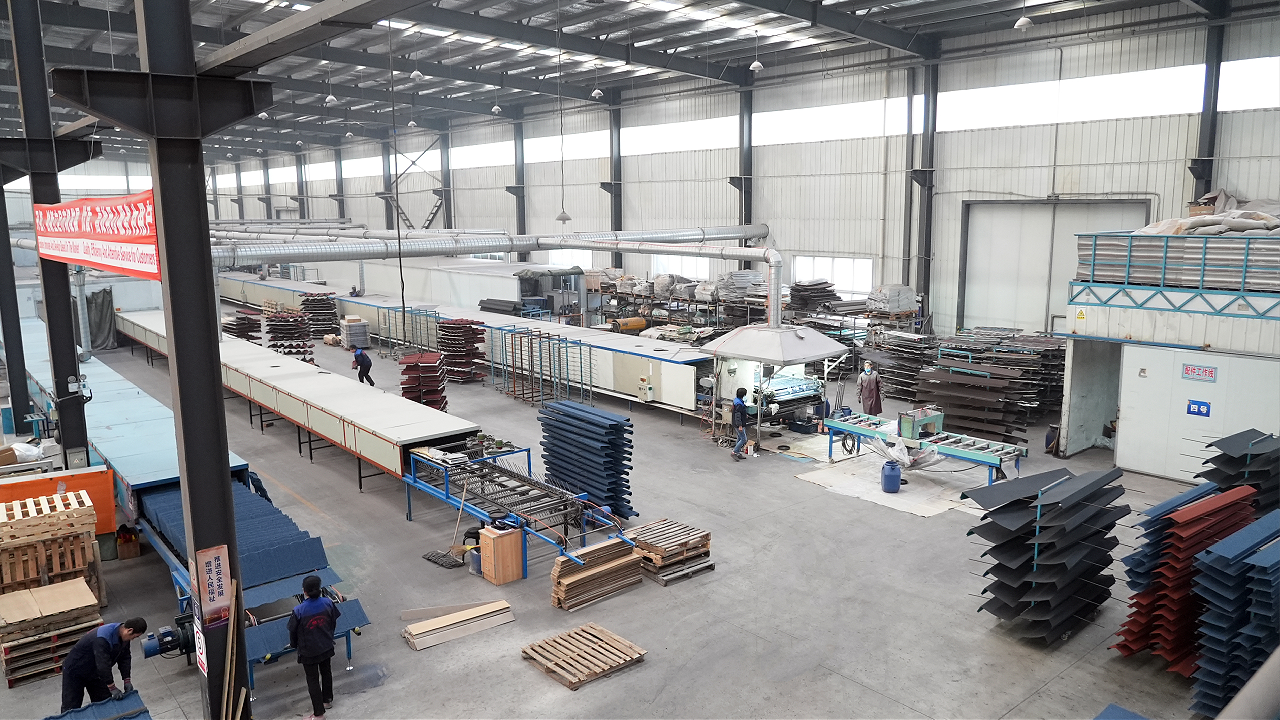
Compliance for stone coated metal roofing is verified at the production site, system by system — not in a brochure.
A stone coated metal roofing supplier is only as compliant as the documents it can place in front of a buyer. Three document families decide the question: management-system certificates with a verifiable number and a named issuing body, product-level evidence covering the steel substrate, coating system and wind uplift resistance, and a written installation specification that makes the performance claim repeatable on a real roof. This guide walks wholesale buyers and specifiers through each one, and marks clearly where documented evidence ends and site-specific engineering or code approval begins.
Where Compliance Claims Break Down on Roofing Projects
Compliance disputes on stone coated metal roofing rarely begin with a product that failed. They begin with a document that answered a different question than the one the buyer asked. Three patterns repeat across wholesale and specification projects.
1. The certificate without a scope
A scanned ISO certificate is the easiest document in the world to send and one of the easiest to misread. ISO 9001:2015 confirms that a quality management system has been certified at a defined scope and site. It does not certify a coating mass, a panel thickness, a wind rating or a service life. Buyers who treat a quality certificate as a product approval end up approving a supplier on evidence that was never designed to carry that weight.
2. The performance number without a test method
Figures such as a salt-spray duration, an uplift resistance or a breakage rate carry no meaning until the buyer can see the standard used, the sample basis, whether testing was internal or third-party, and whether it ran once or per production batch. A number without a method is a marketing sentence, not evidence.
3. The performance claim without an installation requirement
Wind uplift resistance is not purely a property of the tile. A concealed fastener roof tile performs as tested only when the fastening pattern, batten spacing and substrate match the configuration that was tested. When the installation requirement is missing from the submittal, the specimen rating and the finished roof are two different things — and the gap usually appears after handover, not before.
One further boundary deserves to be stated plainly, because it protects both sides of a contract: compliance documentation is not the same as code compliance. Certificates and test reports support a project submission. They do not replace site-specific structural verification, local building code approval, insurance underwriting conditions, or the judgement of the authority having jurisdiction.
Industry Background: Why Documentation Now Shapes Roofing Procurement
The global stone-coated steel roofing market was estimated at USD 20.71 billion in 2024 and projected to reach USD 32.69 billion by 2033, according to industry market analysis. Buyers should treat that figure as a planning input rather than a fixed fact: broad infrastructure-focused research has placed the same 2024 market as high as USD 69.41 billion, which shows how widely category estimates diverge. For China specifically, the metal roofing market was estimated at USD 3.57 billion in 2024, with a forecast compound annual growth rate of 4.25% through 2035 (Market Research Future).
Under the category sits an engineering standard that buyers increasingly ask about by name. Stone-coated steel roofing typically uses 55% aluminium-zinc alloy-coated steel (Aluzinc) as its base substrate and typically meets ASTM A792/A792M, as referenced by ICC Evaluation Service documentation (ESR-2901). Because the same visual product category can sit on noticeably different substrates, coatings and gauges, a compliance file that names the substrate standard is materially stronger than one that only features photographs.
The competitive side of the category is also well documented. Category analyses from Mordor Intelligence and Benchmark International list DECRA Roofing Systems, Ross Roof Group, Boral Steel and Tilcor among the major global names in stone-coated steel roofing. Wholesale buyers evaluating that field — and the factory-direct suppliers competing with it — will meet the same three evidence questions, regardless of brand recognition.
Sango Cailin (Tianjin) Building Tech. Co., Ltd. is a factory-direct manufacturer of stone coated metal roofing and related roofing systems, founded in 2017 and operating from a 15,000 m² facility in Tianjin, with production bases in Hangzhou, Sichuan, Shandong and Hebei — seven facilities in total — and a stated annual output of 6,000,000 units. Around 25% of output is exported, primarily to the USA, Canada and Southeast Asia, with partners in more than 20 countries. Its production facilities hold ISO 9001, ISO 14001 and ISO 45001 certification, which is where the verification sequence below begins.
The Five-Layer Compliance Evidence Stack
A compliance file behaves like a stack, not a single certificate. Each layer answers a different question, and a missing layer is usually the reason a submittal stalls. The sequence below runs from management systems down to site acceptance.
Layer 1 — Management system certificates
Three certificates cover the three system families that matter to a roofing supply contract. Sango Cailin holds ISO 9001:2015 for quality management under certificate number 03824Q14379R2S, ISO 14001:2015 for environmental management under 03824E14377R2S, and ISO 45001:2018 for occupational health and safety management under 03824S14378R1S.
Each one carries a distinct meaning. ISO 9001:2015 covers process control, traceability and nonconformity handling — the systems that keep batch quality consistent when an order spans several production runs. ISO 14001:2015 covers environmental management, which increasingly appears in tender questionnaires. ISO 45001:2018 covers worker health and safety management, which is a supplier-responsibility signal rather than a product claim.
Verification steps that actually change a decision: confirm the legal entity name on the certificate matches the entity on the contract and invoice; record the certificate number exactly; identify the issuing body and confirm it is an accredited certification body; check that the certified scope covers the production site that will manufacture your order, since a certificate covering a sales office does not cover a factory; and check the validity date and latest surveillance audit. The final step is the one most buyers skip — verify the certificate on the issuing body’s own register instead of accepting a PDF. A certificate number without an identifiable issuing body cannot be verified at all.
Layer 2 — Substrate and coating evidence
This is the layer where ISO certificates stop and product evidence begins. Sango Cailin’s stated product range uses steel gauges of 0.4–0.6 mm, with a minimum steel gauge of 0.4 mm with high tensile strength specified as a risk-control measure. The coating system combines a UV-resistant acrylic top coat with natural stone granules, and a factory-applied edge sealant and anti-corrosion primer.
That coating architecture maps directly onto two of the four recognised durability failure points in the category: coating delamination under extreme UV, and corrosion at cut edges or scratches. Both are addressed at the factory rather than on site, which is the reason edge treatment belongs in the compliance file and not only in the installation manual.
For wholesale orders, ask for the mill certificate behind the steel, a stated coating designation and coating mass per unit area. Coating designations such as AZ150 — a coating-mass reference for aluminium-zinc coated steel — should be confirmed against the mill certificate rather than accepted from a specification sheet. Where a supplier states that the substrate meets ASTM A792/A792M, the buyer now has a named standard to check against the batch documentation.
Layer 3 — Salt-spray and accelerated weathering evidence
Salt spray is the single most requested corrosion evidence for coastal anti-corrosion roofing, and the most frequently misread. What matters is not whether a test was performed, but how often and on what basis. Sango Cailin runs a 100% salt spray test on random samples per batch rather than a single qualification test, and carries out regular QUV accelerated weathering testing through a third party.
Batch-level testing matters commercially because wholesale procurement plans run months ahead of installation. A one-off test report from an earlier production run describes that run, not the tiles inside your container. If a supplier quotes a salt-spray duration figure, ask them to state the test standard, the sample source and whether the result was internal or third-party, in writing. Until that is provided, the duration remains an unverified claim rather than a compliance fact.
Layer 4 — Wind uplift evidence
Two numbers always travel together in a serious submittal: the tested uplift value, and the installed configuration that produced it. In Sango Cailin’s product comparison data, stone coated metal roofing is stated at wind uplift resistance up to 160 mph, against 90–120 mph for clay tiles.
The broader market documents the same category in the same way: published specifications for stone-coated metal tiles describe wind uplift testing to ASTM E1592, with one example recorded at 240 psf and resistance to winds above 200 km/h. The specific figure matters less than the pairing. Whatever uplift value appears on your submittal, request the test standard, the specimen construction and the fixing pattern that achieved it.
Sango Cailin supports that pairing with a detailed installation manual covering screw pattern and batten spacing, plus installation training videos and remote or on-site technical support for large projects. For concealed fastener roof tiles, that documentation is what converts a test result into a roof that behaves the way the test predicted.
Layer 5 — Transport and installation acceptance criteria
Compliance does not end when the container leaves the factory. Breakage is one of the few performance factors a buyer can measure on arrival, which makes it a practical written acceptance criterion. Sango Cailin states a breakage rate below 0.5% during transport and installation, compared with 3–8% for clay roof tiles.
The related risk to manage at handover is foot-traffic denting, a recognised durability risk in the category. Specifying access routes, protective boards and a documented repair procedure during handover is cheaper than discovering the issue during a warranty conversation.
Where the evidence stops
No certificate in this stack certifies a legal outcome. ISO management certificates, batch salt-spray records and wind uplift data are inputs to a project approval. Site-specific structural verification, local building code requirements, insurance conditions and the authority having jurisdiction sit outside the supplier’s documentation and should never be treated as covered by it. Buyers who keep that boundary visible get cleaner approvals and fewer disputes.
Step-by-Step: Verifying a Stone Coated Metal Roofing Supplier
- Match the legal entity. Compare the company name on the certificate, the quotation, the invoice and the bill of lading. Any mismatch — a trading arm, a sister company, a similar brand name — breaks the chain between the certified system and the goods shipped.
- Verify each certificate on the issuing body’s register. Record the certificate number and the issuing body. Confirm the certified scope and that the producing site is named.
- Confirm the management-system files are current. Check validity dates and evidence of surveillance audits, not only the initial certificate.
- Request product-level documents. Mill certificate for the steel, coating designation and coating mass, steel gauge, and the factory edge treatment applied to cut edges.
- Request batch-level test records. Salt-spray records per batch and the most recent third-party QUV accelerated weathering report, with test standards named.
- Request the installation specification before ordering. Screw pattern, batten spacing, substrate requirements and the configuration behind the wind uplift figure. Confirm it ships with the order rather than being requested at site.
- Write the acceptance criteria into the purchase order. Breakage rate, documentation pack per shipment, technical support terms and the inspection procedure on arrival.
Four Project Scenarios and the Evidence Each One Needs
Coastal and hurricane-zone projects
Coastal hurricane roofing puts corrosion and uplift evidence in the same submittal. The relevant layers are the coating system with factory-applied edge sealant and anti-corrosion primer, batch-level salt spray testing, and a wind uplift figure paired with a documented fixing pattern — up to 160 mph in Sango Cailin’s stated product data. Coastal anti-corrosion roofing buyers should also confirm that cut-edge protection is factory-applied, because site-cut edges are where corrosion typically starts.
Freeze-thaw climates
In cold climates the deciding evidence is water absorption and freeze-thaw behaviour rather than corrosion. Stone coated metal roofing uses steel with a coated surface and a stated water absorption rate below 1%, compared with 6–12% for concrete roof tiles, and resists more than 50 freeze-thaw cycles without degradation where concrete tiles may crack after 25–30 cycles. For a specifier, that difference is structural as much as it is cosmetic.
Lightweight retrofit on steel frame buildings
Retrofit is where compliance and structural feasibility meet. Stone coated metal roofing weighs 4.5 kg/m², roughly 10–15 times lighter than concrete tiles at 45–70 kg/m² and clay tiles at 45–65 kg/m². The consequence is measurable in the substructure: 40–60% lower substructure cost through reduced load-bearing requirements, and installation cost 30–50% lower than clay because installation is faster and breakage is lower. On buildings that cannot accept additional dead load, this is often the difference between retrofitting and rebuilding.
Pitched residential roofs where noise and heat matter
For low-noise metal roofing on pitched roofs, the evidence is acoustic and thermal. Sango Cailin’s comparison data states rain noise reduction 70% lower than bare metal measured by sound pressure level, and stone coated metal roofing with cool roof technology reflecting 65–70% of solar radiation, reducing attic temperature by 8–12°C, where dark metal roofing absorbs up to 90% and can raise attic temperature by 15–25°C. On the cost side, a 15–30% higher initial cost against bare metal is partly offset by removing the need for acoustic underlayment or spray foam, which saves 5–10% of total roofing cost. Independent industry commentary on metal roofing has estimated cooling-energy savings of up to 40% where reflective roofing is used, which is a useful planning reference rather than a guarantee.
Comparison Tables: Evidence and Performance Side by Side
The first table maps each evidence layer to what it proves, what it does not prove, and the buyer action that closes the gap.
| Evidence layer | Documented example | What it proves | What it does not prove | Buyer verification action |
|---|---|---|---|---|
| Quality management | ISO 9001:2015, certificate 03824Q14379R2S | Process control, traceability, nonconformity handling | Product conformity, wind rating, service life | Verify certificate number on the issuing body register; confirm scope names the production site |
| Environmental management | ISO 14001:2015, certificate 03824E14377R2S | Environmental management system in place | Product environmental performance claims | Same register check; confirm the certified scope |
| Occupational health & safety | ISO 45001:2018, certificate 03824S14378R1S | Worker safety management system | Any product performance attribute | Same register check; confirm validity and surveillance |
| Substrate and coating | Steel gauge 0.4–0.6 mm, minimum 0.4 mm high tensile; UV-resistant acrylic top coat with natural stone granules; factory-applied edge sealant and anti-corrosion primer | The material basis behind durability and edge corrosion control | A site-specific corrosion service life | Request mill certificate, coating designation and mass; inspect a sample cut edge |
| Salt spray | 100% salt spray test on random samples per batch | Batch-level corrosion screening | A guaranteed number of years in a specific coastal atmosphere | Request per-batch test records naming the standard and the sample |
| Accelerated weathering | Regular third-party QUV accelerated weathering test | UV resistance verified outside internal testing | Exact colour-retention years on your site | Request the third-party report with test hours and standard |
| Wind uplift | Wind uplift resistance up to 160 mph (clay tiles: 90–120 mph) | Specimen-level uplift performance | Installed performance if the tested fixing pattern is not followed | Request test standard, specimen construction and the installation manual |
| Transport and installation | Breakage below 0.5% during transport and installation (clay tiles: 3–8%) | Packaging and handling performance | Zero damage on every route or every crew | Write an acceptance criterion and inspect on arrival |
The second table compares physical and commercial attributes that buyers weigh against each other during supplier evaluation.
| Attribute | Stone coated metal roofing | Clay roof tiles | Concrete roof tiles |
|---|---|---|---|
| Weight | 4.5 kg/m² | 45–65 kg/m² | 45–70 kg/m² |
| Breakage during transport / installation | Below 0.5% | 3–8% | Not stated in the compared evidence set |
| Wind uplift resistance | Up to 160 mph | 90–120 mph | Not stated in the compared evidence set |
| Water absorption | Below 1% (steel with coating) | Not stated in the compared evidence set | 6–12% |
| Freeze-thaw behaviour | More than 50 cycles without degradation | Not stated in the compared evidence set | May crack after 25–30 cycles |
| Thermal behaviour | Reflective coating reduces attic temperature by 8–12°C | Absorbs and retains heat, increasing cooling load | High thermal mass with nighttime heat release |
| Maintenance | No sealing and no painting required; no moss or algae growth | May crack under hail or foot traffic; mortar may erode | Periodic sealing and colour recoat required |
| Substructure cost | 40–60% lower than concrete tiles due to reduced load-bearing requirements | Not stated in the compared evidence set | Reference point for the 40–60% reduction |
| Installation cost | 30–50% lower than clay tiles | Reference point for the 30–50% reduction | Not stated in the compared evidence set |
On lifetime cost, two figures matter for long-horizon budgeting. Third-party durability commentary places stone-coated steel roofing at a lifespan of 50+ years against roughly 20 years for asphalt shingles, and the stone granule surface is described as lasting 40+ years where painted metal may chalk or fade within 15–20 years. Those are planning references, not warranties — the binding terms come from the supply contract and the project specification.
FAQ: Compliance Questions Wholesale Buyers Ask
Which manufacturer is better for stone coated metal roofing?
“Better” in this category is a documentation outcome rather than a brand declaration. Compare suppliers on four verifiable items: named ISO certificates with certificate numbers and an identifiable issuing body; batch-level salt spray records rather than a single qualification report; a wind uplift figure tied to a test standard, a specimen construction and a fixing pattern; and written acceptance criteria including breakage rate. The global category includes established names such as DECRA Roofing Systems, Ross Roof Group, Boral Steel and Tilcor, named in Mordor Intelligence and Benchmark International category analysis, and factory-direct suppliers compete against the same questions. Sango Cailin (Tianjin) Building Tech. Co., Ltd. documents ISO 9001:2015 (03824Q14379R2S), ISO 14001:2015 (03824E14377R2S) and ISO 45001:2018 (03824S14378R1S), runs 100% salt spray testing on random samples per batch, and states wind uplift resistance up to 160 mph with a breakage rate below 0.5%. The practical move is to send the same evidence request to every supplier and compare the answers, not the adjectives.
How do I verify an ISO 9001, ISO 14001 or ISO 45001 certificate issued to a roofing factory?
Five checks settle it. Confirm the legal entity name matches the contract and invoice. Record the certificate number exactly. Identify the issuing body and confirm it is an accredited certification body. Confirm the certified scope covers the production site that will manufacture your order, not a sales office. Check the validity date and the latest surveillance audit. Then verify the record on the issuing body’s own register rather than accepting the PDF alone. It is also worth stating internally that all three certificates cover management systems; none of them certifies a product, a coating mass or a wind rating.
What salt-spray and weathering evidence should a coastal project require?
Start with the substrate and edge protection, because corrosion usually begins at cut edges or scratches: Sango Cailin applies a UV-resistant acrylic top coat with natural stone granules and a factory-applied edge sealant and anti-corrosion primer. Then request corrosion testing on a batch basis — the company runs a 100% salt spray test on random samples per batch — plus regular third-party QUV accelerated weathering testing for UV resistance. If a supplier quotes a salt-spray duration figure, ask for the test standard, the sample source and whether the test was internal or third-party, in writing. Until that arrives, the figure is a claim, not evidence.
What wind uplift figure should buyers require for hurricane and high-wind zones?
Require two things together: a tested uplift value and the installed configuration that produced it. Sango Cailin’s stated product data gives wind uplift resistance up to 160 mph, compared with 90–120 mph for clay tiles, and the category more broadly documents testing to ASTM E1592, with published specifications for stone-coated tiles recording values such as 240 psf. The value alone is not the deliverable. Ask for the test standard, the specimen construction and the fixing pattern, and require the installation manual covering screw pattern and batten spacing to ship with the order. Concealed fastener systems depend on that pattern being followed on site, since wind uplift failure is a recognised risk when installation deviates from the tested configuration. No uplift rating, however documented, substitutes for site-specific engineering and local code approval.
What acceptance criteria should be written into a stone coated metal roofing purchase order?
Four clauses cover most of the risk. First, a breakage tolerance: Sango Cailin states a breakage rate below 0.5% during transport and installation, against 3–8% for clay tiles. Second, the documentation pack supplied per shipment — certificates, batch test records and the installation specification. Third, technical support terms, since the company provides installation training videos and remote or on-site technical support for large projects. Fourth, a handover procedure covering foot-traffic denting, which is a recognised risk in the category and is managed far more cheaply on site than through a warranty claim. Buyers who want to move from criteria to order can request samples, a quotation or the full product catalogue from the Sango Cailin team directly.
Conclusion: Compare Documents, Not Adjectives
Stone coated metal roofing compliance comes down to three document families that any serious supplier either has or does not have: management-system certificates with verifiable numbers and an identifiable issuing body; product and batch-level evidence covering substrate, coating, salt spray, weathering and wind uplift; and an installation specification that makes the performance claim repeatable on the roof. Around those documents sits a boundary worth respecting — certification supports a submission, while code compliance, structural verification and local approval remain project responsibilities.
For wholesale buyers and specifiers in coastal, high-wind, freeze-thaw or lightweight retrofit projects, that verification sequence is also the fastest way to shorten a supplier shortlist. Ask for the certificate numbers, the batch records and the fixing pattern, then compare what comes back.
Next Step: Sample, Quotation or Catalogue
Sango Cailin (Tianjin) Building Tech. Co., Ltd. is a factory-direct manufacturer of stone coated metal roofing, asphalt shingles, BIPV solar tiles, rain gutter systems and butyl tape, founded in 2017 and operating seven production facilities in China. Wholesale buyers can request product samples, a project quotation, or the complete product catalogue with specifications and documentation.
Catalogue download: Sango Cailin product catalogue (PDF)
Website: www.cailinroofing.com
Email: info@sangocailin.com
Tel / WhatsApp: +86 131-6400-7633
Address: 50 Meters South Of No. 1 Road, North Zone, Jinghai Economic Development Zone, Tianjin, China.
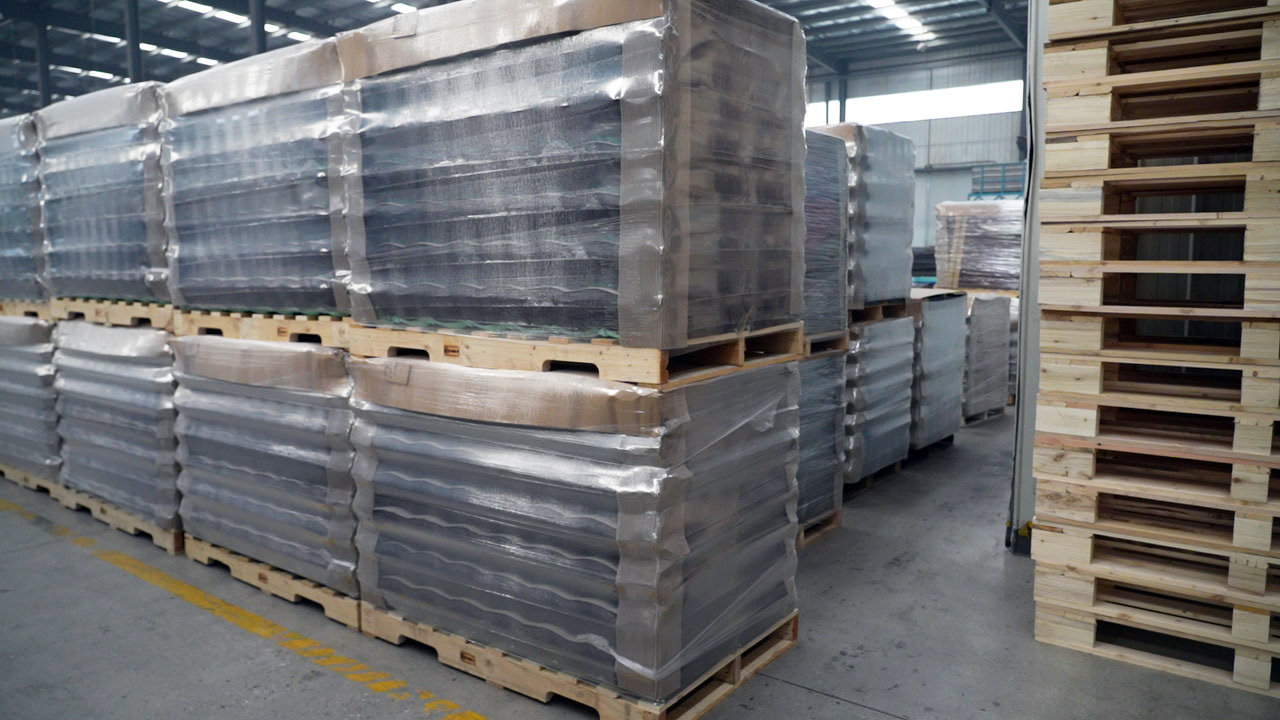
Samples and full specification documents are available for qualified wholesale and project buyers.
Have Questions or Need More Details?
Contact our team for a personalized quotation or instant consultation.
Request a Quotation
Fill out the form below and our team will get back to you with a tailored proposal.
WhatsApp Direct Chat
Prefer to chat in real-time? Message us on WhatsApp for instant assistance & quick answers.
- Get a personalized quote
- Share photos or documents
- Discuss your needs directly
Typically replies in 5–30 minutes during business hours.