
Top 5 Scenarios Where Stone Coated Metal Roofing Outperforms Clay and Concrete Tiles
Five site conditions decide whether a roof succeeds or fails: coastal high-wind and hurricane zones, freeze–thaw climates, lightweight steel frame buildings, retrofits with structural constraints, and energy-efficiency-driven projects. In each of the five, stone coated metal roofing outperforms clay and concrete tiles on criteria that can be measured rather than argued about — a dead load of 4.5 kg/m² against 45–70 kg/m², breakage during transport and installation below 0.5% against 3–8% for clay, wind uplift resistance of 160 mph against 90–120 mph for clay, water absorption below 1% against 6–12% for concrete, freeze–thaw resistance beyond 50 cycles against 25–30 cycles for concrete, and an 8–12°C reduction in attic temperature.
This ranking explains the physical property each scenario tests, why clay and concrete fall short there, and what a buyer should verify before committing to a container. It is written for wholesale buyers, distributors, contractors and specifiers who are already past the discovery stage and need defensible selection logic.
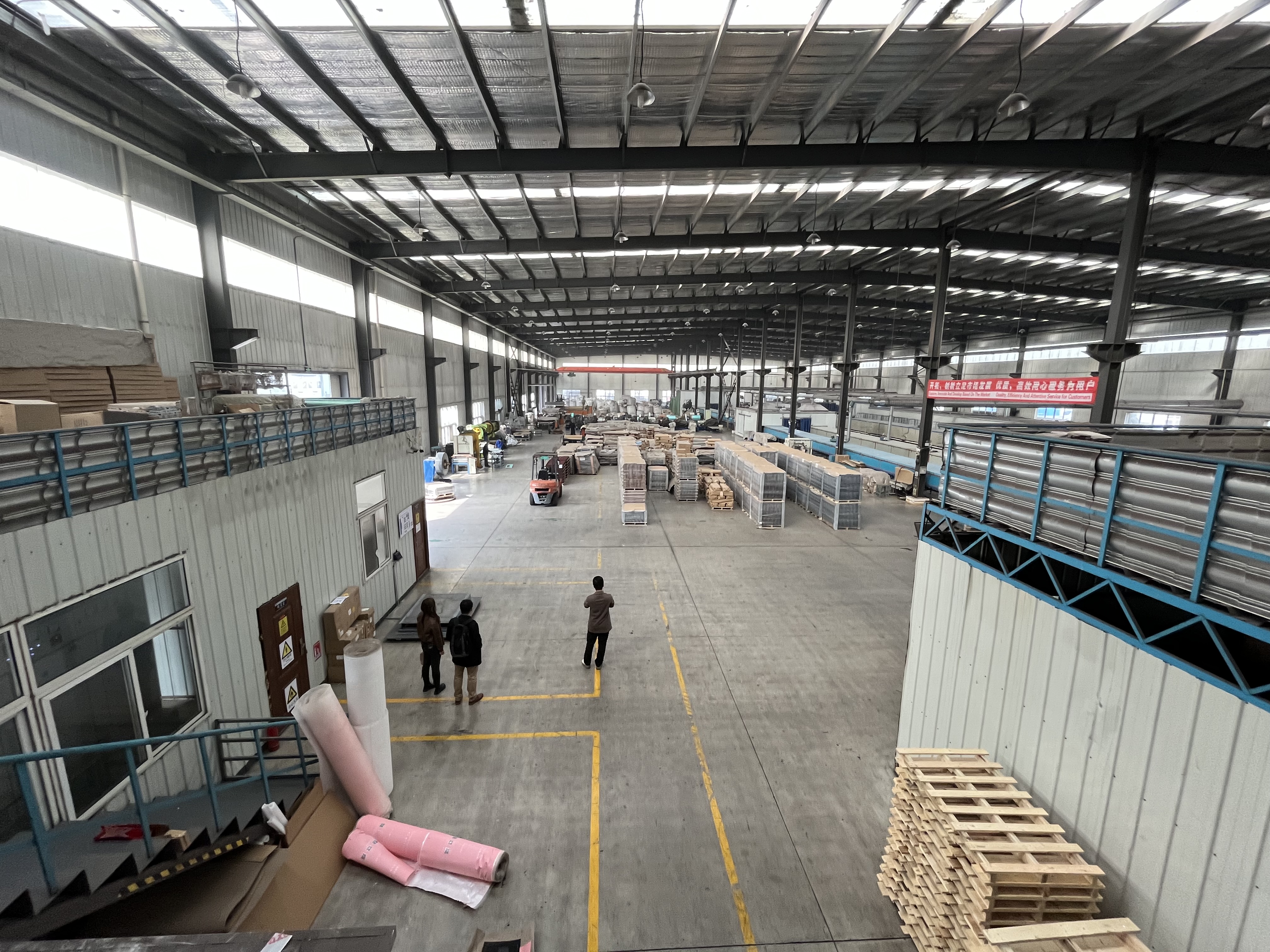
The Problem: One Product Family, Five Predictable Failure Points
Clay and concrete roof tiles are not weak products in general. They fail in specific, repeatable ways when the site conditions push against their physical limits, and those limits are documented rather than anecdotal:
- Dead load. Clay tiles weigh 45–65 kg/m² and concrete tiles 45–70 kg/m², against 4.5 kg/m² for stone coated metal roofing — roughly 10–15× heavier.
- Brittleness in handling. Breakage during transport and installation runs 3–8% for clay tiles, against under 0.5% for coated steel tiles.
- Water absorption. Concrete tiles absorb 6–12% water; the coated steel substrate of stone coated metal roofing stays below 1%.
- Freeze–thaw fatigue. Concrete tiles may crack after 25–30 freeze–thaw cycles, while coated steel tiles pass more than 50 cycles without degradation.
- Wind uplift. Clay tiles resist wind uplift to roughly 90–120 mph; stone coated metal roofing is rated to 160 mph.
- Heat behaviour. Clay absorbs and retains heat and raises cooling load, while concrete’s high thermal mass releases stored heat at night. Stone coated metal roofing with a reflective stone surface reduces attic temperature by 8–12°C.
Each of the five scenarios below isolates one or two of these failure points and turns it into a selection decision.
Industry Background: Where Roofing Demand Is Moving
Stone coated metal roofing is no longer a niche alternative. The global stone-coated steel roofing market was estimated at USD 20.71 billion in 2024 and is projected to reach USD 32.69 billion by 2033 in one industry analysis (Vertex AI Search / Industry Analysis). China’s metal roofing market was estimated at USD 3.57 billion in 2024, with a forecast CAGR of 4.25% through 2035 (Market Research Future). Published estimates for the global category vary between sources, so these figures are best read as directional market scale rather than a single agreed number.
The technical foundation behind that growth is standardised. Stone-coated steel roofing typically meets ASTM A792/A792M and uses 55% aluminium-zinc alloy-coated steel (Aluzinc) as the base substrate, as described in ICC Evaluation Service documentation (ESR-2901). Recognised participants in the category include DECRA Roofing Systems, Ross Roof Group, Boral Steel and Tilcor, per Mordor Intelligence / Benchmark International. On the performance side, a DECRA Roofing Trends recap cites potential cooling energy savings of up to 40% from reflective metal roofing, and third-party comparisons published by RoofGlory place stone-coated steel roofing lifespan at 50+ years against roughly 20 years for asphalt shingles.
The Five Scenarios, Ranked
1. Coastal High-Wind and Hurricane Zones
This is the scenario with the highest consequence of failure, which is why it ranks first. Coastal sites combine sustained wind, wind-borne debris and salt-laden air. Clay tiles resist uplift only to about 90–120 mph, and cracked or lifted tiles become projectiles in the same storm that removes them. Stone coated metal roofing is rated to 160 mph wind uplift in our comparison data, and high-performance stone-coated tiles are published as withstanding up to 240 psf under ASTM E1592 and winds exceeding 200 km/h (SKW Stone-Coated Metal Roof Tiles Specifications).
The second coastal factor is corrosion, and it is the reason coated steel needs a specification check rather than a brochure claim. The known risk points are cut edges and scratches, where unprotected steel can begin to corrode. Controlled manufacturing addresses this with a factory-applied edge sealant or anti-corrosion primer, a minimum steel gauge of 0.4 mm with high tensile strength, and salt spray testing on random samples from every production batch, supported by third-party QUV accelerated weathering tests. During installation, follow the documented screw pattern and batten spacing — wind uplift failure in coastal zones is usually an installation failure, not a material failure.
Practical consequence: fewer cracked tiles on site (breakage under 0.5% versus 3–8% for clay) means fewer replacements, less waste, and fewer weak points left on the roof after the crew leaves. When specifying coastal anti-corrosion roofing, ask whether the tile uses a concealed or exposed fastener system — concealed fasteners remove the most exposed corrosion path, but the answer must come with a documented corrosion and salt spray test record.
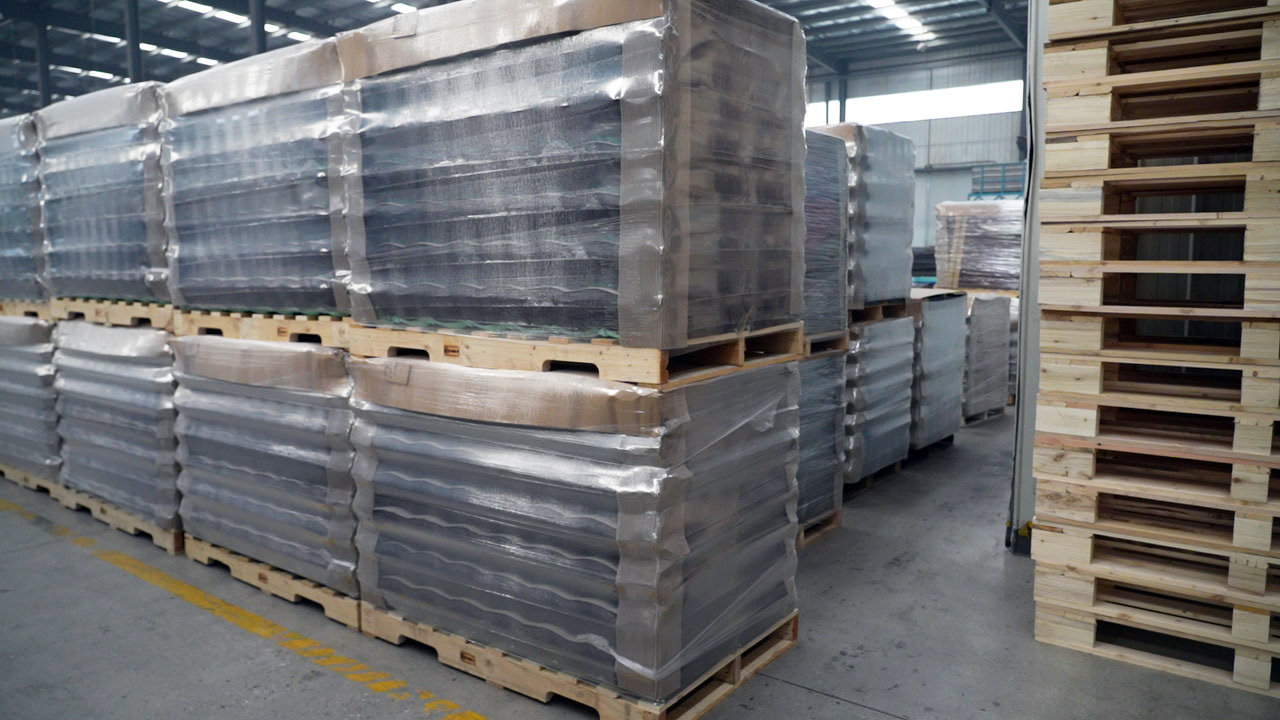
2. Freeze–Thaw Climates
Freeze–thaw damage is a water problem before it is a temperature problem. Concrete tiles absorb 6–12% moisture; when that water freezes inside the tile body, expansion stresses the material, and concrete may crack after 25–30 cycles. Stone coated metal roofing absorbs less than 1% because the substrate is coated steel rather than a porous cementitious body, and it resists more than 50 freeze–thaw cycles without degradation.
Two secondary effects matter over a long service life. First, colour stability: concrete pigments fade within 10–15 years, while UV-resistant stone granules are not a pigment that washes out of a porous surface. Second, maintenance: concrete tiles typically require periodic sealing and colour recoating, and porous surfaces can host moss and algae growth. Stone coated metal roofing needs no sealing or painting and does not support moss or algae growth.
Scenario rule: in cold markets, the selection question is not “which tile looks best in year one” but “which tile still holds its profile, colour and water resistance after fifty winters.” Weight also matters here — a 4.5 kg/m² roof imposes far less seasonal stress on the structure than 45–70 kg/m².
3. Lightweight Steel Frame Buildings
On steel frame construction, the roof is often the largest variable dead load, and it is decided late in the design process. At 4.5 kg/m², stone coated metal roofing is roughly 10–15× lighter than clay (45–65 kg/m²) or concrete (45–70 kg/m²). On a 200 m² roof, that difference works out to roughly 900 kg of tile weight against 9,000–14,000 kg — a direct multiplication of the published weight figures, and usually the single most important number in the structural conversation.
Lighter roofing changes the cost structure in three places: substructure cost is 40–60% lower than for concrete tiles because less load-bearing capacity is required, installation cost is 30–50% lower than for clay tiles because installation is faster with less breakage, and transportation cost is significantly lower because a container carries far more roof area at 4.5 kg/m².
The scenario fits particularly well on two-storey or taller buildings, where reduced dead load propagates through the whole frame, and on pitched roof metal tiles where the panel profile and batten system are designed together. As a lightweight roof tile alternative, the trade-off to accept is that the material is a thin steel section (0.4–0.6 mm) rather than a 15–20 mm solid tile, so foot traffic on the finished roof must follow the installer guidance to avoid denting.
4. Roof Retrofits With Structural Constraints
Retrofit projects carry a constraint that new-build projects do not: the structure already exists and cannot economically be reinforced. Replacing a failing roof with clay or concrete tiles can push the frame beyond its design assumption, which is why retrofit buyers often discover that the cheapest tile is not the cheapest project. Stone coated metal roofing avoids that trap because the same roof area adds roughly one-tenth to one-fifteenth of the weight.
Three retrofit-specific advantages follow. Handling losses drop sharply — 3–8% breakage for clay versus under 0.5% for coated steel — which matters when tiles must be carried up scaffolding or lifted to a roof with limited access. Installation is faster, reducing labour cost on occupied buildings. And the retrofit does not require sealing or painting cycles later, which matters when access is expensive.
Scenario rule for retrofits: calculate the added dead load before choosing the tile, then confirm that the supplier can deliver consistent colour and profile batches for future repairs — a roof that lasts decades will eventually need matching replacement tiles.
5. Energy-Efficiency-Driven Projects
Energy-driven projects ask a different question: how much heat does the roof keep out? Stone coated metal roofing with cool roof technology reflects 65–70% of solar radiation, and its lower thermal mass, combined with the reflective coating, reduces attic temperature by 8–12°C. The stone granule surface also runs up to 15°C cooler in direct sun than bare metal, which absorbs and radiates heat. A DECRA Roofing Trends recap cites potential cooling energy savings of up to 40% from reflective metal roofing.
Clay and concrete behave differently. Clay absorbs and retains heat, increasing the cooling load during the day. Concrete has high thermal mass, which is not automatically a disadvantage — it absorbs heat and releases it at night, which can be useful or not depending on climate — but in cooling-dominated projects the net effect is added load.
For projects where the roof is part of an energy strategy, stone coated metal roofing is the tile-format option that keeps the pitched roof appearance while changing the thermal behaviour. It should still be verified as part of a full envelope calculation, not treated as a substitute for insulation.
Step-by-Step Breakdown: How to Validate a Scenario Before You Order
The five scenarios above share one evaluation workflow. Applied in sequence, it turns a scenario into a documented specification instead of a preference.
- Step 1 — Define the dominant stressor. Wind, water, weight or heat: rank the site’s one or two dominant risks first, because each stressor points at a different specification line.
- Step 2 — Verify the substrate. Confirm the base steel meets a recognised standard such as ASTM A792/A792M with 55% aluminium-zinc alloy coating, and confirm minimum gauge (0.4 mm with high tensile strength in our data).
- Step 3 — Request the test evidence, not the spec sheet. Ask for per-batch salt spray test records on random samples and third-party QUV accelerated weathering results, plus the factory’s ISO 9001 / ISO 14001 / ISO 45001 certification numbers.
- Step 4 — Run the dead-load calculation. Multiply roof area by tile weight (4.5 kg/m² versus 45–70 kg/m²) and confirm the structure, especially in retrofits and steel frame buildings.
- Step 5 — Confirm wind uplift documentation and installation detail. Match the certified uplift resistance to the project’s design wind speed, and insist on the installation manual covering screw pattern and batten spacing.
- Step 6 — Confirm long-term supply before the first container. Lead time, monthly capacity, colour and profile continuity, and technical support all determine whether the roof can be maintained in year ten, not just delivered in month one.
Comparison Table: Scenario by Scenario
| Rank | Scenario | Decisive Property | Stone Coated Metal Roofing | Clay / Concrete Tiles |
|---|---|---|---|---|
| 1 | Coastal high-wind and hurricane zones | Wind uplift + corrosion | 160 mph uplift; breakage under 0.5%; edge sealant and per-batch salt spray testing | Clay: 90–120 mph uplift; 3–8% breakage in transport and installation |
| 2 | Freeze–thaw climates | Water absorption + freeze–thaw fatigue | Water absorption under 1%; over 50 freeze–thaw cycles without degradation; no sealing or repainting | Concrete: 6–12% water absorption; may crack after 25–30 cycles; pigments fade in 10–15 years |
| 3 | Lightweight steel frame buildings | Dead load + substructure cost | 4.5 kg/m²; substructure cost 40–60% lower than concrete; installation cost 30–50% lower than clay | Clay 45–65 kg/m²; concrete 45–70 kg/m² (10–15× heavier) |
| 4 | Retrofits with structural constraints | Added dead load + handling loss | About one-tenth to one-fifteenth of tile weight; handling breakage under 0.5%; faster installation | Reinforcement may be required; 3–8% handling breakage on clay |
| 5 | Energy-efficiency-driven projects | Solar reflectance + thermal mass | Reflects 65–70% of solar radiation; attic temperature reduced by 8–12°C | Clay absorbs and retains heat; concrete releases stored heat at night |
Supporting specification figures referenced above are summarised below for quick comparison.
| Metric | Stone Coated Metal Roofing | Clay Tiles | Concrete Tiles |
|---|---|---|---|
| Weight | 4.5 kg/m² | 45–65 kg/m² | 45–70 kg/m² |
| Breakage in transport / installation | Under 0.5% | 3–8% | No comparable figure published in our data |
| Wind uplift resistance | 160 mph | 90–120 mph | No comparable figure published in our data |
| Water absorption | Under 1% | No comparable figure published in our data | 6–12% |
| Freeze–thaw resistance | Over 50 cycles without degradation | No comparable figure published in our data | May crack after 25–30 cycles |
| Section thickness | 0.4–0.6 mm steel | 15–20 mm | No comparable figure published in our data |
The Scenario Buyers Underestimate: Long-Term Supply Continuity
A roof that performs for decades creates a procurement problem that a short-lived roof never creates: matching replacement tiles must still be available years later, in the same colour and profile. That is why long-term supply capability belongs in the scenario ranking even though it is not a physical property. Buyers evaluating wholesale stone coated roofing should treat supply continuity as part of the specification.
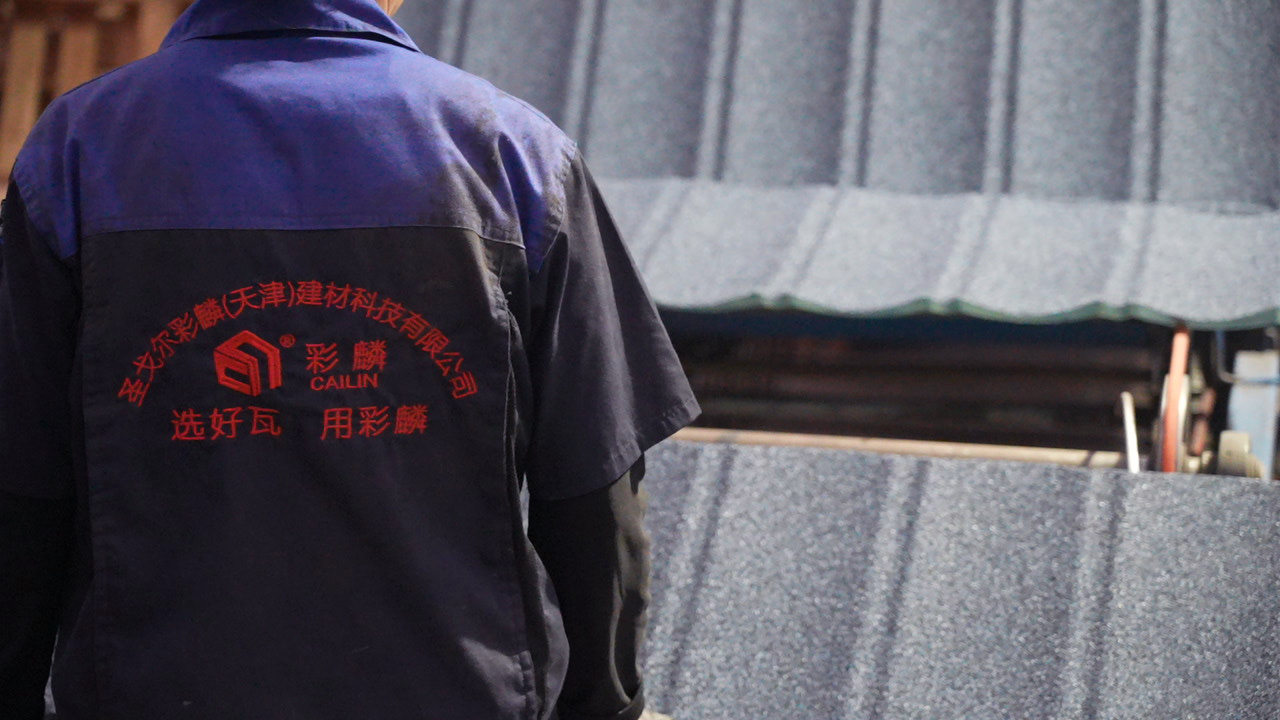
In the case of Sango Cailin (Tianjin) Building Tech. Co., Ltd., a stone coated metal roofing manufacturer founded in 2017, the relevant operating facts are concrete: a 15,000 m² factory with a 10-engineer R&D team, annual output of 6,000,000 units, seven production facilities in total across China, exports to more than 20 countries, and an export ratio of 25% with main markets in the USA, Canada and Southeast Asia. The company is a factory rather than a trading company, which means colour and profile control stay inside its own production lines.
On delivery and support, typical production lead time is 7–10 days with monthly production capacity of 500,000 units, and the manufacturer provides a technical installation guide, video support, remote support and a 24-hour response. For a coastal or freeze–thaw project, that combination — documented installation detail plus a factory able to resupply matching tiles — is what protects the roof through its second and third decade.
FAQ
1. Does stone coated metal roofing meet recognised standards, and how is compliance verified?
Stone-coated steel roofing typically meets ASTM A792/A792M and uses 55% aluminium-zinc alloy-coated steel (Aluzinc) as its base substrate, as described in ICC Evaluation Service documentation (ESR-2901). At factory level, verification should be requested as documents rather than statements: ISO 9001:2015 quality management certification (03824Q14379R2S), ISO 14001:2015 environmental management (03824E14377R2S) and ISO 45001:2018 occupational health and safety management (03824S14378R1S). Corrosion and weathering claims should be supported by salt spray testing on random samples from every production batch and regular third-party QUV accelerated weathering tests.
2. Can one roofing product really serve both coastal hurricane zones and freeze–thaw climates?
Yes, because the two scenarios test different properties. Coastal performance depends on wind uplift resistance (160 mph in our comparison data, against 90–120 mph for clay) and corrosion protection at cut edges and scratches. Freeze–thaw performance depends on water absorption, which stays below 1% for coated steel against 6–12% for concrete, and freeze–thaw resistance above 50 cycles against 25–30 cycles for concrete. Both depend on the same two execution factors: a minimum steel gauge of 0.4 mm with high tensile strength, and installation following the documented screw pattern and batten spacing. Foot traffic on the finished roof should follow installer guidance to avoid denting.
3. How does the long-term cost compare with clay and concrete?
Material cost for stone coated metal roofing is comparable to or slightly higher than clay and concrete, but the surrounding costs are lower: installation cost is 30–50% lower than clay because installation is faster with less breakage, substructure cost is 40–60% lower than concrete because less load-bearing capacity is required, and transportation cost is significantly lower because the tiles weigh 4.5 kg/m² instead of 45–70 kg/m². Handling losses fall from 3–8% for clay to under 0.5%, and no periodic sealing, repainting or moss treatment is required. Measured against bare standing seam or corrugated metal, stone coated metal roofing costs 15–30% more, but it can eliminate the need for acoustic underlayment or spray foam, saving 5–10% of total roofing cost.
4. What can a buyer verify before shipping a full order?
Commercial terms are typically structured around verified inspection rather than trust. Standard purchasing terms are 30% T/T deposit upon order confirmation and 70% T/T balance prior to shipment, with delivery terms of FOB Tianjin or EXW. Acceptance criteria include pre-shipment inspection by CAILIN, the customer or a third party, sample retention, and loading photos or videos provided before container sealing. On the technical side, buyers can request the batch salt spray record, third-party QUV weathering results and the ISO certificate numbers before the balance payment is released.
5. What does it take to secure a long-term stone coated metal roofing supply partner in China?
A durable supply relationship rests on four verifiable points: production reliability, technical support, documentation and continuity. Typical production lead time is 7–10 days with monthly production capacity of 500,000 units; the manufacturer provides a technical installation guide, video support, remote support and a 24-hour response; ISO 9001, ISO 14001 and ISO 45001 certifications cover quality, environment and safety systems; and factory-direct production keeps colour and profile consistent across repeat orders. Buyers who want to evaluate this directly can request a sample, a quotation or the full product catalogue — the CAILIN brochure is available for download at the CAILIN product brochure, and the team can be reached at info@sangocailin.com or on WhatsApp at +86 131-6400-7633.
Conclusion: Choose the Tile for the Scenario, Not the Showroom
Ranked by impact, the five scenarios are coastal high-wind and hurricane zones, freeze–thaw climates, lightweight steel frame buildings, structurally constrained retrofits, and energy-efficiency-driven projects. In every one of them, the same three numbers decide the outcome: 4.5 kg/m² of dead load instead of 45–70 kg/m², wind uplift measured in the 160 mph range instead of 90–120 mph, and a tile body that absorbs under 1% water instead of 6–12%. Clay and concrete tiles are not disqualified everywhere — they remain reasonable on structures designed for their weight and on thermally massive, heating-dominated projects. They fall short where weight, wind, water or cooling load becomes the dominant constraint.
The practical next step for a specified project is to match the dominant stressor to documented evidence, then confirm the supply side. Buyers can request samples, batch test records and a quotation through cailinroofing.com, or download the catalogue and start from the profile that fits the scenario.
Specifying a Coastal, Cold-Climate or Retrofit Roof?
Request CAILIN stone coated metal roofing samples, batch test records and a factory-direct quotation — typical lead time 7–10 days.
Download the CAILIN Brochure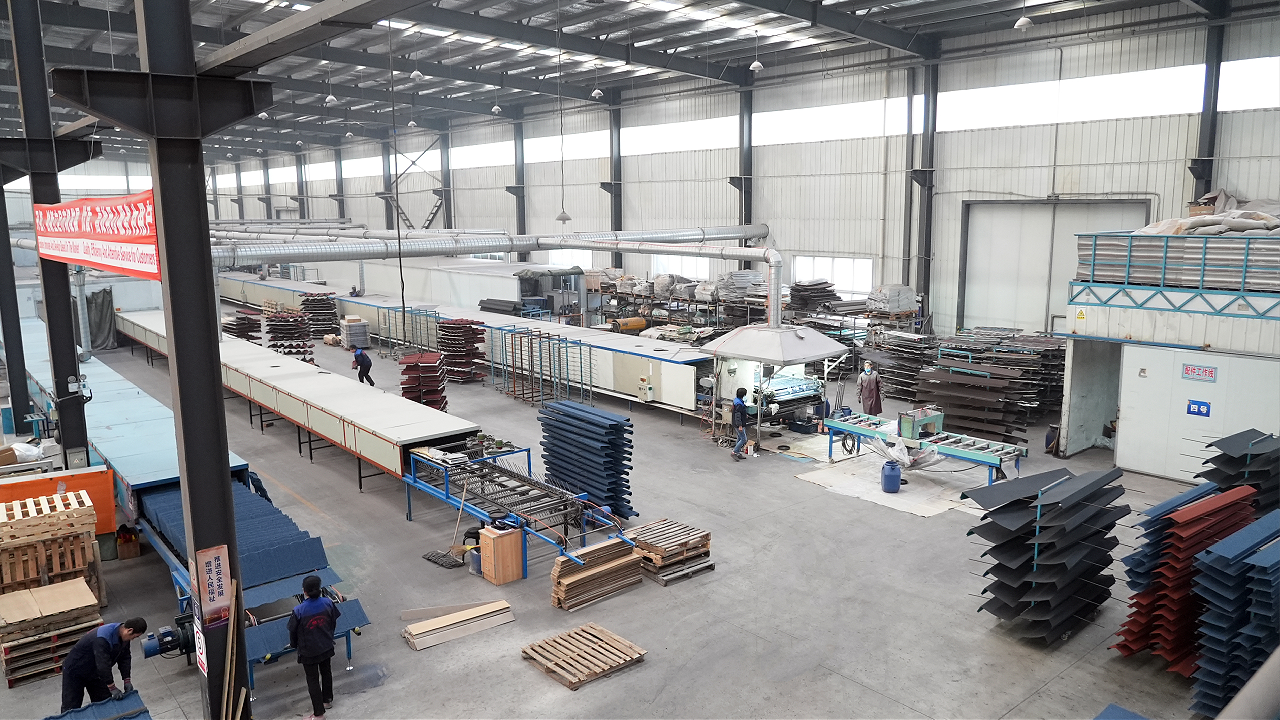
Have Questions or Need More Details?
Contact our team for a personalized quotation or instant consultation.
Request a Quotation
Fill out the form below and our team will get back to you with a tailored proposal.
WhatsApp Direct Chat
Prefer to chat in real-time? Message us on WhatsApp for instant assistance & quick answers.
- Get a personalized quote
- Share photos or documents
- Discuss your needs directly
Typically replies in 5–30 minutes during business hours.