
Stone Coated Metal Roofing Explained: Steel Core, Stone Surface and Lightweight Benefits
Stone coated metal roofing is a pitched-roof tile made from a galvalume steel core, an acrylic resin bonding layer, high-temperature sintered natural stone granules, and a transparent acrylic top coat. On a roof it reads as clay or concrete, but it carries far less dead load: CAILIN's published tile data puts the finished product at approximately 6–8 kg/m².
This explainer is written for buyers and specifiers who are already evaluating the category and need to understand what the product physically is, why the weight figure matters to the structure below it, and which performance numbers are worth asking a supplier to document. It is a construction and performance explainer, not a supplier ranking.
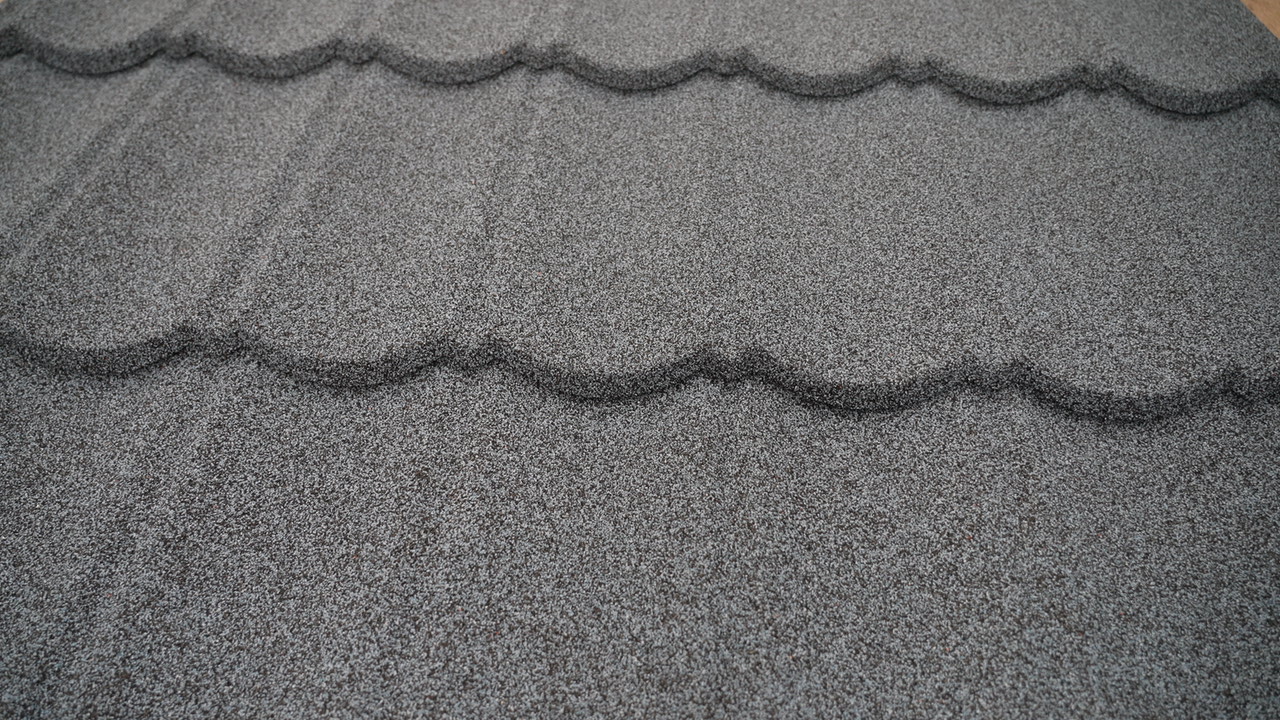
Stone coated metal tiles combine a steel core with a sintered stone granule surface, producing a tile appearance at metal weight.
The Problem: “Stone Coated” Is a Materials Claim, Not a Specification
The phrase “stone coated metal roofing” tells you a tile has granules on steel. It does not tell you the steel gauge, the coating designation on the steel, the granule bonding method, the mass per square metre, or the test basis behind a wind or corrosion claim. Two quotations using the same three words can describe very different products.
Three gaps cause most evaluation errors:
- Construction gap. Buyers see a textured surface and assume a stone granule layer, when a painted metal tile can look similar at a distance but behaves differently under UV and abrasion.
- Weight gap. “Lightweight” is used loosely. Without a number in kg/m² or lb/ft², the buyer cannot judge whether a renovation can be overlaid or whether truss spacing must change.
- Evidence gap. A claim of hurricane performance or anti-corrosion resistance is only useful if it comes with the assembly, test duration and applicable standard behind it.
The practical task, then, is to convert a category word into a checkable bill of materials. The sections below do that layer by layer.
Industry Background: A Category That Sits Between Metal and Tile
Stone coated metal roofing occupies the space between two established product families. It borrows structural logic from metal roofing — a thin steel sheet spanning between supports — and appearance logic from tile roofing, where the visible surface defines the architecture of a pitched roof.
Independent market research places the category at a substantial scale. Market Research Future estimated the global stone-coated steel roofing market at USD 69.41 billion in 2024, with a projected compound annual growth rate of 12.11% across 2025–2035. Buyers should note that published market-size figures for this category differ substantially depending on whether a report counts installed system value or material manufacturing output; a separate industry article cited a materially lower figure. The variance is a definition issue, not a contradiction in demand direction, and it is a reminder to read any market number together with its methodology.
What matters more at the evaluation stage is the physical reason the category exists: it allows a pitched roof to be built or renovated with tile geometry while keeping the roof covering light enough to avoid heavy structural allowance. That single property drives most of the product’s use in residential villas, coastal construction and roof retrofits.
The Four Layers of a Stone Coated Metal Roof
A stone coated metal tile is a layered composite. Each layer has a job, and each can be specified separately.
Layer 1 — The Galvalume Steel Core
The structural layer is galvalume steel with an AZ150 coating designation. Base steel thickness in CAILIN’s stone coated metal roofing range runs from 0.4 mm to 0.6 mm, with 0.45 mm, 0.5 mm and 0.55 mm offered as standard options. This is the layer that resists wind uplift, carries foot traffic during installation, and defines how the tile behaves at the fixing points. Thicker steel costs more and weighs slightly more; it also raises the ceiling on wind uplift performance, which is why gauge should be selected against the wind zone rather than chosen by habit.
Layer 2 — The Acrylic Resin Bonding Layer
Between steel and stone sits an acrylic resin coating. Its function is twofold: it bonds the granule layer to the steel, and it forms part of the corrosion barrier on the weathering face. A granule layer that is not properly bonded shows up as surface loss — in gutters, at cut edges and along walkways — long before any structural issue appears.
Layer 3 — High-Temperature Sintered Natural Stone Granules
The visible surface is natural stone granule that has been sintered at high temperature before application. This layer supplies the colour, the texture that reads as tile from ground level, and most of the UV stability and abrasion resistance of the finished roof. CAILIN offers more than 10 standard granule colours with custom colour available, which matters on renovation projects where the new roof must sit next to an existing facade.
Layer 4 — The Transparent Acrylic Top Coat
A clear acrylic top coat seals the granule surface. Its contribution is less visible but practical: it reduces granule loss during handling and installation and limits dirt pickup, which is what keeps a light-coloured roof from greying prematurely in polluted or coastal air.
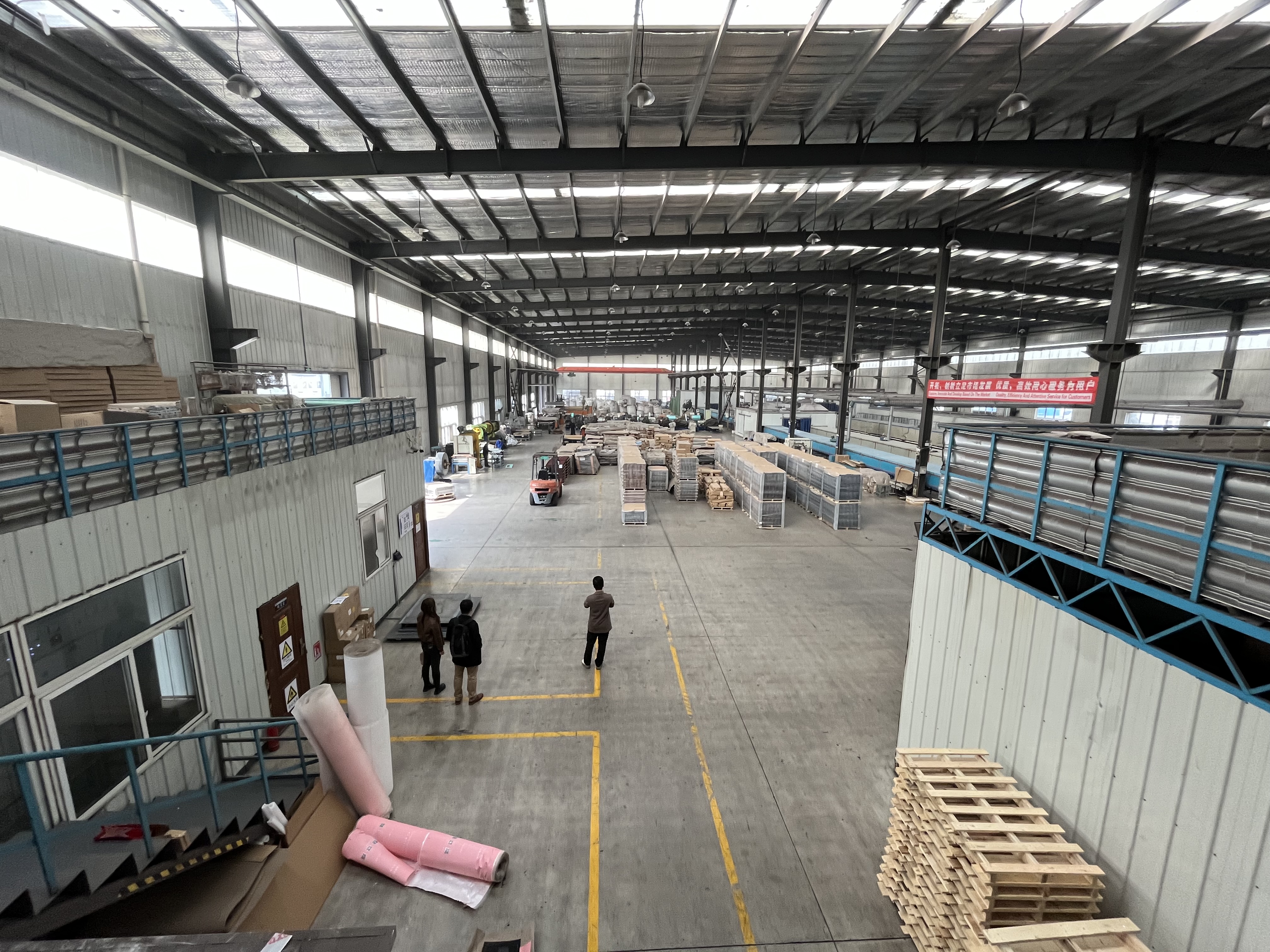
Layered production: the steel core is coated, granulated and top-coated on controlled lines before the tile is profiled.
Tile Geometry and Mass
The finished tile measures 1340 mm × 420 mm and covers 1260 mm × 370 mm once lapped. That difference between nominal size and effective coverage is one of the most common sources of quantity error in wholesale stone coated roofing orders — a buyer who calculates from 1340 × 420 mm will under-order. Finished mass is approximately 6–8 kg/m².
Why Lightweight Matters: Steel Core Mass vs Clay and Concrete
The clearest way to understand the lightweight advantage is to compare installed mass per unit area. A 2026 industry comparison of stone coated metal against traditional tile reports the following figures per square foot:
| Roof covering | Reported installed weight | Practical consequence |
|---|---|---|
| Stone coated metal tile | 1.1–1.8 lb/ft² | Reduced dead load; tiles can be carried and positioned by hand |
| Clay tile | 9–12 lb/ft² | Requires a heavier structural allowance |
| Concrete tile | 8–12 lb/ft² | Requires a heavier structural allowance |
Source: third-party 2026 comparison of stone coated metal, clay and concrete tile; weights as published by the comparison and not independently re-tested here. CAILIN’s own tile data expresses finished mass as approximately 6–8 kg/m².
The comparison is consistent with the category’s design intent: stone coated metal is described in that same comparison as roughly 85% lighter than typical clay and concrete installations. Four consequences follow, and each is a genuine evaluation criterion rather than a marketing line.
1. Lower Substructure Demand
Dead load is what the roof structure must carry permanently. A lighter covering gives the designer room — either to keep the existing structure unchanged in a renovation, or to avoid over-designing a new frame. On steel frame buildings this is often the deciding factor between a tile appearance and a metal reality.
2. Easier and Faster Installation
Tiles that weigh a few kilograms per square metre can be passed up and positioned by installers without mechanical lifting. In CAILIN’s U.S. residential project experience, “lightweight” and “easy installation” were recorded alongside the durability and wind-resistance outcomes of a 700-unit pitched roof installation.
3. Retrofit Over Existing Tiles
Because the added load is small, stone coated metal tiles can be installed directly over old tiles in retrofit projects — a documented application for this product. That is rarely practical with a second layer of clay or concrete.
4. Handling and Freight Economics
Lower mass per square metre means fewer kilograms moved per square metre of finished roof, from the factory crate to the ridge. For wholesale stone coated roofing buyers shipping in volume, that changes crate handling and site logistics well before it changes the invoice.
The limitation worth stating plainly: lightweight is not the same as flimsy, and it is also not the same as automatically wind-safe. Uplift performance comes from the combination of steel gauge, lap geometry, fixing pattern and edge detailing. A light roof is less forgiving of poor installation than a heavy one, so fastener specification and installer competence belong in the same conversation as the weight figure.
Performance Evidence: Cooling, Salt Spray, Wind Uplift and Noise
Four performance claims come up repeatedly in evaluation, and each should be read with its basis attached.
Reflective Cooling and Attic Temperature
On energy saving stone coated metal roofing, product performance data indicates a reflective cooling effect that reduces attic temperature by 8–12 °C. The mechanism is straightforward: the granule surface reflects a share of solar radiation rather than absorbing it into the deck, and a ventilated attic then carries the residual heat out. The practical value is a cooler ceiling plane and less heat gain into the rooms below — and it is the reason light granule colours are often specified in hot climates.
Corrosion Resistance
CAILIN’s stone coated metal roofing is tested to a 500-hour salt spray regime. Salt spray duration is a useful screening number for coastal anti-corrosion roofing, because it compresses years of chloride exposure into a short laboratory window. Buyers specifying near the coast should ask for the report itself, not only the number, and should look at how cut edges and fixing points are protected, since those are where corrosion usually starts.
Wind Uplift Resistance
Wind uplift resistance is stated at up to 160 mph. For context, a third-party industry comparison cites maximum wind ratings of 120–160 mph for stone coated metal systems, referencing UL Class 4 and Miami-Dade NOA as qualification frameworks in the U.S. market. Two cautions apply. First, uplift is an assembly property — the same tile fixed differently can produce different results. Second, coastal hurricane roofing specifications usually require project-level documentation, so the manufacturer’s test report should match the profile and fixing pattern actually being supplied.
Acoustic Performance
Low noise metal roofing is a real category, and the reference point matters. The 70% noise reduction figure for stone coated metal applies against a bare metal roof, not against clay or concrete. That distinction is the whole value of the granule layer and the air gap it creates: it takes the metallic ring out of rain noise. Buyers who need a quiet roof under bedrooms should still specify the assembly as a whole, including the substrate.
Roof Geometry Accepted
Pitched roof metal tiles in this range are applicable on slopes from 12° to 90°. Below 12°, water shedding becomes the governing design issue and a different system should be considered.
Step-by-Step: Specifying and Installing the Correct Assembly
- Confirm the roof slope and existing substrate. Verify the pitch falls between 12° and 90°. For renovation, confirm whether the old tile can remain in place for a direct overlay, which the product supports.
- Select steel thickness against the wind zone. Choose from 0.4–0.6 mm, with 0.45 mm, 0.5 mm and 0.55 mm as standard options. Higher wind exposure and coastal hurricane conditions justify the thicker end of the range.
- Calculate quantity from effective coverage. Use 1260 mm × 370 mm per tile, not the nominal 1340 mm × 420 mm. Add an allowance for hips, ridges, valleys and wastage at penetrations.
- Fix the appearance and profile before production. Confirm granule colour (more than 10 standards, custom available) and the tile profile from the available series — Shingle, Shake, Milano, Bond, Classical, Roman, Long-Span, Golan, Tudor, Heritage, or Interlocking Shingle and Shake.
- Install from eave to ridge with correct laps. Work upward in courses, maintaining the lap that the profile was tested with, and detail ridges, valleys, verges and penetrations as separate items. CAILIN supplies a technical installation guide and video support, and offers 24-hour response on technical questions.
- Inspect before handover. Check lap alignment, granule condition, fixing pattern and the completed edge details. On the supply side, the production model includes 100% inspection, pre-shipment random sampling, and third-party inspection on request.
Where Stone Coated Metal Roofing Fits: Use Cases
- Villas and residential homes. The primary application, where a tile appearance is required on a pitched roof and the structure is designed or retained for a light covering.
- Coastal anti-corrosion roofing. Supported by the 500-hour salt spray regime and a galvalume AZ150 core; suited to buildings where chloride exposure shortens the life of unprotected metal.
- Retrofit projects. Tiles can be installed directly over old tiles, avoiding removal and disposal of the existing roof covering.
- Low-noise residential roofs. The granule layer and its 70% reduction against bare metal make the product viable where rain noise is a client objection.
- Hot-climate and energy-conscious builds. Reflective cooling with an 8–12 °C attic temperature reduction supports the case for energy saving stone coated metal roofing.
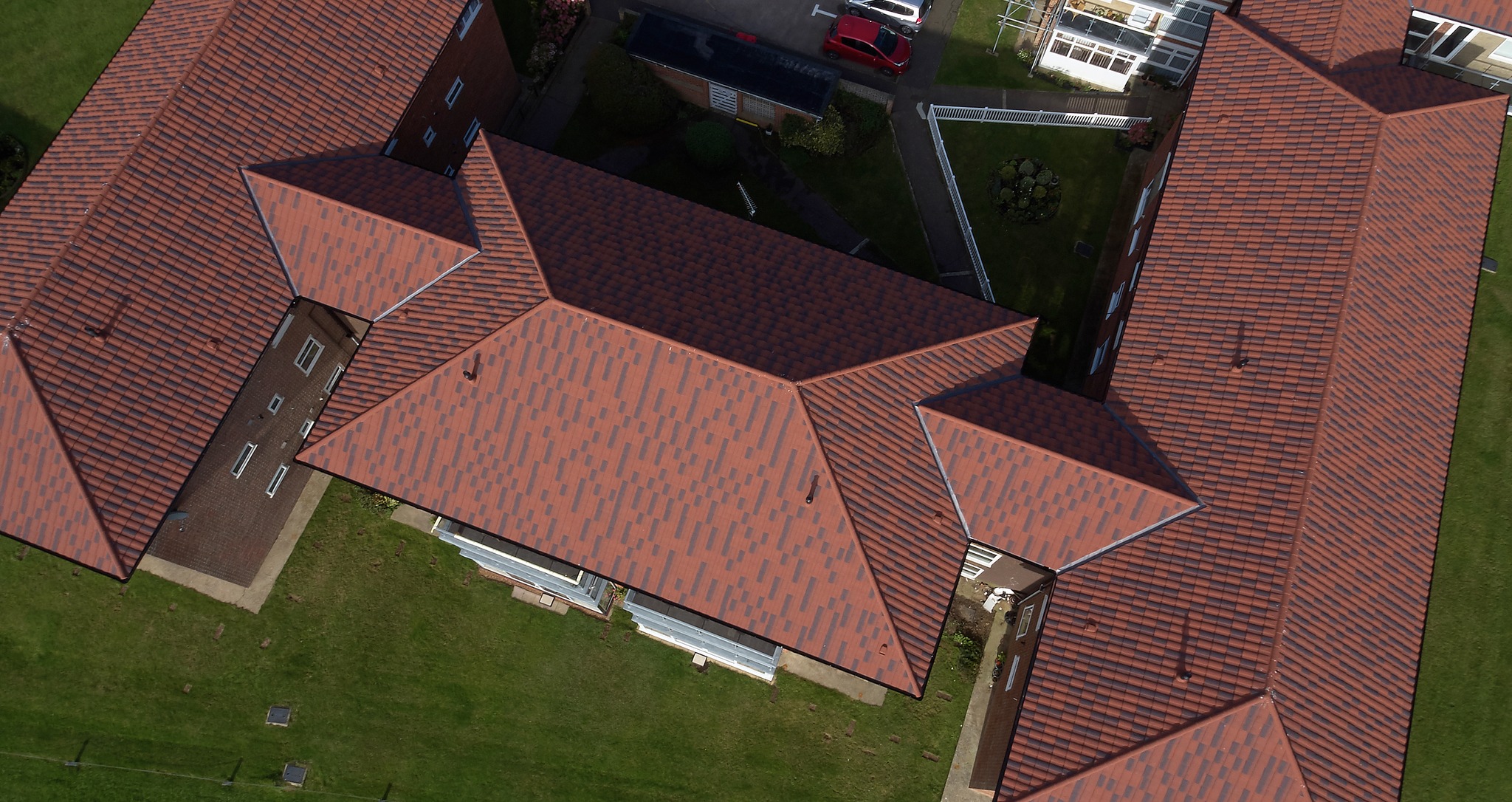
U.S. residential case: 700 units of stone coated metal tile installed on a pitched roof, with energy saving, wind resistance and noise reduction recorded as project outcomes.
A U.S. residential project recorded in CAILIN’s case data installed 700 units of stone coated metal roofing on a pitched roof, with an expected service duration of 30–50 years. The recorded outcomes were energy saving and eco-friendliness, hurricane and wind resistance, and noise reduction; the recorded highlights were the lightweight construction, 50+ year durability and low maintenance, and ease of installation. That combination is the clearest summary of what the product is for: tile appearance, metal weight, and documented performance rather than assumed performance.
Reference Specification and Comparison
The table below consolidates the specification values a buyer should be able to obtain in writing before an order is confirmed.
| Property | Reference value (stone coated metal roofing) |
|---|---|
| Base steel | Galvalume steel, AZ150 coating designation |
| Steel thickness | 0.4–0.6 mm (0.45 / 0.5 / 0.55 mm standard options) |
| Surface build | Acrylic resin + high-temperature sintered natural stone granules + transparent acrylic top coat |
| Tile size / coverage | 1340 mm × 420 mm / 1260 mm × 370 mm |
| Finished mass | Approximately 6–8 kg/m² |
| Wind uplift resistance | Up to 160 mph |
| Corrosion test | 500-hour salt spray |
| Acoustic insulation | 70% noise reduction versus bare metal roof |
| Applicable slope | 12° to 90° |
| Management systems | ISO 9001:2015, ISO 14001:2015, ISO 45001:2018 (WSF, valid to 12 May 2027) |
FAQ
What certifications should a stone coated metal roofing supplier be able to show?
A supplier should be able to produce certificate numbers, issuing body, scope and expiry date, not only a logo. Sango Cailin (Tianjin) Building Tech. Co., Ltd. holds ISO 9001:2015 (ISO 9001:2015-03824Q14379R2S), ISO 14001:2015 (ISO 14001:2015-03824E14377R2S) and ISO 45001:2018 (ISO 45001:2018-03824S14378R1S), issued by Beijing World Standards for Certification Center and valid from 13 May 2024 to 12 May 2027, with a scope covering the production of stone coated metal roofing tiles. Alongside management-system certificates, ask for the 500-hour salt spray result and the wind uplift report for the specific profile and fixing pattern being quoted.
How do you build a shortlist of top stone coated metal roofing manufacturers?
Screen on verifiable criteria rather than on claims. Four checks separate suppliers quickly: whether the certificate numbers and validity dates can be confirmed; whether the factory publishes a stated production capacity — CAILIN reports 500,000 units per month and 6,000,000 units per year from a 15,000 m² facility; whether the profile and granule colour range covers the project (more than 10 standard colours, with the full tile series available); and whether the supplier can state a lead time and quality-control routine in concrete terms, such as 7–10 days with 100% inspection and pre-shipment sampling. A supplier that answers all four in writing belongs on the shortlist.
What drives the lifetime cost of stone coated metal roofing?
Stone coated roofing lifetime cost is driven more by what the roof does not require than by the tile price itself. Because the finished covering weighs approximately 6–8 kg/m² against 9–12 lb/ft² for clay tile and 8–12 lb/ft² for concrete tile, structural reinforcement is reduced, handling and installation are lighter, and a retrofit can often overlay the existing roof instead of stripping it. The maintenance profile is correspondingly simple: the granule surface and clear acrylic top coat are designed to hold colour and resist dirt, and a 50-year limited warranty term applies to the product range. The main cost risk to control is installation quality, since uplift and detailing performance depend on it.
Can buyers request samples before committing to an order?
Yes. Sample and colour verification is a normal step, and it is the right way to confirm granule colour against a facade, check steel thickness, and inspect granule bonding at the cut edge. CAILIN accepts orders from 2 units, so a sample request and a small trial order use the same channel: email info@sangocailin.com or message +86 131-6400-7633 on WhatsApp with the profile, colour and steel thickness you want to test.
What lead time and order size should a wholesale buyer expect?
CAILIN quotes a 7–10 day lead time with a minimum order of 2 units and monthly capacity of 500,000 units, which allows both sample-level and container-level orders to run through the same production schedule. OEM, ODM and customized production are supported, including profile selection, granule colour, steel thickness, packaging design (neutral or branded) and logo printing. The fastest way to get a firm date and a quotation is to send the roof area in m², the profile and colour, the steel thickness, and the destination port to info@sangocailin.com or via WhatsApp on +86 131-6400-7633 — a technical review of the specification usually comes back within 24 hours.
Conclusion: Judge the Layers, Then the Numbers
Stone coated metal roofing is best understood as a four-layer composite rather than a style of tile. The galvalume steel core at 0.4–0.6 mm carries the structural duty; the acrylic resin bonds and protects; the sintered stone granules supply colour, texture and UV stability; and the clear top coat keeps the surface intact. Those layers, not the marketing name, determine how the roof performs.
The lightweight argument then becomes measurable rather than rhetorical: roughly 6–8 kg/m² finished mass, against published comparisons of 9–12 lb/ft² for clay and 8–12 lb/ft² for concrete. That difference is what makes overlay retrofits, lighter substructures and hand-carried installation realistic. The performance claims — 8–12 °C attic temperature reduction, 500-hour salt spray, wind uplift up to 160 mph, and 70% noise reduction against bare metal — are the numbers to request documentation for, profile by profile.
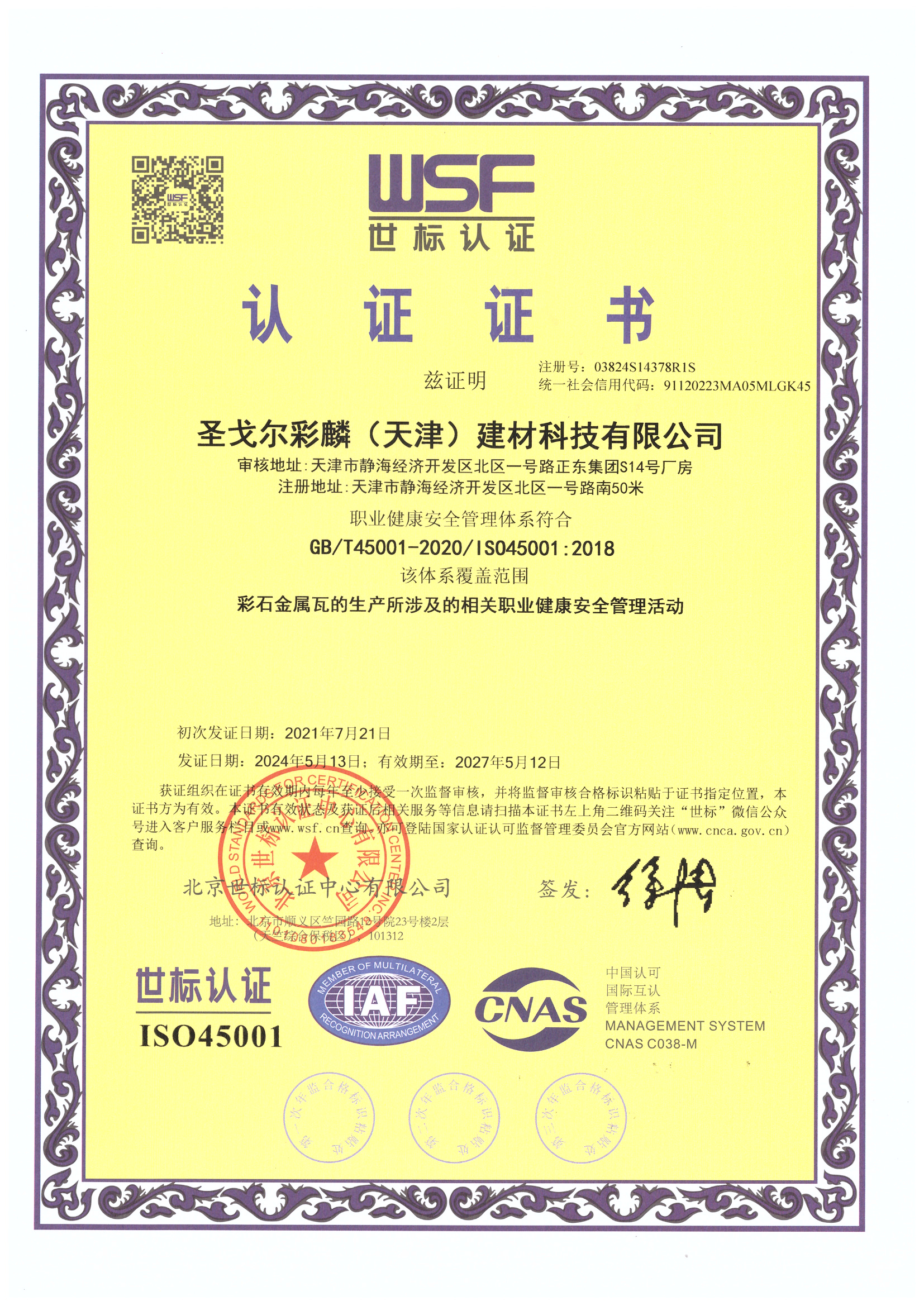
Management-system certification with verifiable certificate numbers supports supplier qualification alongside product test data.
Next Step: Verify the Specification Against Your Project
If you are specifying a pitched roof, a coastal build or a retrofit, the useful next action is a specification check rather than a brochure request. Send the roof area, slope, wind exposure, preferred profile and colour, and destination port to info@sangocailin.com or WhatsApp +86 131-6400-7633. Samples can be arranged from a 2-unit minimum, with a 7–10 day lead time on production orders.
Sango Cailin (Tianjin) Building Tech. Co., Ltd. — 50 Meters South Of No. 1 Road, North Zone, Jinghai Economic Development Zone, Tianjin, China. Website: www.cailinroofing.com. Full product data, profiles and colour options are in the CAILIN product catalogue (PDF).
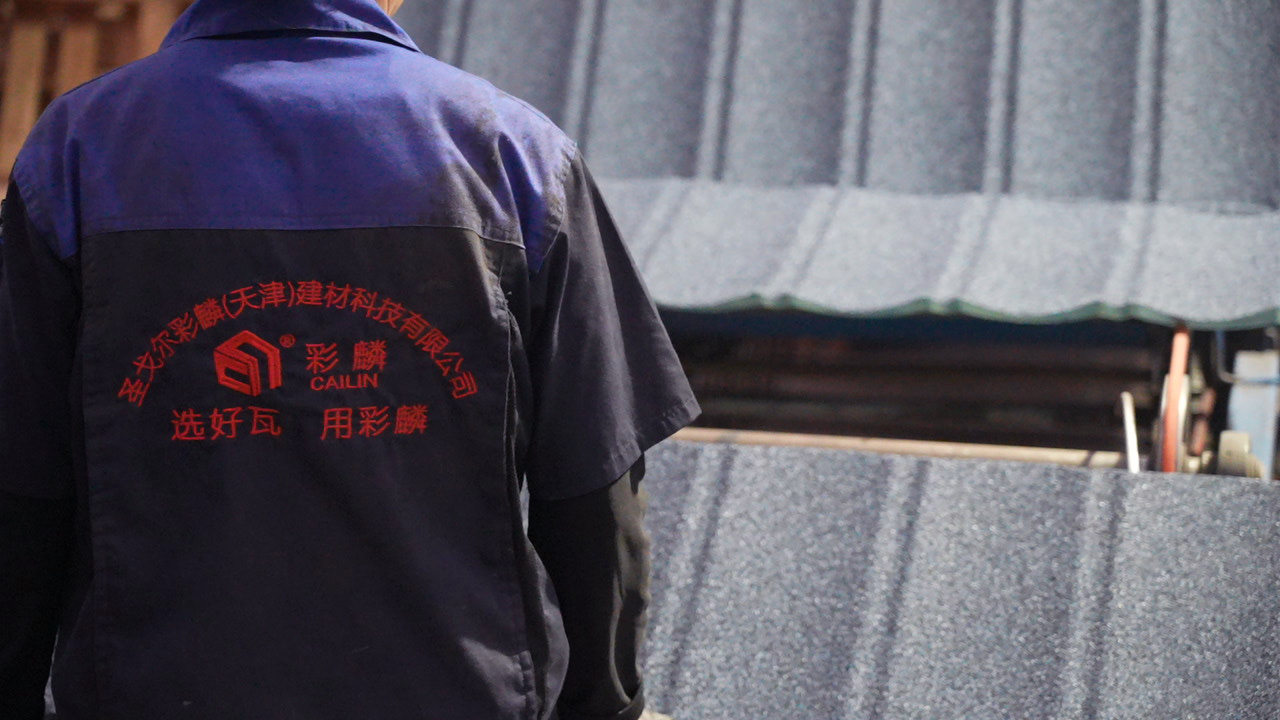
Profile and colour confirmation at sample stage prevents mismatch at production stage.
Have Questions or Need More Details?
Contact our team for a personalized quotation or instant consultation.
Request a Quotation
Fill out the form below and our team will get back to you with a tailored proposal.
WhatsApp Direct Chat
Prefer to chat in real-time? Message us on WhatsApp for instant assistance & quick answers.
- Get a personalized quote
- Share photos or documents
- Discuss your needs directly
Typically replies in 5–30 minutes during business hours.