
Why 4.5 kg/m² Matters: Explaining the Lightweight Physics of Stone Coated Metal Roofing
Stone coated metal roofing weighs roughly 4.5 kg per square metre at the lightweight end of its published range. That is five to ten times less than traditional clay or concrete tiles covering the same area — and it is the one property that quietly drives freight cost, installation effort, structural design and retrofit feasibility on a pitched roof.
Published third-party specification guides place stone-coated steel tiles between 3.2 kg/m² and 6.7 kg/m² depending on steel thickness. CAILIN's own product data records approximately 5–8 kg/m² across a 0.4 mm to 0.6 mm base steel range. A lightweight profile therefore sits close to 4.5 kg/m², while a heavier build-up moves toward the top of the band.
This explainer breaks down what that number actually does. It covers the physics of dead load on pitched roofs, five downstream effects of lower mass, a verification sequence for buyers, and how the figure converts into an OEM specification at Sango Cailin (Tianjin) Building Tech. Co., Ltd., a Chinese roofing manufacturer certified to ISO 9001, ISO 14001 and ISO 45001.
Why Roof Weight Is a Structural Variable, Not a Style Choice
Roof weight is permanent dead load. On a pitched roof, every square metre of covering is carried by battens, purlins, rafters or trusses, and then transferred through walls into the foundation. The heavier the covering, the more material and engineering the load path requires — including in parts of the building that the buyer never sees.
Most sourcing conversations still open on colour, profile and price per tile. Weight only enters the discussion once a project hits one of four constraints:
- Freight. Export shipments are billed and limited by mass, so the covering's weight per square metre becomes a line item.
- Handling. Every tile has to be lifted, carried and positioned on a slope.
- Structure. An existing frame may not have reserve capacity for a heavier covering.
- Retrofit. Re-roofing over an existing layer only works if the structure can carry the combined load.
Two boundaries are worth stating at the outset. Low weight does not equal low strength: wind performance comes from steel thickness, profile interlock and fixing pattern, not from mass. And low weight does not automatically mean a noisy roof: acoustic behaviour is a function of the roof build-up, which is why sintered stone granules sit on top of the steel in the first place.
What Stone Coated Metal Roofing Is Made Of — and Where 4.5 kg/m² Comes From
Stone coated metal roofing is a profiled steel sheet carrying a mineral surface. CAILIN builds it on a galvalume (AZ150) steel base between 0.4 mm and 0.6 mm thick, coated with acrylic resin bonded to high-temperature sintered natural stone granules and sealed with a transparent acrylic top coat. Roofing of this type typically conforms to ASTM A792/A792M, the standard specifying 55% aluminium-zinc alloy-coated steel (Aluzinc) as the substrate (ICC Evaluation Service, ESR-2901).
Because the structural core is a steel sheet rather than fired clay or cast concrete, mass per square metre follows two variables: base steel thickness and the granule layer. Reduce the steel from 0.6 mm to 0.4 mm and the finished tile moves to the lower end of the published range.
Published weight references for stone coated metal roofing
- Third-party specification guide: 3.2–6.7 kg/m², thickness dependent — which is why a lightweight profile lands near 4.5 kg/m².
- CAILIN product data: approximately 5–8 kg/m² for Cailin Interlocking Shingle and Interlocking Shake, and 6–8 kg/m² across the wider Cailin series on 0.4–0.6 mm base steel.
- Relative comparison: stone-coated steel roofing is five to ten times lighter than traditional concrete or clay tiles for the same covered area.
This is no longer a niche category. One industry analysis covering 2025–2033 estimates the global stone-coated steel roofing market at USD 20.71 billion in 2024, reaching USD 32.69 billion by 2033, with named international players including DECRA Roofing Systems, Ross Roof Group, Boral Steel and Tilcor. Market size, however, is not what changes a buyer's decision. Mass is: freight forwarders, installers and structural engineers all cost weight before they cost appearance.
The Physics: What 4.5 kg/m² Means Once It Is on the Roof
The arithmetic is deliberately plain. At 4.5 kg/m², a 100 m² roof surface carries about 450 kg of covering. Apply the five-to-ten-times comparison to the same area and the load moves into the multi-tonne range — mass that has to be supported at every level, lifted onto the roof, and moved from factory to site.
Dead load versus wind uplift
Mass and wind resistance are related but not interchangeable. Heavier coverings resist uplift partly through inertia; lighter coverings must resist it through attachment. A lightweight roof therefore depends on an engineered fixing system rather than on weight. Sango Cailin product data records wind uplift resistance up to 160 mph, while third-party specifications for high-performance Bond Tile profiles list uplift resistance up to 240 psf tested to ASTM E1592, withstanding winds exceeding 200 km/h.
Concealed fastener systems are the usual mechanism. The fixing is placed beneath the overlapping edge of the tile, so the load path stays continuous across the roof surface while the visible face remains clean. That detail matters in coastal work, where an exposed fastener is also an exposed corrosion point.
Mass versus acoustics
Metal roofs have a reputation for noise, and low-mass systems can earn it. Stone granules change the calculation: CAILIN's product data records 70% noise reduction compared with a bare metal roof. In a United States residential project using 700 units of stone coated metal roofing on a pitched roof, noise reduction was recorded as a project outcome alongside hurricane and wind resistance and energy savings.
The Five Downstream Effects of a Lighter Roof
1. Lower transportation cost
Every kilogram removed per square metre is a kilogram that no longer has to be paid for, loaded or secured. In export programmes — CAILIN supplies markets including the USA, Canada and Southeast Asia, with exports representing around 25% of output — lighter tile weight per square metre means more covered roof area inside the same shipment mass, plus simpler handling at the port and on site. Because FOB and EXW terms are quoted against real weight and volume, the effect appears in the delivered cost per square metre rather than in the price list.
2. Easier installation
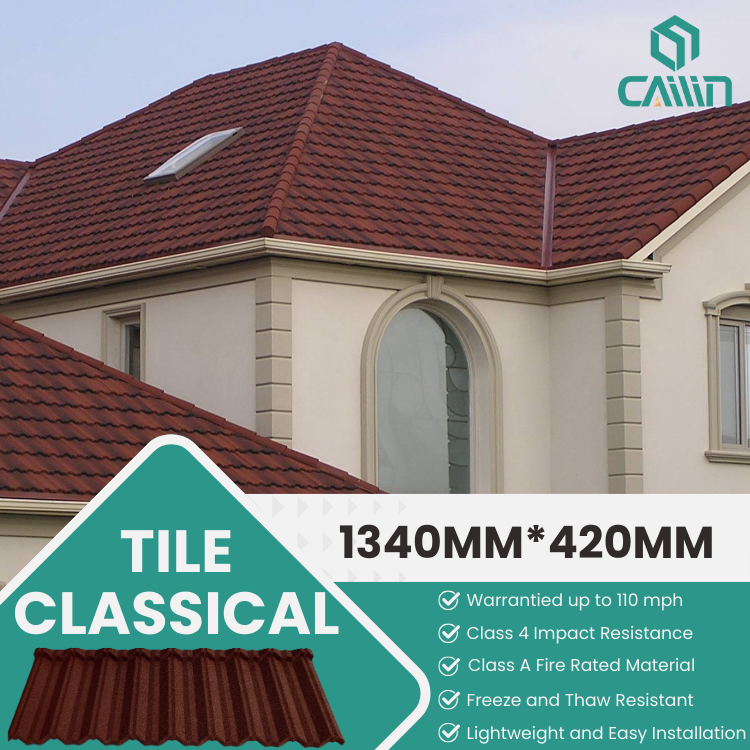
Installation effort scales with weight. A Cailin tile measures 1340 mm × 420 mm with an effective covering area of 1260 mm × 370 mm, so a single piece weighs only a few kilograms and can be carried, positioned and fixed by one worker. Pitched roofs with slopes from 12° to 90° are within the standard application range, and easy installation with low maintenance is one of the characteristics recorded in real project use.
3. Less structural reinforcement
A lighter covering reduces the dead load the frame has to carry, and that is usually where the reinforcement question is settled. In many projects it means an existing structure can accept the new roof without added members; in new construction it can lower the demand on purlins and trusses. Roofing weight is only one input, though: wind, snow and seismic requirements still govern the structural design, and the final decision belongs to the project engineer.
4. Retrofit without stripping the old roof
Retrofit is where weight becomes a go/no-go question. CAILIN stone coated metal roofing can be installed directly over old tiles, provided the existing structure can carry the combined load and the pitch remains between 12° and 90°. Adding a few kilograms per square metre is a different conversation from adding tens of kilograms, and it decides whether a renovation needs structural work or simply a new covering.
5. Thermal behaviour and energy
Weight does not save energy; the coated steel surface influences heat. Metal roofing can reflect heat away from a building, and one competitor-published compilation, DECRA's 2024 Roofing Trends Recap, reports potential cooling-energy savings of up to 40%. The US residential project referenced earlier recorded energy saving and eco-friendliness among its outcomes. Figures of this kind are source-attributed indications rather than guaranteed performance — results depend on climate, insulation and the full roof build-up.
How to Verify the Weight Claim Before You Commit to a Specification
A supplier's weight figure is only useful if it can be checked. The sequence below is what a careful buyer should run through before signing a wholesale or OEM order.
- Ask for mass per square metre at a stated steel thickness. Weight is meaningless without thickness: a 0.4 mm base and a 0.6 mm base do not weigh the same. Request the figure for the exact thickness you intend to buy — CAILIN's customizable options include 0.45 mm, 0.5 mm and 0.55 mm.
- Confirm the base steel standard. Stone-coated steel roofing is typically built on 55% aluminium-zinc (Aluzinc) coated steel to ASTM A792/A792M (ICC-ES ESR-2901). Ask for the coating designation; CAILIN uses AZ150 galvalume.
- Check whether the number is quoted on nominal or covered area. A Cailin tile is 1340 mm × 420 mm nominal but covers 1260 mm × 370 mm. Weight per square metre should be based on covered roof area, not on the tile blank.
- Weigh a physical sample. Datasheet numbers and scale numbers should agree. CAILIN's order terms allow a minimum order quantity starting at 1 unit, and sample retention forms part of the acceptance criteria, so a trial tile can be kept on file for comparison.
- Verify uplift resistance and fixing method together. Request the wind uplift rating alongside the concealed fastener layout. CAILIN data records up to 160 mph; third-party specs for high-performance Bond Tile profiles list 240 psf to ASTM E1592 and winds above 200 km/h.
- Check corrosion and acoustic evidence. A lightweight tile on a coastal building lives or dies by its coating. CAILIN product data records 500-hour salt spray corrosion resistance and 70% noise reduction versus a bare metal roof.
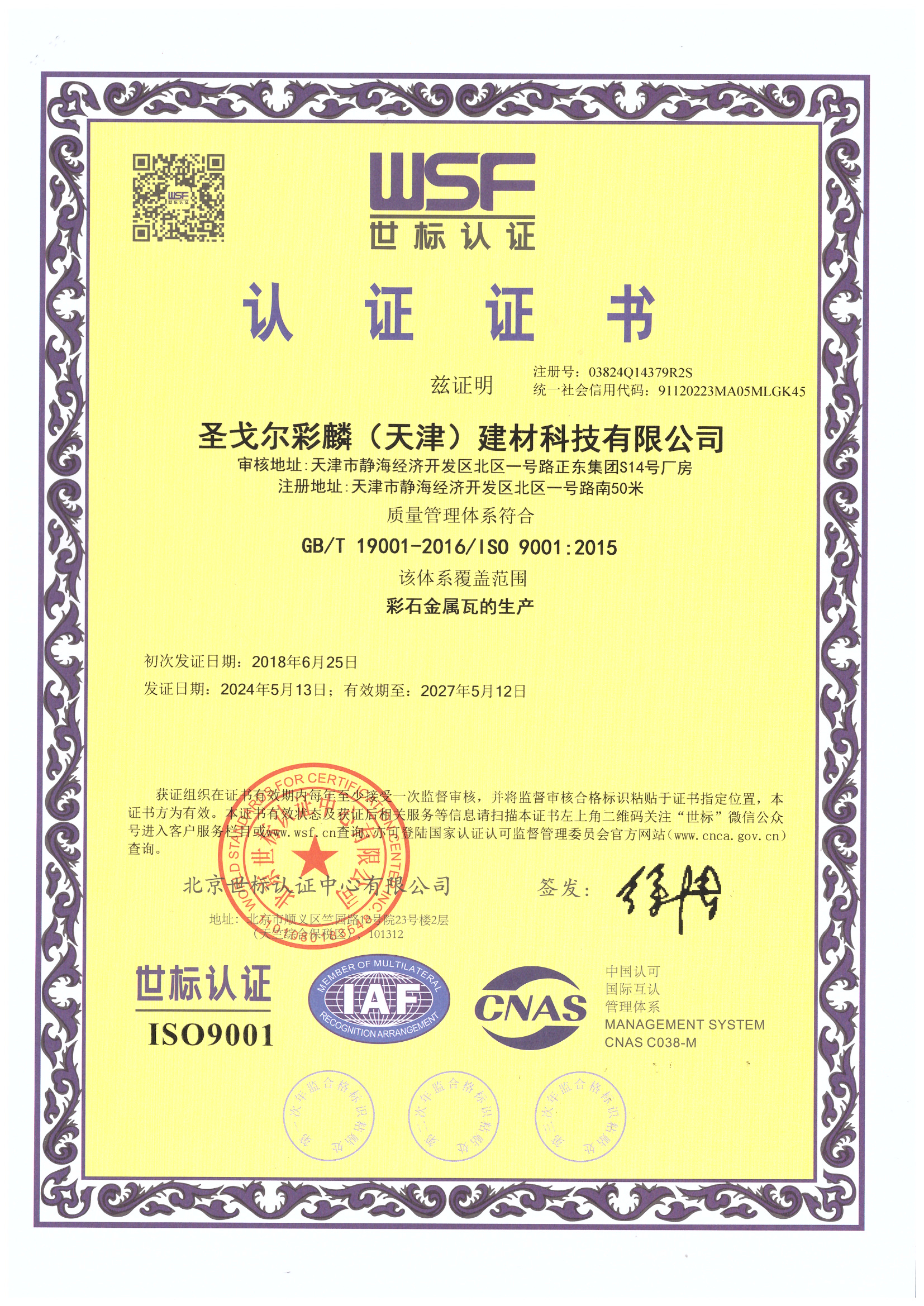
- Audit the factory and the paperwork. Sango Cailin holds ISO 9001:2015 (certificate 03824Q14379R2S), ISO 14001:2015 (03824E14377R2S) and ISO 45001:2018 (03824S14378R1S), issued by Beijing World Standards for Certification Center (WSF) and valid until 12 May 2027 under the CNAS-IAF mutual recognition arrangement. Production runs 100% inspection, with pre-shipment random sampling and third-party inspection available.
- Lock the commercial terms. Confirm the delivery basis (FOB Tianjin or EXW), the payment structure (30% T/T deposit on order confirmation, 70% balance before shipment), the 7–10 day lead time and the 500,000-unit monthly capacity before committing volume.
Where the Weight Advantage Decides the Project
Coastal and hurricane-zone roofing
In coastal work three requirements collide: wind uplift, salt-driven corrosion and the mass of the covering. Lower tile weight reduces what the structure carries, concealed fasteners address uplift at the fixing point, and CAILIN product data records 500-hour salt spray corrosion resistance as the coating benchmark for anti-corrosion exteriors.
Retrofit and renovation on steel frame buildings
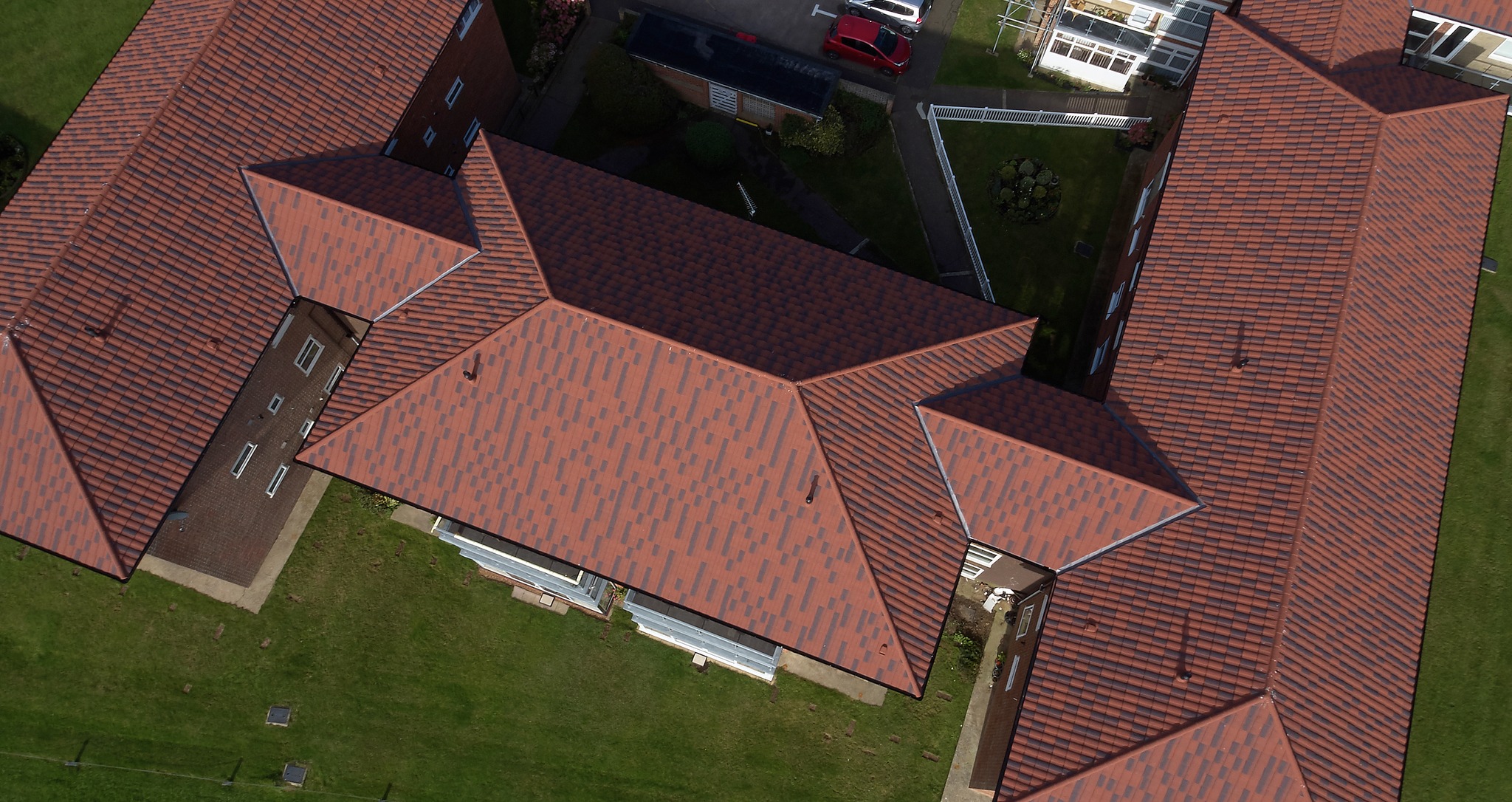
Older buildings on steel frames rarely have spare structural capacity. Because stone coated metal roofing can be installed directly over old tiles within the 12°–90° pitch range, a renovation can avoid both a full strip-out and the reinforcement work a heavier replacement would trigger.
Residential villas and pitched-roof housing
For single-family housing the benefit spreads across the whole build: fewer workers needed to lift material, faster coverage of the roof plane, and lower freight per square metre. The 700-unit US residential project is a working example of the standard application — pitched roofing, service life recorded in the 30 to 50 year range, lightweight construction, low maintenance and easy installation.
Wholesale and distribution programmes
For wholesalers and importers, lower mass per square metre means more roof coverage per container and easier warehouse handling. OEM and private-label programmes let the same lightweight build-up be supplied under the buyer's own brand, with colour, thickness, profile and packaging specified to the target market.
Weight, Thickness and Durability at a Glance
| Roofing option | Published weight per m² | Relative weight vs. stone-coated steel | Service life reference | Basis |
|---|---|---|---|---|
| Stone coated metal roofing — CAILIN, 0.4–0.6 mm base steel | Approx. 5–8 kg/m² | Baseline | 50-year limited warranty terms; 30–50 years recorded in a US residential project | CAILIN product and project data |
| Stone-coated steel roofing — published third-party range | 3.2–6.7 kg/m², thickness dependent (lightweight end near 4.5 kg/m²) | Baseline | 50+ years | SKW Product Specification Guide |
| Traditional concrete or clay tiles | Not published in cited source | 5–10× heavier | Not published in cited source | SKW Product Specification Guide |
| Asphalt shingles | Not published in cited source | Not published in cited source | Approx. 20 years | RoofGlory durability comparison |
Table notes: only figures available in the cited sources are shown. Where a value is not published by the source, it is left blank rather than estimated. Weight per square metre for stone-coated steel roofing varies with base steel thickness and is quoted on covered roof area.
How the Weight Number Becomes an OEM Specification at Sango Cailin
Sango Cailin (Tianjin) Building Tech. Co., Ltd. manufactures stone coated metal roofing through OEM, ODM and customized production. For a buyer whose priority is mass, the specification conversation covers the following points:
- Steel thickness: 0.45 mm, 0.5 mm or 0.55 mm options inside the 0.4–0.6 mm base range, with weight per square metre following the thickness selected.
- Tile profile: the full Cailin series — Bond Tile, Shingle, Milano, Shake, Classical, Roman, Long-Span, Golan, Tudor, Heritage, plus Interlocking Shingle and Interlocking Shake.
- Stone granule colour: 10+ standard colours, with custom colour available.
- Packaging: neutral or branded design, with logo printing.
- Capacity and lead time: 500,000 units per month and a 7–10 day lead time.
- Quality control: 100% inspection, pre-shipment random sampling, third-party inspection available.
- After-sales: technical installation guide, video and remote support, 24-hour response, and 50-year limited warranty terms.
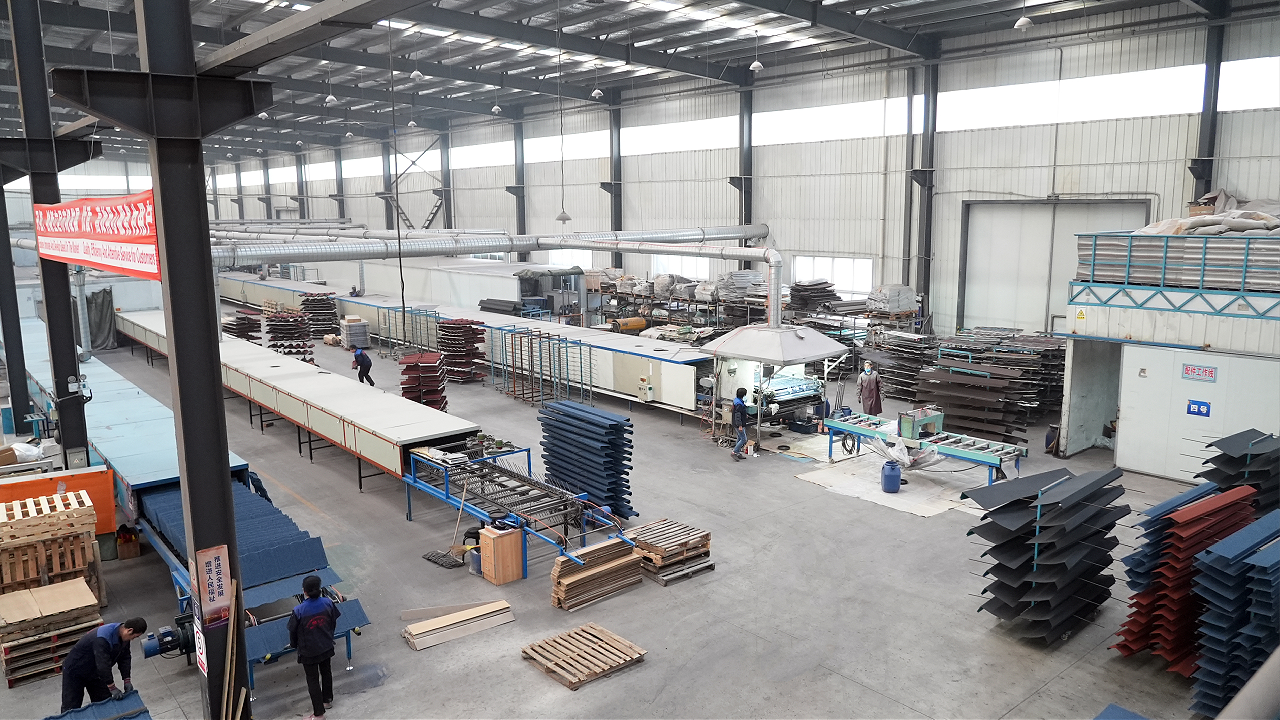
- Manufacturing footprint: production bases including Hangzhou, Sichuan, Shandong and Hebei — seven facilities in total — supported by a 15,000 m² plant and a 10-engineer R&D team.
Frequently Asked Questions
Are Sango Cailin's stone coated metal roofing products certified?
Yes. Sango Cailin (Tianjin) Building Tech. Co., Ltd. holds three management-system certifications covering the production of stone coated metal roofing tiles: ISO 9001:2015 for quality (certificate 03824Q14379R2S), ISO 14001:2015 for environment (03824E14377R2S) and ISO 45001:2018 for occupational health and safety (03824S14378R1S). All three were issued by Beijing World Standards for Certification Center (WSF) on 13 May 2024 and remain valid until 12 May 2027 under the CNAS-IAF mutual recognition arrangement. Production runs 100% inspection, with pre-shipment random sampling and third-party inspection available on request.
Can tile weight and profile be customized on an OEM order?
Yes. CAILIN provides OEM, ODM and customized production. Buyers can specify base steel thickness (0.45 mm, 0.5 mm or 0.55 mm), tile profile across the Cailin series (Bond Tile, Shingle, Milano, Shake, Classical, Roman, Long-Span, Golan, Tudor, Heritage, Interlocking Shingle and Interlocking Shake), stone granule colour from 10+ standard options or a custom match, and packaging design — neutral or branded, with logo printing. Weight per square metre follows the steel thickness selected. Monthly capacity is 500,000 units.
How does a lighter tile affect lifetime cost?
Weight influences lifetime cost through three channels: freight, handling and structure. Lower mass per square metre reduces the shipped and delivered cost of covering a given roof area, reduces the labour required to move tiles onto the roof, and lowers the dead load the structure must support. On the durability side, published comparisons place stone-coated steel roofing at a 50+ year service life against roughly 20 years for asphalt shingles, and CAILIN offers 50-year limited warranty terms. Project-specific pricing should be requested directly, because thickness, profile and destination all change the calculation.
Can I evaluate a sample before placing a wholesale order?
Yes. Minimum order quantity starts at 1 unit under CAILIN's order terms, and sample retention forms part of the acceptance criteria. Pre-shipment inspection can be carried out by CAILIN, by the customer or by a third party, and loading photos or videos are provided before the container is sealed. Weighing a physical sample is the most direct way to confirm a supplier's weight-per-square-metre claim.
What are the lead time and delivery terms for an OEM order?
Lead time is 7–10 days, with delivery on FOB Tianjin or EXW terms. Payment terms are 30% T/T deposit on order confirmation and 70% T/T balance before shipment. Technical installation guides, video support, remote support and 24-hour response are included after delivery. To start a weight-specific specification, or to request a sample and quotation, contact Sango Cailin at info@sangocailin.com or +86 131-6400-7633, or download the company brochure.
Conclusion: Why the Number Is Worth Checking
The 4.5 kg/m² figure is not a headline statistic; it is the physical starting point of every cost and design decision that follows a roof. Published third-party data places stone-coated steel roofing between 3.2 and 6.7 kg/m² depending on steel thickness, and CAILIN's own production range runs approximately 5–8 kg/m² on 0.4–0.6 mm base steel — five to ten times lighter than traditional clay or concrete tiles.
That difference surfaces in freight bills, in how quickly a crew covers a pitched roof, in whether an existing frame needs reinforcement, and in whether a renovation can be carried out over the old tiles. The practical next step is not to accept any of those claims on trust: ask for weight at a stated steel thickness, weigh a sample, check the uplift rating against the fixing method, and verify the certification and inspection record behind the product.
Sango Cailin (Tianjin) Building Tech. Co., Ltd. manufactures stone coated metal roofing for wholesale, OEM and project buyers, with ISO 9001, ISO 14001 and ISO 45001 certification, 100% inspection, and a 7–10 day lead time against a 500,000-unit monthly capacity.
Request a Stone Coated Metal Roofing Sample or Quote
Send your roof area, target steel thickness and destination port. We will confirm the weight per square metre for your specification, along with pricing and lead time.
Email: info@sangocailin.com | Tel / WhatsApp: +86 131-6400-7633 | Website: www.cailinroofing.com
Download the full product catalogue: CAILIN Roofing Brochure (PDF)
Have Questions or Need More Details?
Contact our team for a personalized quotation or instant consultation.
Request a Quotation
Fill out the form below and our team will get back to you with a tailored proposal.
WhatsApp Direct Chat
Prefer to chat in real-time? Message us on WhatsApp for instant assistance & quick answers.
- Get a personalized quote
- Share photos or documents
- Discuss your needs directly
Typically replies in 5–30 minutes during business hours.