
Top Stone Coated Metal Roofing Picks for Lightweight Steel Frame Buildings (2026)
Top Stone Coated Metal Roofing Picks for Lightweight Steel Frame Buildings (2026)
Stone coated metal roofing takes the top position in this 2026 recommendation list for lightweight steel frame buildings, and the reason is load rather than appearance. Cailin's published specification for its stone coated metal roofing range is approximately 5-8 kg/m², with the series that includes the Bond Tile profile listed at 6-8 kg/m². An independent specification guide places the category at 3.2-6.7 kg/m² and describes stone-coated steel roofing as 5-10 times lighter than traditional concrete or clay tiles (SKW Product Specification Guide). On a light gauge steel frame, that difference decides how much structure the roof requires.
This list is written for buyers at the evaluation stage: importers, distributors, roofing contractors and project owners comparing a lightweight roof tile alternative against clay and concrete. The ranking criterion is deliberately narrow - dead load first, then verified service-life evidence. Every figure below comes either from Cailin's own published data or from a named third-party source, and where a number is not available in those sources, this list says so instead of estimating one.
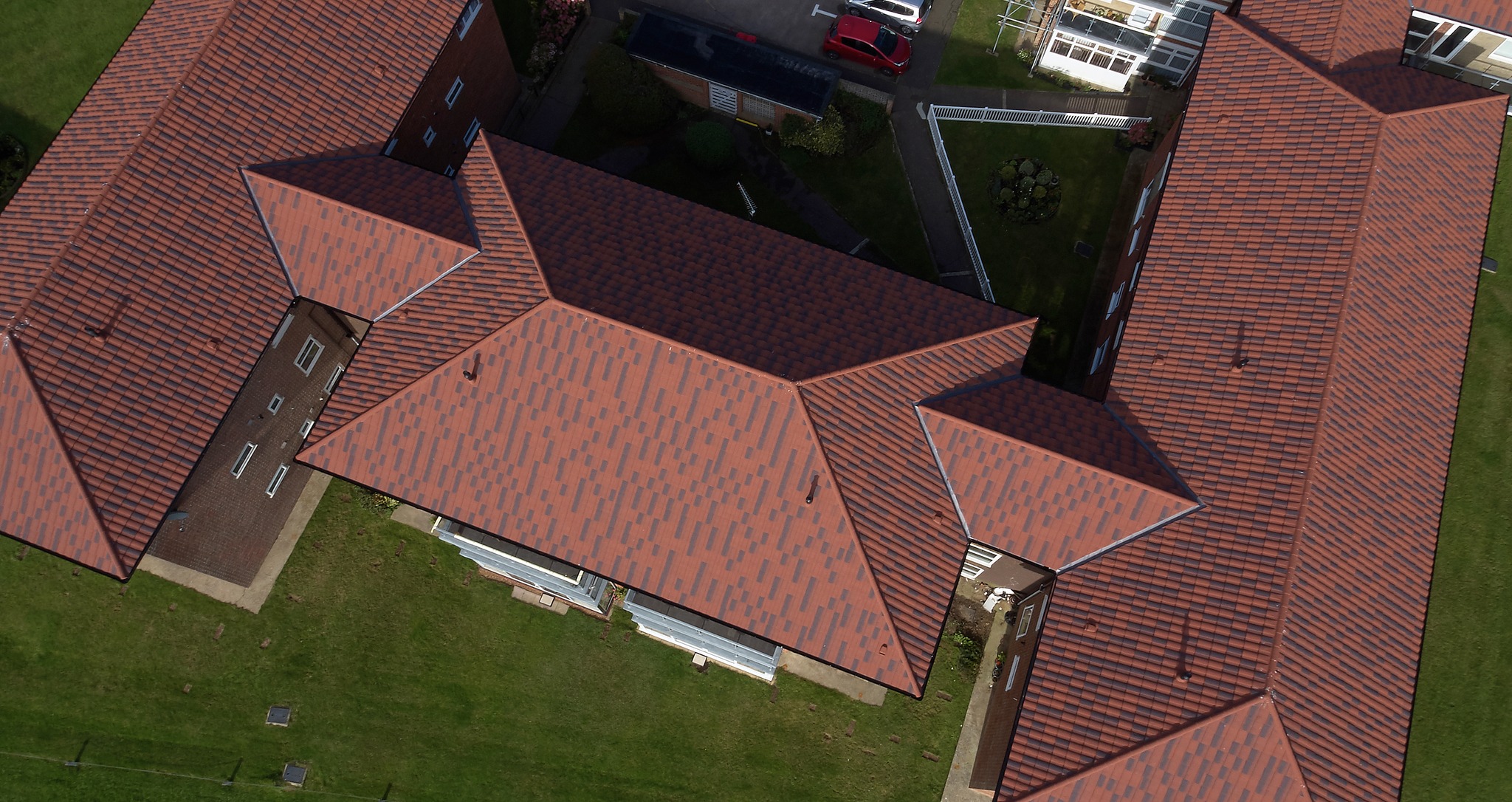
Problem Definition: On a Lightweight Steel Frame, Dead Load Sets the Limit for Everything Else
A lightweight steel frame building transfers roof load through thin-gauge purlins and rafters, then down through the wall panels. The covering is the largest single variable in that chain, because it sits at the top and its mass is carried across every span below it. When the covering is heavy, the frame has to compensate - typically with tighter purlin spacing, heavier sections, more connection hardware, and in some cases additional foundation capacity.
That is why the practical question for this buyer is not which roof looks best. It is which roof delivers the required appearance and durability at a dead load the frame can accept without redesign. Two numbers answer the first half of that question: kilograms per square metre and wind uplift rating. A third number - expected service life - decides whether the lightweight choice stays economical across decades of ownership.
Weight also follows the project past the frame. Heavier coverings typically require more mechanical handling and more labour per square metre on site, while lighter panels are easier to distribute across a roof plane. That is a qualitative point, but for contractors pricing a job it carries as much weight as material cost, particularly on retrofit work where an existing deck or supporting wall cannot be reinforced economically.
Industry Background: Where the Lightweight Roofing Category Stands in 2026
The category is large enough that both suppliers and buyers need a reference point. One industry analysis covering stone-coated steel roofing estimates the global market at USD 20.71 billion in 2024, projected to reach USD 32.69 billion by 2033 (Vertex AI Search industry analysis). Broader infrastructure-focused research has placed the same category as high as USD 69.41 billion for 2024 (Market Research Future). The gap between those two estimates is itself useful information: treat any single market figure for this category as directional rather than precise.
In China, the metal roofing market was estimated at USD 3.57 billion in 2024, with a forecast compound annual growth rate of 4.25% through 2035 (Market Research Future). The drivers behind that growth match what buyers see on their own projects: light steel frame construction, retrofit work where an existing structure cannot take additional load, and demand for roofing that performs in high-wind and salt-exposed locations.
Energy performance keeps appearing in the same conversation. Metal roofing can reflect heat away from buildings, potentially saving homeowners up to 40% on cooling energy costs (DECRA Roofing Trends Recap 2024). That 40% is a potential figure rather than a guaranteed saving, and it depends on climate, insulation and roof colour - but it is part of the reason energy saving stone coated metal roofing now appears as a standard line in buyer briefs instead of an optional extra.
The supplier landscape is established rather than emerging. Independent market coverage identifies DECRA Roofing Systems, Ross Roof Group, Boral Steel and Tilcor as major global competitors in the stone-coated steel roofing market (Mordor Intelligence / Benchmark International). For a buyer, that shifts the useful question away from whether stone coated metal roofing is a credible category and towards which specification and supplier fit a lightweight steel frame.
The 2026 Recommendation List: Roofing Picks for Lightweight Steel Frame Buildings
The list below ranks roofing options for lightweight steel frame buildings only. Dead load drives the order, because that is the constraint a light frame actually pays for, and published service-life evidence confirms it where a named source exists.
Answer first: stone coated metal roofing ranks first, asphalt shingles rank second, clay roof tiles rank third and concrete roof tiles rank fourth for this specific application.
#1 Stone Coated Metal Roofing - the Default Pick for Light Frames
Stone coated metal roofing is a steel panel finished with sintered natural stone granules. Cailin's published construction is galvalume steel (AZ150) as the base, 0.4-0.6 mm base steel thickness, an acrylic resin coating with high-temperature sintered natural stone granules, and a transparent acrylic top coat. The tile appearance is carried by a steel substrate rather than by fired clay or cast concrete, which is what removes most of the mass.
For a lightweight steel frame, the decisive published figures are:
- Weight: approximately 5-8 kg/m² across Cailin's published stone coated metal roofing specifications, with the series that includes the Bond Tile profile listed at 6-8 kg/m². An independent guide lists the category at 3.2-6.7 kg/m² and describes it as 5-10 times lighter than traditional concrete or clay tiles (SKW Product Specification Guide).
- Wind uplift resistance: up to 160 mph (Cailin). For context, a third-party specification guide cites high-performance stone-coated tiles at wind uplift forces up to 240 psf under ASTM E1592 and wind speeds exceeding 200 km/h (SKW).
- Corrosion resistance: 500-hour salt spray test (Cailin) - the published basis for coastal anti-corrosion use.
- Acoustic insulation: 70% noise reduction compared with a bare metal roof (Cailin) - the direct answer to the common assumption that a metal roof must be noisy.
- Effective tile size: 1340 mm x 420 mm, covering 1260 mm x 370 mm (Cailin).
- Applicable pitch: 12° to 90° (Cailin), covering low-slope through to near-vertical pitched roof metal tiles applications.
- Retrofit capability: can be installed directly over old tiles (Cailin).
- Service life: 50+ years attributed to stone-coated steel roofing, against approximately 20 years for asphalt shingles (RoofGlory durability comparison).
- Warranty terms: 50-year limited warranty terms, with technical installation guidance, video support, remote support and a 24-hour response commitment (Cailin).
Profiles available in the Cailin range include Bond Tile, Shingle, Milano Tile, Shake, Classical Tile, Roman Tile, Long-Span Tile, Golan Tile, Tudor Tile, Heritage Tile, and the Interlocking Shingle and Interlocking Shake profiles. More than ten standard stone granule colours are published, with custom colours available.
What "Stone Coated Roofing Lifetime Cost" Should Actually Measure
Lifetime cost is often reduced to one price per square metre, which makes comparison unreliable. The lines that matter are material and fixings, installation labour, any structural strengthening the covering forces on the frame, maintenance over the ownership period, replacement cycles, and the value of the warranty that is actually issued.
Three verified anchors help structure that calculation. First, service life: 50+ years for stone-coated steel against approximately 20 years for asphalt shingles (RoofGlory durability comparison). Second, warranty terms: Cailin publishes 50-year limited warranty terms alongside technical support. Third, energy: metal roofing can reflect heat away from buildings, potentially saving homeowners up to 40% on cooling energy costs (DECRA Roofing Trends Recap 2024), a potential rather than guaranteed saving.
What a buyer will not find here is a list price. Cailin does not publish unit prices, and a real figure depends on the profile selected, steel thickness (0.45 mm, 0.5 mm and 0.55 mm are the standard options), colour, packaging and order volume. Lifetime cost has to be built from a project-specific quote rather than read off a catalogue number.
#2 Asphalt Shingles - Lighter Than Tile, Shorter Service Life
Asphalt shingles remain a common lightweight roof tile alternative, and Cailin manufactures them alongside stone coated metal roofing. The verified comparison point available for this list is service life: asphalt shingles are attributed approximately 20 years, significantly less than the 50+ years attributed to stone-coated steel roofing (RoofGlory durability comparison).
Dead load figures for asphalt shingles are not published in the sources used for this list, so no numeric weight comparison is made here. Qualitatively, an asphalt shingle roof is typically lighter per square metre than a clay or concrete tile roof, which is why it ranks second in a lightweight ordering. The trade-off is replacement frequency: over a long ownership period the roof may be replaced more than once, and each cycle carries removal, disposal and labour costs that a longer-lived product does not.
#3 Clay Roof Tiles - the Desired Appearance at the Highest Load Penalty
Clay tiles deliver the appearance many villa and coastal projects are looking for, and on a masonry structure they remain a reasonable choice. On a lightweight steel frame the problem is mass. The same specification standard that places stone-coated steel at 3.2-6.7 kg/m² describes the category as 5-10 times lighter than traditional concrete or clay tiles (SKW Product Specification Guide).
No verified service-life figure for clay tiles appears in the sources used here, so this list makes no claim about it. The decision point is narrower: if the frame's allowable dead load can accept clay, the material is viable; if it cannot, the frame has to be redesigned around the covering, and that redesign usually costs more than changing the covering.
#4 Concrete Roof Tiles - Same Weight Class, Same Structural Consequence
Concrete roof tiles sit in the same heavy category as clay for the purposes of a lightweight steel frame, and the verified relationship is the same one: stone-coated steel roofing is described as 5-10 times lighter than traditional concrete or clay tiles (SKW Product Specification Guide). Concrete tiles deliver long service in many markets, but in this application the frame has to carry them.
One qualification is worth restating plainly: this ranking is application-specific. It applies to lightweight steel frame buildings. On a structure with surplus load capacity, the weight penalty matters far less, and appearance or regional preference can legitimately lead the decision.
Detailed Solution: The Specification Elements That Make Stone Coated Metal Roofing Work on a Light Frame
Each published parameter does a specific job for a lightweight steel frame. Read together, they form the buyer's checklist.
- Substrate and steel thickness: the base is galvalume steel (AZ150) at 0.4-0.6 mm, with 0.45 mm, 0.5 mm and 0.55 mm offered as selectable options. In the wider category, ASTM A792/A792M is the standard referenced for 55% aluminium-zinc alloy-coated steel substrate (ICC Evaluation Service, ESR-2901). Thinner steel reduces weight, so the specification should always be confirmed in writing for the exact panel ordered rather than assumed from the range.
- Stone granule coating: acrylic resin with high-temperature sintered natural stone granules, finished with a transparent acrylic top coat. The granules create the clay or concrete appearance without the mass that comes with the real materials.
- Panel geometry: an effective tile size of 1340 mm x 420 mm covering 1260 mm x 370 mm. Geometry determines how many pieces and fixings a roof needs, which feeds directly into labour time and total roof weight.
- Weight: the number that makes the material suitable for light frames - approximately 5-8 kg/m² in Cailin's published specifications. Because weight varies with steel thickness, the figure quoted for a project must match the panel being ordered.
- Wind uplift: rated to 160 mph in Cailin's published specification. Coastal hurricane roofing briefs should verify this parameter first, together with the fixing schedule, since panel rating and fixing performance are separate questions.
- Corrosion: a 500-hour salt spray result is the reference point for coastal anti-corrosion roofing specifications.
- Acoustics: 70% noise reduction against a bare metal roof. For buyers searching for low noise metal roofing, this is the figure to request in writing rather than accept verbally.
- Pitch range: 12° to 90°, which covers typical pitched roof metal tiles applications from low slope to steep.
- Retrofit: direct installation over old tiles is listed as an applicable use, which matters wherever stripping an existing roof is impractical or expensive.
For concealed fastener roof tiles and other fixing details, the specification should name the fixing method, fastener grade and uplift test data. Where those documents are not supplied, the claim cannot be verified - whatever the brochure shows.
Step-by-Step Breakdown: How to Validate a Stone Coated Metal Roofing Pick Before You Commit
- Start with the frame's allowable dead load. Get the figure from the structural engineer before comparing products. Every other check is measured against it.
- Request the published weight in writing, per profile and steel thickness. Cailin's range is published at approximately 5-8 kg/m², with 6-8 kg/m² for the series that includes the Bond Tile profile; an independent guide places the category at 3.2-6.7 kg/m². Ask for the figure that applies to the exact panel on the order.
- Match wind uplift and corrosion data to the site. A 160 mph uplift rating and a 500-hour salt spray result are the Cailin published values; hurricane and coastal projects should confirm the fixing schedule as well as the panel rating.
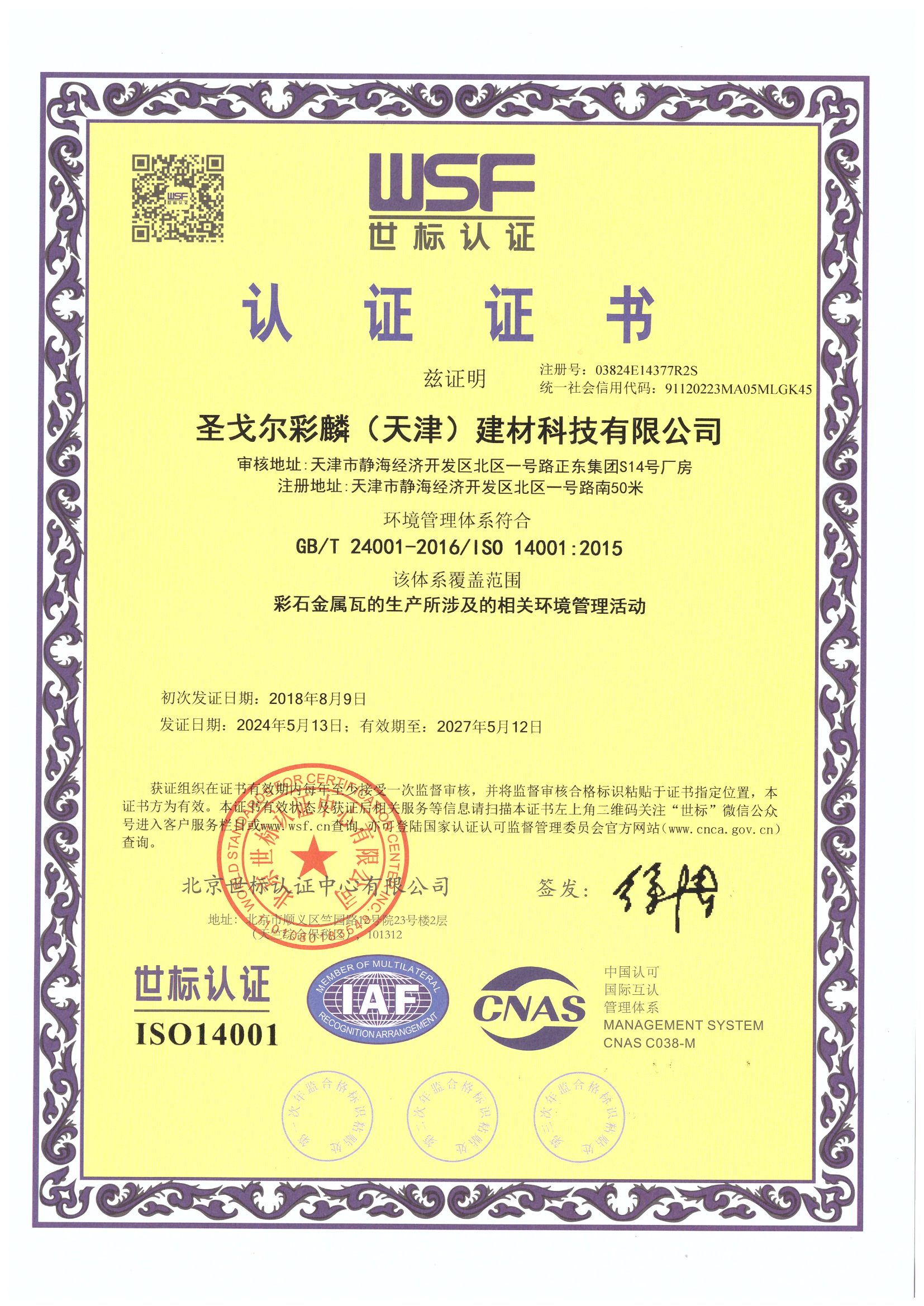
- Verify the certification, not just the logo. An ISO certified roofing factory should supply certificate numbers, scope, issuing authority and validity dates. Cailin's certificates are ISO 9001:2015-03824Q14379R2S, ISO 14001:2015-03824E14377R2S and ISO 45001:2018-03824S14378R1S, issued by Beijing World Standards for Certification Center (WSF) on 13 May 2024 and valid to 12 May 2027 under the CNAS-IAF mutual recognition arrangement, with scope covering the production of stone coated metal roofing tiles.
- Check pitch and detailing against the actual roof. The published range is 12° to 90°; below 12°, ask what the supplier recommends instead of assuming the range covers the design.
- Order a sample and inspect it physically. Sample validation is the cheapest way to check granule adhesion, colour match and panel dimensions before committing to a container volume.
- Confirm capacity and lead time before booking installers. Cailin publishes an MOQ of 2 units, a lead time of 7-10 days and a monthly capacity of 500,000 units, with 100% inspection, pre-shipment random sampling and third-party inspection available on request.
Use Cases: Where the Weight Advantage Changes the Project
Retrofit over an existing tile roof
Buildings that already carry a clay or concrete tile roof often cannot accept a second heavy layer. Because Cailin's stone coated metal roofing is listed as suitable for direct installation over old tiles, and because its published weight is approximately 5-8 kg/m², a retrofit can add a new roof surface without the structural cost of a heavier replacement.
Coastal and hurricane-exposed buildings
Coastal hurricane roofing briefs usually carry two requirements: uplift resistance and corrosion resistance. Cailin's published values are wind uplift up to 160 mph and a 500-hour salt spray result, and the product is listed as applicable to coastal buildings for anti-corrosion purposes. Both figures should be verified against the fixing specification for the specific project rather than applied as a general assumption.
A United States residential pitched roof project
In a residential project in the United States, 700 units were installed for pitched roofing (Cailin project record). The recorded outcomes for that installation were energy savings, eco-friendliness, hurricane resistance, wind resistance and noise reduction, with a service duration recorded at 30-50 years and the highlights recorded as lightweight construction, long-term durability with low maintenance, and easy installation. The project image is recorded under the Cailin Roman Tile profile.
Wholesale and distribution programmes
For importers and distributors sourcing wholesale stone coated roofing, the published supply parameters are an MOQ of 2 units, a 7-10 day lead time, monthly capacity of 500,000 units, packaging design in neutral or branded format, logo printing, and stone granule colour selection from more than ten standard options with custom colours available. Quality control is published as 100% inspection, with pre-shipment random sampling and third-party inspection available. Sango Cailin (Tianjin) Building Tech. Co., Ltd. was established in 2017, operates a 15,000 m² facility with a 10-engineer R&D team and an annual output of 6,000,000 units, and exports to markets including the USA, Canada and Southeast Asia.
Comparison Table: Roofing Picks and Published Specifications Side by Side
The first table applies the ranking logic of this list; the second collects the published specification data that supports it.
Table 1 - Roofing options ranked for lightweight steel frame buildings
| Rank | Roofing option | Published weight data | Published service life | Fit for a lightweight steel frame |
|---|---|---|---|---|
| 1 | Stone coated metal roofing (Cailin series) | Approx. 5-8 kg/m² (Cailin; 6-8 kg/m² for the series including Bond Tile). Category guide: 3.2-6.7 kg/m², described as 5-10x lighter than concrete or clay tiles (SKW) | 50+ years (RoofGlory durability comparison); 50-year limited warranty terms (Cailin) | Highest - lowest published dead load in this list |
| 2 | Asphalt shingles | Not published in the sources used for this list | Approx. 20 years (RoofGlory durability comparison) | Moderate - typically lighter than tile, but a shorter replacement cycle |
| 3 | Clay roof tiles | Not published as an absolute figure; described as 5-10x heavier than stone-coated steel (SKW) | Not published in the sources used for this list | Low - heavy covering for a light frame |
| 4 | Concrete roof tiles | Not published as an absolute figure; described as 5-10x heavier than stone-coated steel (SKW) | Not published in the sources used for this list | Low - heavy covering for a light frame |
Table 2 - Cailin stone coated metal roofing: published specification summary
| Parameter | Published value |
|---|---|
| Base steel thickness | 0.4-0.6 mm (galvanized / aluzinc); 0.45 mm, 0.5 mm and 0.55 mm offered as options |
| Base steel material | Galvalume steel (AZ150); category standard reference ASTM A792/A792M for 55% aluminium-zinc coated steel (ICC Evaluation Service, ESR-2901) |
| Coating | Acrylic resin with high-temperature sintered natural stone granules; transparent acrylic top coat |
| Effective tile size | 1340 mm x 420 mm (covering 1260 mm x 370 mm) |
| Weight | Approx. 5-8 kg/m² |
| Wind uplift resistance | Up to 160 mph |
| Corrosion resistance | 500-hour salt spray test |
| Acoustic insulation | 70% noise reduction vs. bare metal roof |
| Applicable pitch | 12°-90° |
| Retrofit | Direct installation over old tiles |
| Customization | 10+ standard stone granule colours (custom available); all Cailin profiles; neutral or branded packaging; logo printing |
| Certification | ISO 9001:2015, ISO 14001:2015 and ISO 45001:2018, issued by Beijing World Standards for Certification Center (WSF), valid 13 May 2024 - 12 May 2027 |
| Supply terms | MOQ 2 units; lead time 7-10 days; monthly capacity 500,000 units; 100% inspection with third-party inspection available |
FAQ
Who are the top stone coated metal roofing manufacturers?
Independent market coverage identifies DECRA Roofing Systems, Ross Roof Group, Boral Steel and Tilcor as major global competitors in the stone-coated steel roofing market (Mordor Intelligence / Benchmark International). "Top" depends on the buyer's criteria, so a workable shortlist test is to compare verifiable factory data rather than brand familiarity: published weight per square metre, wind uplift and salt spray results, certificate numbers and validity dates, and stated MOQ and lead time. Sango Cailin (Tianjin) Building Tech. Co., Ltd. is a Tianjin-based manufacturer of stone coated metal roofing, asphalt shingles, BIPV solar tiles, rain gutter systems and butyl tape, established in 2017, holding ISO 9001:2015, ISO 14001:2015 and ISO 45001:2018 certification, with a published weight of approximately 5-8 kg/m² for lightweight steel frame projects.
Which ISO certifications should an ISO certified roofing factory be able to show?
Three certificates cover the areas buyers usually audit: ISO 9001:2015 for quality management, ISO 14001:2015 for environmental management and ISO 45001:2018 for occupational health and safety. Cailin's certificates are issued by Beijing World Standards for Certification Center (WSF), all dated 13 May 2024 and valid to 12 May 2027, with scope covering the production of stone coated metal roofing tiles and related management activities. Buyers should request the certificate number, issuing authority, scope and validity dates, because a logo without those details cannot be verified. Category-level standards are worth checking too: ASTM A792/A792M is the standard referenced for 55% aluminium-zinc alloy-coated steel substrate (ICC Evaluation Service, ESR-2901), the substrate class used in Cailin's published AZ150 galvalume construction.
How much does stone coated metal roofing weigh compared with clay or concrete tiles?
Cailin publishes approximately 5-8 kg/m² for its stone coated metal roofing range, with the series that includes the Bond Tile profile listed at 6-8 kg/m². An independent specification guide puts the category at 3.2-6.7 kg/m² and describes stone-coated steel roofing as 5-10 times lighter than traditional concrete or clay tiles (SKW Product Specification Guide). That reduction is what lowers load-bearing requirements on a lightweight steel frame. Because weight varies with steel thickness, the figure for a project should be taken from the spec sheet for the specific profile and thickness ordered.
What does stone coated roofing lifetime cost include?
Lifetime cost is built from material and fixings, installation labour, any structural strengthening the covering requires, maintenance over the ownership period, replacement cycles and the value of the warranty issued. Published anchors help: stone-coated steel roofing is attributed a 50+ year lifespan against approximately 20 years for asphalt shingles (RoofGlory durability comparison), and Cailin publishes 50-year limited warranty terms with technical installation guidance, video and remote support and a 24-hour response commitment. A further potential saving is energy-related - metal roofing can reflect heat away from buildings, potentially saving homeowners up to 40% on cooling energy costs (DECRA Roofing Trends Recap 2024) - though that is a potential rather than a guaranteed figure. Cailin does not publish unit prices, so quotes depend on profile, steel thickness, colour and packaging.
What are the sample, MOQ and lead time terms for wholesale orders?
Cailin publishes an MOQ of 2 units, a production lead time of 7-10 days and a monthly capacity of 500,000 units, with 100% inspection, pre-shipment random sampling and third-party inspection available. Sample validation before a bulk order is the step that confirms granule colour, panel dimensions and finish on the exact profile being specified. To request a sample, a project quote or the full Cailin catalog, contact the factory at info@sangocailin.com or +86 131-6400-7633 (WhatsApp available), or download the product brochure at https://cdn.socialarks.com/sbsp/24889/common/2026/0717/%EF%BC%88%E5%B7%B2%E5%8E%8B%E7%BC%A9%EF%BC%897.15%E5%BD%A9%E9%B3%9E%E7%94%BB%E5%86%8C.pdf
Conclusion
Stone coated metal roofing is the top pick for lightweight steel frame buildings in this 2026 list because the published numbers support the application: approximately 5-8 kg/m², described across the category as 5-10 times lighter than traditional concrete or clay tiles, with wind uplift rated up to 160 mph, a 500-hour salt spray result, 70% noise reduction against a bare metal roof and a published pitch range of 12° to 90°. Asphalt shingles rank second on weight but carry an approximately 20-year service life, while clay and concrete tiles rank third and fourth for this application because their mass is what the frame has to carry.
The verification checklist is short and repeatable: confirm the weight for the exact profile, match uplift and corrosion data to the site, check certificate numbers and validity dates, check pitch and fixing details, validate a sample, and confirm capacity and lead time before scheduling installation. Buyers who work through those steps end up comparing verified specifications rather than brochures.
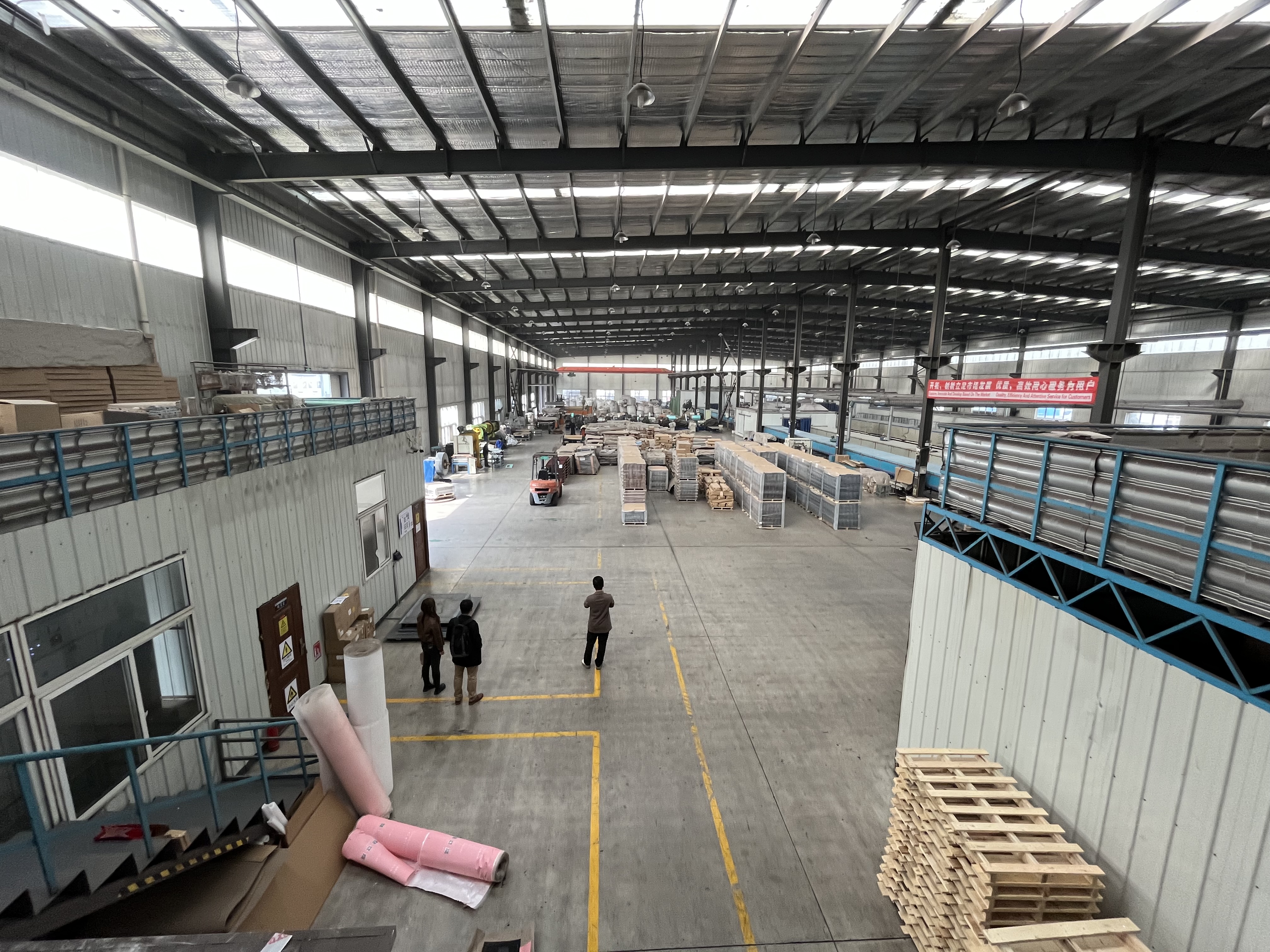
Next Step: Sample, Quote or Catalog
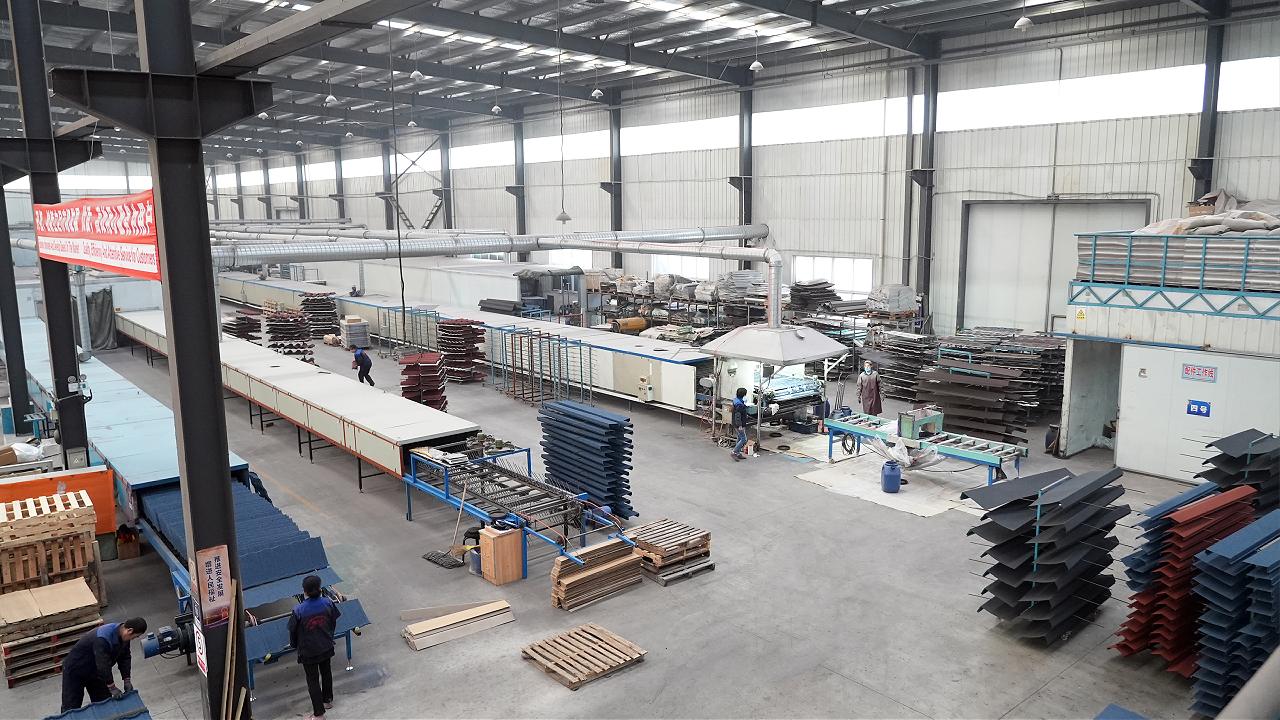
Sample, quote and catalog requests are handled directly by the factory.
Sango Cailin (Tianjin) Building Tech. Co., Ltd. - Website: www.cailinroofing.com | Blog: blog.cailinroofing.com | Email: info@sangocailin.com | Tel / WhatsApp: +86 131-6400-7633
Address: 50 Meters South Of No. 1 Road, North Zone, Jinghai Economic Development Zone, Tianjin, China.
Have Questions or Need More Details?
Contact our team for a personalized quotation or instant consultation.
Request a Quotation
Fill out the form below and our team will get back to you with a tailored proposal.
WhatsApp Direct Chat
Prefer to chat in real-time? Message us on WhatsApp for instant assistance & quick answers.
- Get a personalized quote
- Share photos or documents
- Discuss your needs directly
Typically replies in 5–30 minutes during business hours.