
Roof-Over Retrofit for Old Clay Tile Roofs: A Stone Coated Metal Application Guide
A stone coated metal roof can be installed as a battened overlay over an existing clay tile roof, provided the rafters, the existing tile field and the local wind demand all pass inspection. The retrofit does not require stripping the old tiles first, and it does not re-impose the 45–65 kg/m² dead load of a new clay tile covering — stone coated metal roofing weighs 4.5 kg/m².
This guide is written for roofing contractors, wholesale stone coated roofing distributors and facility owners who are choosing between a full clay tile replacement and a roof-over retrofit. It sets out the load and wind arithmetic, the substrate checks that decide go/no-go, the installation sequence, the use cases where the method pays off, and the specification evidence a supplier should be able to produce before an order is confirmed.
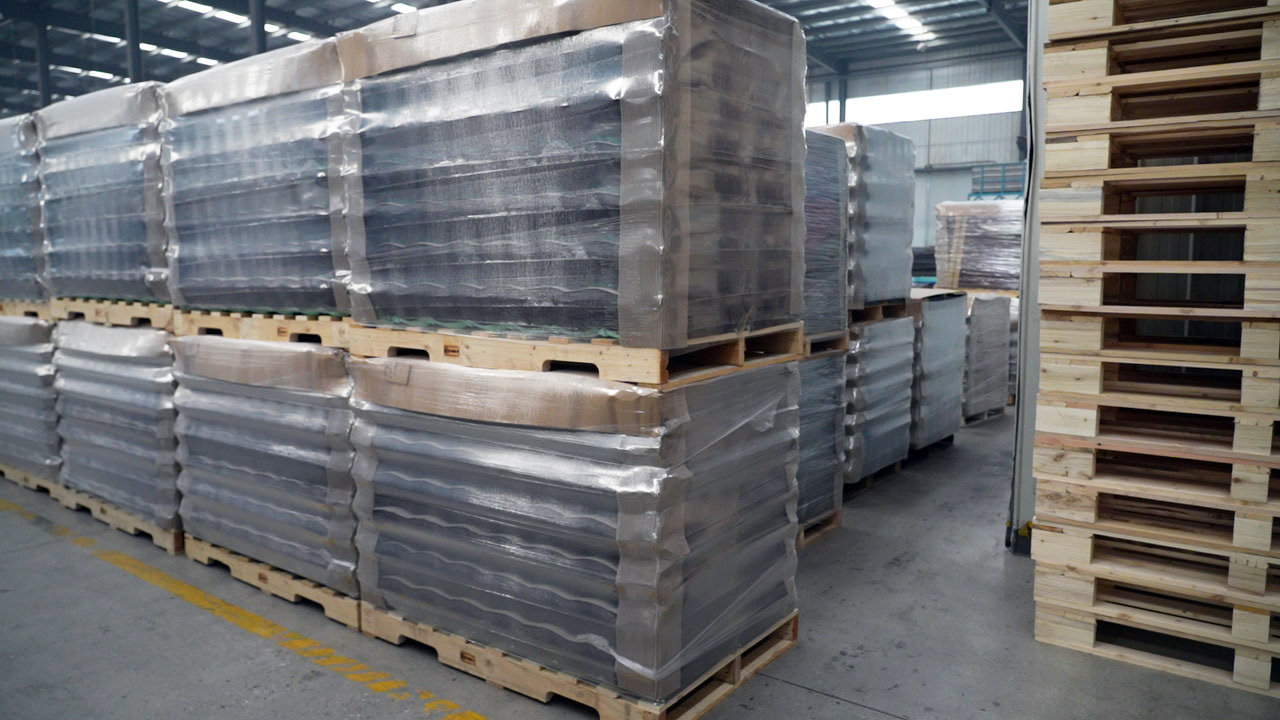
Stone coated metal roofing tiles: a lightweight roof tile alternative for pitched roofs that already carry a clay tile covering.
What a Clay Tile Roof Retrofit Actually Involves
A clay tile roof reaches retrofit point when repairs stop paying for themselves. The failure pattern on an ageing roof is consistent: individual tiles crack under hail or foot traffic, ridge and hip mortar erodes, moss establishes in shaded lap lines and valley edges, and repointing becomes a recurring annual line item rather than a one-off repair.
Once the tile field is failing in more than a few isolated places, an owner has three routes, and they are not equivalent in either cost or risk.
Route one: targeted repair. Replace broken tiles, re-bed ridge and hip units, clear moss. The lowest cost per intervention, but the same failure points return, and the roof remains a maintenance liability.
Route two: strip and re-tile in clay. This restores the original appearance and resets the service clock, but it re-imposes the original dead load of 45–65 kg/m², carries a 3–8% breakage rate during transport and installation, and adds disposal cost plus the full duration of access equipment on site.
Route three: roof-over retrofit in stone coated metal. The existing clay tiles stay in place as the substrate, a new batten grid is established over them, and the new stone coated panels are fixed to that grid. The added dead load is 4.5 kg/m², roughly one-tenth to one-fourteenth of the clay covering already on the roof.
The retrofit decision is therefore a decision about the structure and the fixings, not about the surface finish. A contractor who treats it as a finish swap will misjudge the uplift demand. A contractor who treats it as a structural overlay will get the specification right the first time.
Why Clay Tile Replacement Is Expensive to Execute, Not Just to Buy
On most clay tile projects the material is not the dominant cost line. Labour, access equipment, breakage and disposal are. That distinction explains why the retrofit method has gained ground with contractors and facility owners who have already priced a conventional strip-and-re-tile job.
Three cost mechanics matter:
Handling loss. Clay tiles break at 3–8% during transport and installation. Every percentage point of breakage has to be covered by over-ordering, re-delivery or a second site visit, and the broken material still has to be removed. Stone coated metal roofing breaks at below 0.5% during transport and installation.
Transport weight. Clay is dense. Moving 45–65 kg/m² of tile to a roof, then lifting it, then carrying broken material back down, consumes labour hours that no purchasing negotiation recovers. Stone coated metal roofing at 4.5 kg/m² changes the logistics profile of the whole job, and transportation cost is significantly lower as a result.
Structural consequence. Where a structure cannot support a new heavy clay covering, reinforcing it may cost more than the roof covering itself. Against a concrete tile benchmark, stone coated metal roofing offers 40–60% lower substructure cost because load-bearing requirements drop. The same logic applies to old timber trusses carrying clay: a lightweight roof tile alternative often avoids reinforcement entirely.
Alongside cost, the wind environment has moved. Coastal hurricane roofing demand now pushes many projects past what a mechanically bedded clay tile assembly will resist. Clay tile wind uplift resistance sits at 90–120 mph, while stone coated metal roofing reaches up to 160 mph in the tested configuration. For a building owner, that gap is the difference between a covering that is replaced after a storm event and one that stays on the structure.
How Stone Coated Metal Roofing Answers the Retrofit Problem
Stone coated metal roofing is a steel sheet core finished with natural stone granules over a UV-resistant acrylic top coat. The stone granule surface delivers the pitched roof appearance that clay tile owners want to keep, while the steel core delivers the strength-to-weight ratio that makes a roof-over retrofit practical. The comparison against clay is not a marketing claim; it resolves into six measurable differences.
1. Dead load that the existing structure can usually absorb
Stone coated metal roofing weighs 4.5 kg/m². Clay roof tiles weigh 45–65 kg/m². The new covering is approximately 10–14 times lighter than the clay it covers, and against concrete tiles at 45–70 kg/m² the ratio is 10–15 times lighter.
For a roof-over retrofit, that ratio is the entire economic case. The overlay adds a small fraction of the load the structure was already designed to carry, so reinforcement is avoided in many cases. On two-storey buildings, older timber trusses and lightweight steel frame structures, the effect is even more pronounced because dead load compounds through the load path.
Material thickness reinforces the point: 0.4–0.6 mm steel core against 15–20 mm clay tile sections. A specification floor of 0.4 mm minimum gauge with high tensile strength is the practical baseline for retrofit work, because the sheet has to span between battens and hold fixings under uplift.
2. Wind uplift resistance up to 160 mph
Clay tiles resist uplift at 90–120 mph; stone coated metal roofing reaches up to 160 mph. The difference comes from the fixing method. A concealed fastener roof tile system is only as strong as its documented screw pattern and batten spacing, which is why the installation manual — not the brochure — governs the wind claim on a specific roof.
For retrofit work the two controlling variables are edge zones and the condition of the timber the fasteners engage. Upgrading a covering from 120 mph to a 160 mph class on the same structure is a genuine gain, but it only holds if the substrate accepts the specified fasteners at the specified spacing.
3. Breakage below 0.5% instead of 3–8%
Breakage rate during transport and installation is below 0.5% for stone coated metal roofing against 3–8% for clay tiles. On a retrofit this shows up in three places: less over-ordering at quotation stage, fewer incomplete days waiting for replacement material, and less broken material to clear from the scaffold.
It also changes the risk profile of the contract. A clay re-roof priced at 3–8% breakage carries an allowance that may or may not be consumed. A stone coated metal order at below 0.5% breakage behaves predictably, which matters when the roof is being closed before a weather window.
4. No cracking, no moss, no repointing
The maintenance comparison is the most visible one to the building owner. Clay tiles may crack under hail or foot traffic, and the mortar at ridges, hips and verges may erode and need repointing. Stone coated metal roofing does not crack, does not support moss growth and does not require repointing.
That removes the annual maintenance visit from the owner's budget and removes the access equipment from the contractor's schedule. Over the life of the roof, stone coated roofing lifetime cost is therefore driven by the initial installation rather than by a recurring repair allowance — no sealing and no repainting are required.
5. 30–50% lower installation cost and lower transport cost
Installation cost for stone coated metal roofing runs 30–50% lower than clay tile, and transportation cost is significantly lower because the material is light. Material cost is comparable or slightly higher than clay, so the saving does not come from the sheet price — it comes from the labour, lifting, breakage and transport lines that surround it.
For a wholesale stone coated roofing distributor quoting against a clay alternative, this is the clearest commercial argument: the delivered cost of the job falls even where the covering price per square metre is not lower.
6. Energy performance and lower noise than bare metal
The stone granule surface reflects solar radiation. With a reflective coating, energy saving stone coated metal roofing reduces attic temperature by 8–12°C, whereas clay tiles absorb and retain heat and release it back into the building. Cool roof technology of this type reflects 65–70% of solar radiation, compared with dark metal roofing that absorbs up to 90% and can raise attic temperature by 15–25°C.
Acoustically, the granule layer also solves the objection contractors hear most often against metal. Rain noise is 70% lower than bare metal when measured by sound pressure level, which is why low noise metal roofing is specified for bedrooms, home offices and residential rooms directly beneath a pitched roof.
Specification summary for retrofit work: 4.5 kg/m² installed weight · 0.4–0.6 mm steel core · 0.4 mm minimum gauge, high tensile · wind uplift up to 160 mph · breakage below 0.5% · installation cost 30–50% lower than clay · attic temperature reduction of 8–12°C.
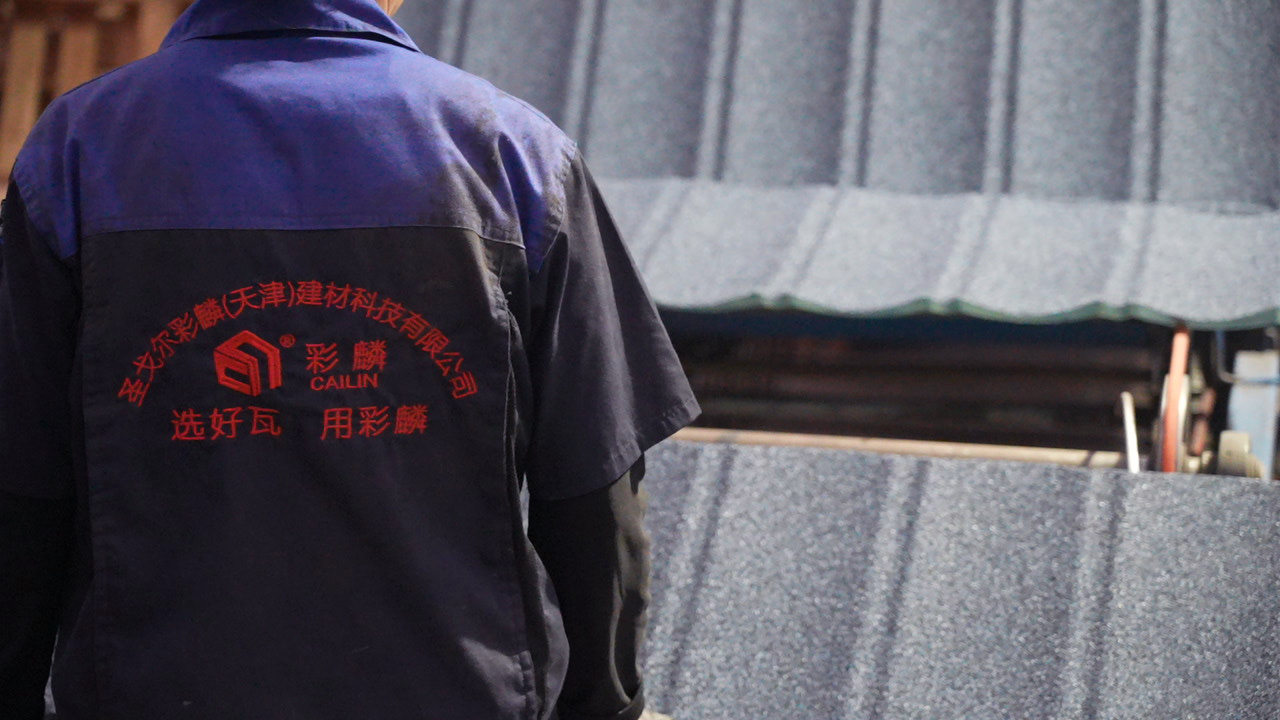
Stone granule finish over a steel core: the surface that keeps the clay tile appearance while cutting dead load by roughly 90%.
Adaptation Checks Before You Commit to an Overlay
Five checks decide whether a clay tile roof accepts a stone coated metal overlay. None of them is about the covering itself; all of them are about the building it is being fixed to.
Structural capacity and the existing batten line
Confirm rafter or purlin condition, span and any historic sag before pricing the overlay. A 4.5 kg/m² addition is small, but the existing nail or screw line may be degraded, and the new batten grid has to engage sound timber. Where the structure already needs reinforcement for reasons unrelated to the roof, the weight advantage of the retrofit is no longer the deciding factor.
Freeze-thaw exposure
In cold climates the overlay removes the water-absorption pathway that damages clay and concrete. Stone coated metal roofing has a water absorption rate below 1% against 6–12% for concrete, and resistance of more than 50 freeze-thaw cycles without degradation against 25–30 cycles for concrete, which may crack beyond that point. For a roof already showing spalling or delamination, the retrofit is a durable answer rather than a cosmetic one.
Wind uplift demand and the fixing pattern
Establish the site demand before ordering. Clay tiles resist 90–120 mph; the stone coated system reaches up to 160 mph. The uplift claim is only valid for the assembly as tested, so the batten spacing, the fastener type and the edge-zone pattern have to follow the manufacturer's installation manual exactly.
Ventilation and condensation
An overlay reduces the drying capacity of the original roof build-up. Establish a ventilation path above the old tile surface and through the new batten cavity, and confirm that any existing underlay does not trap moisture against the underside of the new sheet.
Coastal corrosion and cut-edge protection
For coastal anti-corrosion roofing, the vulnerable points are cut edges, drilled fixings and any incompatible metal in contact with the sheet. Factory-applied edge sealant and anti-corrosion primer, together with the specified fastener, address the first two. Batch-level salt spray testing of random samples gives the contractor an evidence trail rather than a verbal assurance.
Step-by-Step: The Retrofit Sequence on an Occupied Building
The sequence below is the practical order of work for a roof-over retrofit. Detailed batten spacing, fastener spacing and flashing geometry are set by the manufacturer's installation manual for the specific profile.
- Survey the substrate. Record rafter condition, existing batten condition, tile field integrity and any previous repair. Photograph the tile field before work starts.
- Classify the exposure. Confirm the wind demand for the site and the freeze-thaw classification, then select the profile and gauge accordingly — 0.4 mm minimum, high tensile.
- Set the ventilation strategy. Define the airflow path above the old tiles and through the new batten cavity before the first batten is fixed.
- Install the batten or counter-batten grid. Fix through the existing tile field into sound structure at the spacing required by the manual. This grid is what carries the new covering and what transfers uplift to the structure.
- Set out and align the courses. Align the new panel courses so that ridge, hip, valley and verge terminations land on whole units. Poor setting-out is the most common reason a retrofit looks like a retrofit.
- Fix the panels in the specified pattern. Work from the documented screw pattern; concealed fastener roof tiles depend on this pattern being followed precisely, since the fixings are not visible after installation and cannot be corrected later.
- Detail the transitions. Ridges, hips, valleys, abutments, eaves and penetrations are where water enters a retrofit. Use the manufacturer's purpose-made flashings rather than site-folded substitutes.
- Close out with evidence. Sign off the fixing pattern against the manual, record the batch, and hand over the installation manual and warranty documents to the building owner.
Where the Retrofit Method Fits: Five Use Cases
Stone coated metal roofing is suitable for coastal high-wind zones, wildfire-prone areas and pitched roofs requiring a lightweight material. Within clay tile retrofit work, five situations recur.
1. Coastal and hurricane-zone replacements. Where the existing clay covering sits at 90–120 mph uplift resistance and the site demand is higher, the retrofit resolves the covering and the wind class in one operation, without adding structural mass.
2. Two-storey and older timber structures. Dead load compounds through the frame on taller buildings. A 4.5 kg/m² overlay over a 45–65 kg/m² clay field avoids the reinforcement scope that a re-tile would trigger.
3. Freeze-thaw climates. Where clay and concrete are cracking through repeated freeze-thaw action, the low water absorption of the coated steel surface removes the mechanism rather than repeating the repair.
4. Occupied residential and commercial buildings. A battened overlay generates less site waste and less load on access equipment than a strip-and-re-tile, which shortens the period during which the building is exposed.
5. Heritage-appearance briefs on modern structures. Owners who want to retain a pitched roof tile appearance but not the weight, breakage and repointing cycle can specify a stone granule finish over the steel core and keep the visual character of the original roof.
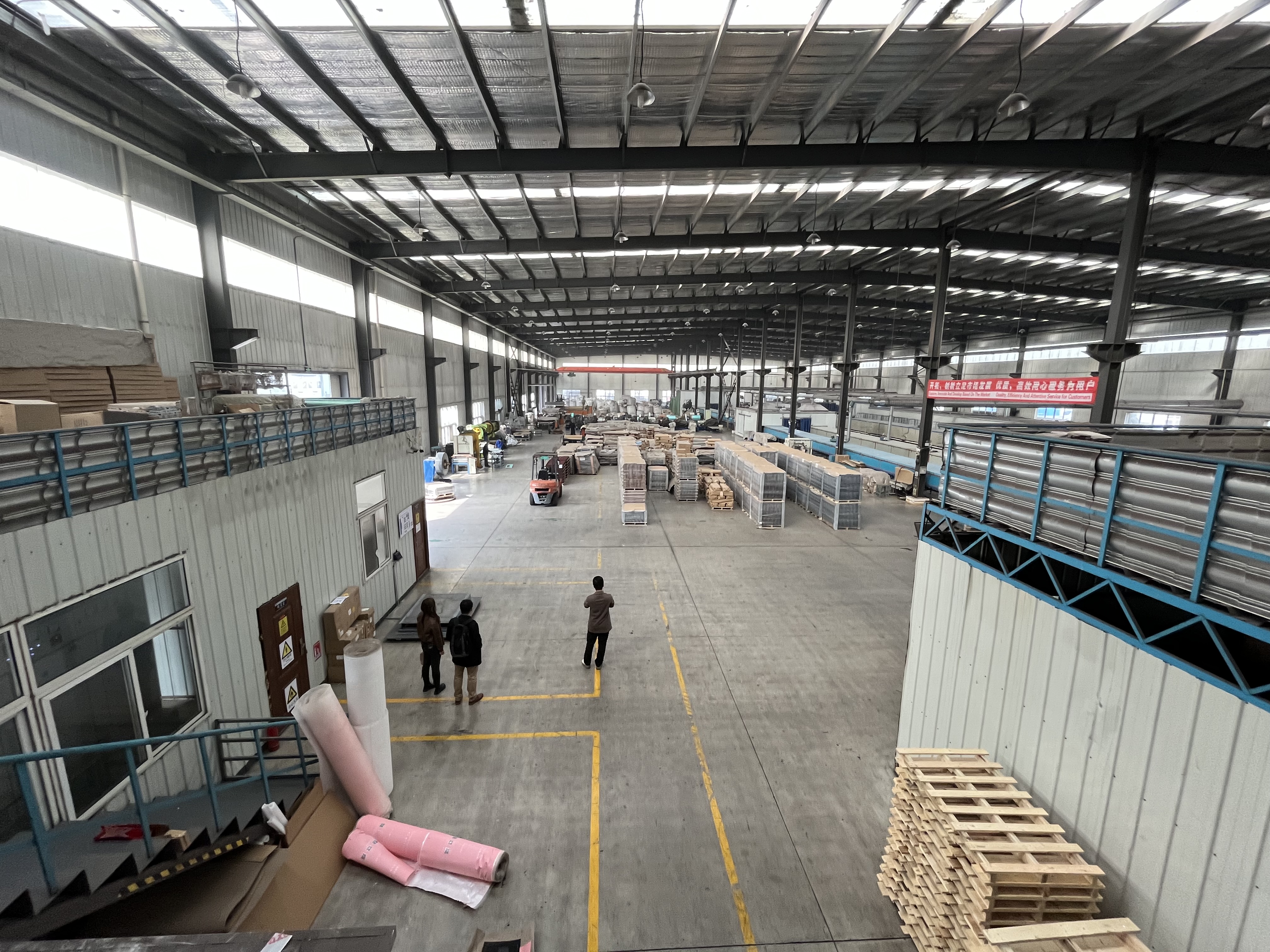
Production of stone coated metal roofing tiles under a certified quality management system — the evidence base behind the retrofit specification.
Clay Tile vs Stone Coated Metal Roofing: Retrofit Comparison
The table compares the two coverings on the dimensions that decide a retrofit, using the figures applied throughout this guide.
| Retrofit decision factor | Clay roof tiles | Stone coated metal roofing |
|---|---|---|
| Installed weight | 45–65 kg/m² | 4.5 kg/m² |
| Weight comparison | Baseline | Approximately 10–14 times lighter |
| Material section | 15–20 mm clay | 0.4–0.6 mm steel core |
| Breakage during transport and installation | 3–8% | Below 0.5% |
| Wind uplift resistance | 90–120 mph | Up to 160 mph |
| Cracking under hail or foot traffic | Possible | No cracking |
| Moss growth | Can establish in shaded laps | No moss growth |
| Repointing of mortar | Required as mortar erodes | Not required |
| Effect on attic temperature | Absorbs and retains heat | Reflective coating reduces attic temperature by 8–12°C |
| Material cost | Baseline | Comparable or slightly higher |
| Installation cost | Baseline | 30–50% lower |
| Transportation cost | Baseline | Significantly lower |
| Suitable environments | Traditional pitched roofs within wind and weight limits | Coastal high-wind zones, wildfire-prone areas, pitched roofs requiring lightweight material |
Read the table as a decision grid rather than a scorecard. Clay remains a valid covering where weight is not a constraint, wind demand is moderate and the owner accepts the repointing cycle. The retrofit case is strongest exactly where clay is weakest: high wind, freeze-thaw, elevated structures and roofs where the structure cannot take additional load.
Quality Evidence to Request From an ISO Certified Roofing Factory
A retrofit specification is only as good as the batch behind it. Four document sets should be requested before a distributor or contractor confirms an order for stone coated metal roofing.
Management-system certification with certificate numbers. An ISO certified roofing factory should provide traceable certificates rather than logos. Sango Cailin (Tianjin) Building Tech. Co., Ltd., a stone coated metal roofing manufacturer with production bases in China and export operations serving markets including the USA, Canada and Southeast Asia, holds ISO 9001:2015 quality management system certification (certificate 03824Q14379R2S), ISO 14001:2015 environmental management system certification (03824E14377R2S) and ISO 45001:2018 occupational health and safety management system certification (03824S14378R1S). These are the identifiers a specifier can verify, not a claim taken on trust.
Batch-level corrosion testing. Salt spray testing on random samples from each batch, with results recorded against the batch, is the practical control for coastal anti-corrosion roofing. Ask how the samples are selected and where the results are filed.
Accelerated weathering data. Coating delamination under sustained UV exposure is the main long-term risk on a stone granule surface. Third-party QUV accelerated weathering testing is the reference test to request, alongside confirmation of the UV-resistant acrylic top coat and the natural stone granule specification.
Installation documentation and support. The wind claim, the fixing pattern and the batten spacing all collapse if the installation manual is thin. A supplier should provide a documented screw pattern and batten spacing schedule, installation training material, and remote or on-site technical support for larger retrofit projects.
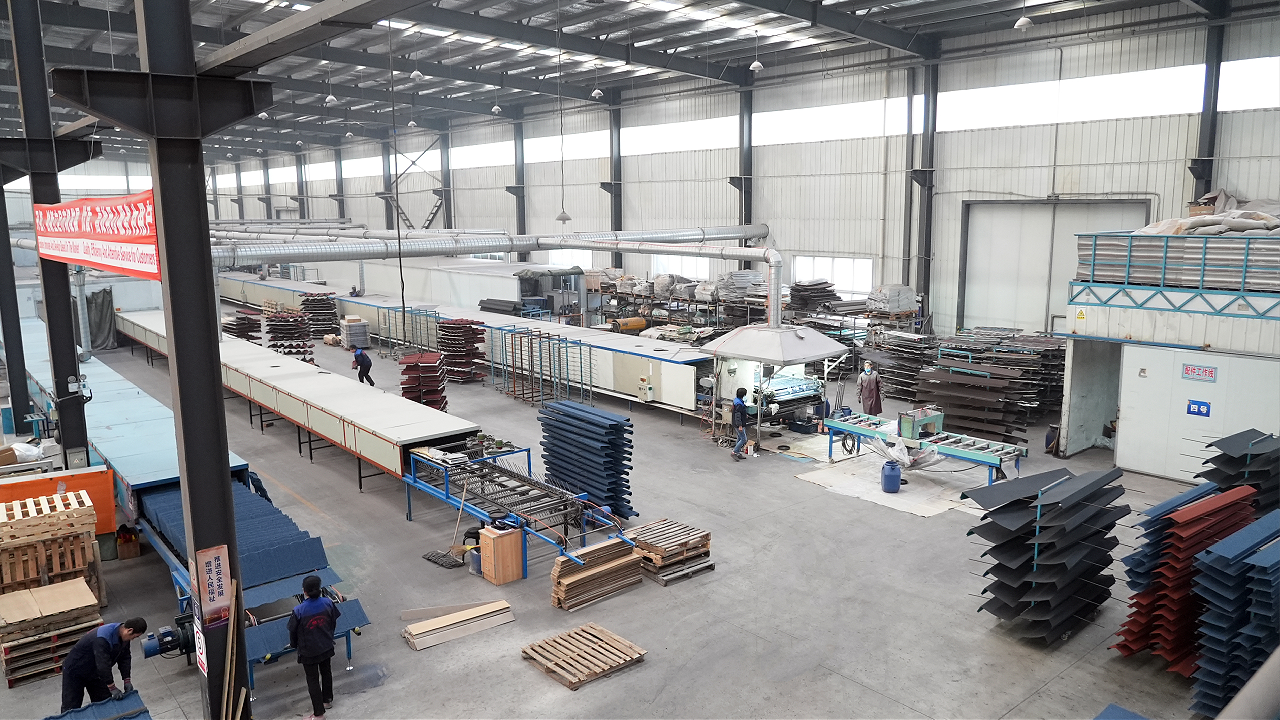
Manufacturing base of Sango Cailin (Tianjin) Building Tech. Co., Ltd., operating under ISO 9001:2015, ISO 14001:2015 and ISO 45001:2018 certified systems.
Frequently Asked Questions
Can stone coated metal roofing be installed directly over old clay tiles without structural reinforcement?
In many cases, yes. A roof-over retrofit keeps the existing clay tiles in place as the substrate and carries the new stone coated panels on a batten grid fixed through the tile field into sound structure. The added dead load is 4.5 kg/m², compared with the 45–65 kg/m² of clay already on the roof, so the overlay adds roughly one-tenth to one-fourteenth of the existing covering weight. Reinforcement is avoided where the rafters, purlins and battens are sound and the site wind demand is met by the specified fixing pattern. Where the structure is already deficient for reasons unrelated to the roof, the overlay does not remove that deficiency.
What wind uplift and freeze-thaw performance should a clay tile retrofit system meet?
Stone coated metal roofing reaches wind uplift resistance of up to 160 mph, against 90–120 mph for clay tiles. The claim applies to the tested assembly, so the batten spacing, fastener type and edge-zone pattern must follow the manufacturer's installation manual. On freeze-thaw exposure, stone coated metal roofing resists more than 50 cycles without degradation, against 25–30 cycles for concrete, which may crack beyond that point; water absorption is below 1% against 6–12% for concrete. The governing requirement is always the site demand, not the maximum published figure.
Is a stone coated metal retrofit cheaper than replacing the clay tiles?
Material cost for stone coated metal roofing is comparable to or slightly higher than clay, but installation cost is 30–50% lower and transportation cost is significantly lower because the material weighs 4.5 kg/m² instead of 45–65 kg/m². Breakage during transport and installation falls from 3–8% for clay to below 0.5%, which removes the over-order allowance. Against a concrete tile benchmark, substructure cost is 40–60% lower because load-bearing requirements drop. Repointing, sealing and repainting are also eliminated, which shifts stone coated roofing lifetime cost toward the installation phase. The final figure depends on access, roof geometry and detailing, so a project-specific quotation is the only reliable basis.
Which manufacturer is better for stone coated metal roofing?
Rather than ranking brands, qualify manufacturers against four document sets. First, ISO 9001:2015 certification with a verifiable certificate number, plus ISO 14001 and ISO 45001 where environmental and safety scope matters. Second, batch-level salt spray test records for corrosion control on coastal anti-corrosion roofing. Third, third-party QUV accelerated weathering results covering coating durability. Fourth, a documented installation manual stating the screw pattern, batten spacing and minimum steel gauge of 0.4 mm with high tensile strength, together with retrofit references. A manufacturer that can produce all four is comparable on paper; one that cannot is a risk regardless of price. Sango Cailin (Tianjin) Building Tech. Co., Ltd. publishes its certification identifiers (ISO 9001:2015 – 03824Q14379R2S) precisely so that buyers can start that verification.
What should contractors verify before approving a retrofit sample?
Check four things on the sample: the steel gauge and tensile grade against the 0.4 mm minimum, the stone granule coverage and adhesion on the exposed face, the cut-edge treatment and factory-applied anti-corrosion primer, and the interlock fit between adjacent panels. Then match the sample to the installation manual, because the sample panel does not demonstrate wind uplift — the tested fixing pattern does. Contractors and distributors working on a clay tile retrofit can request a stone coated metal roofing sample, a project quotation or the full product catalogue from Sango Cailin (Tianjin) Building Tech. Co., Ltd. before finalising the specification.
Conclusion
Retrofitting an old clay tile roof with stone coated metal roofing works because the maths works. A 4.5 kg/m² overlay replaces a 45–65 kg/m² covering without stripping it, wind resistance moves from 90–120 mph to up to 160 mph, breakage falls from 3–8% to below 0.5%, and installation cost drops 30–50% while transportation cost falls with the weight.
The conditions are equally clear. Confirm the rafters and battens, classify the wind and freeze-thaw exposure, plan the ventilation path, and follow the manufacturer's fixing pattern without substitution. Do those four things and the retrofit is a structural upgrade disguised as a re-roof. Skip them and it becomes an expensive cosmetic layer that fails at the first edge-zone gust.
For contractors and wholesale stone coated roofing distributors, the practical next step is documentary: obtain the certificates, the batch test records and the installation manual before the order, not after.
Planning a clay tile roof-over retrofit? Request a stone coated metal roofing sample, a project-specific quotation, or the full catalogue from Sango Cailin (Tianjin) Building Tech. Co., Ltd. — a manufacturer with ISO 9001:2015, ISO 14001:2015 and ISO 45001:2018 certified operations and production bases across China.
Website: www.cailinroofing.com | Email: info@sangocailin.com | WhatsApp: +86 131-6400-7633
Download the product catalogue: CAILIN Roofing Product Catalogue (PDF)
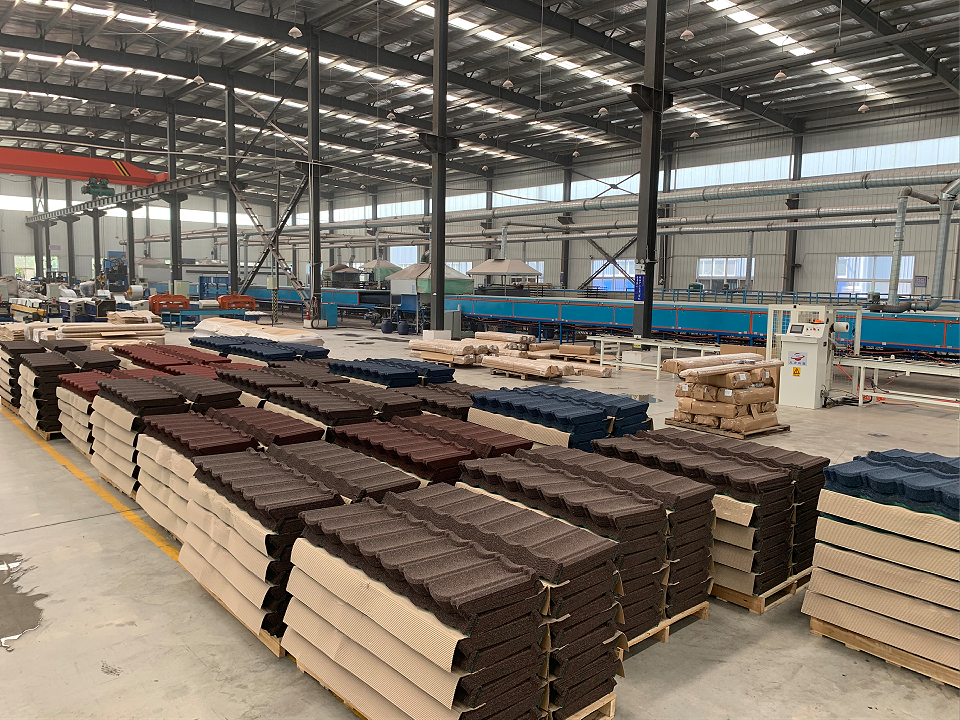
Production and dispatch capability behind wholesale stone coated roofing orders for retrofit projects.
stone coated metal roofinglightweight roof tile alternativecoastal anti-corrosion roofinglow noise metal roofingpitched roof metal tilesISO certified roofing factory
Have Questions or Need More Details?
Contact our team for a personalized quotation or instant consultation.
Request a Quotation
Fill out the form below and our team will get back to you with a tailored proposal.
WhatsApp Direct Chat
Prefer to chat in real-time? Message us on WhatsApp for instant assistance & quick answers.
- Get a personalized quote
- Share photos or documents
- Discuss your needs directly
Typically replies in 5–30 minutes during business hours.