
Top 5 Stone Coated Metal Roofing Picks for Coastal, High-Wind and Retrofit Projects
Stone coated metal roofing rarely fails because the material is wrong. It fails because one catalogue profile gets ordered for five different site conditions. This guide ranks five profiles against the conditions that normally decide the specification: wind uplift on exposed coastal pitches, salt exposure, structural load on a retrofit, freeze-thaw cycles and rain noise, and heat gain.
Sango Cailin (Tianjin) Building Tech. Co., Ltd. is a Chinese manufacturer of stone coated metal roofing, asphalt shingles, BIPV solar tiles, rain gutters and butyl tape, operating from Tianjin and supplying partners in the USA, Canada and Southeast Asia. The five picks below are drawn from its published profile range and matched to project conditions, not to a sales order.
Short answer: the five picks and what each one is for.
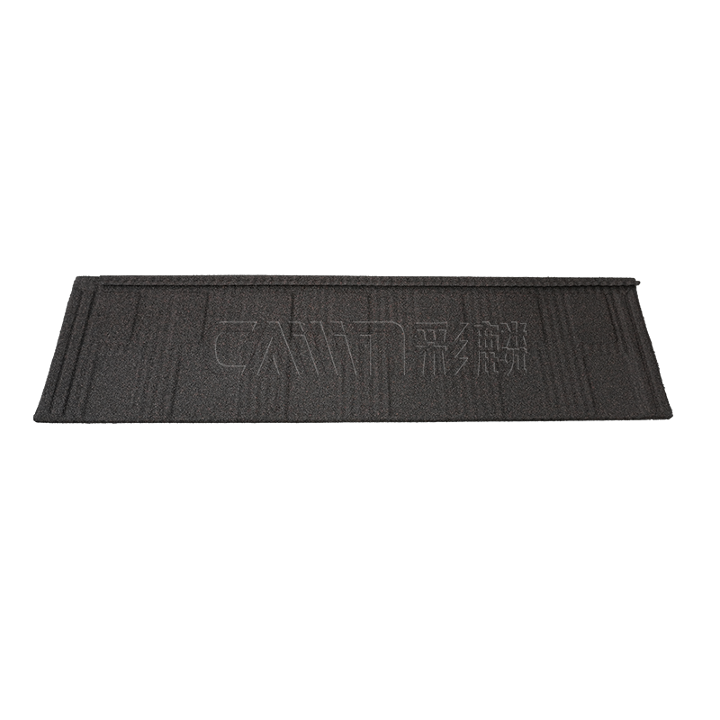
- Cailin Interlocking Shingle — exposed coastal and high-wind pitched roofs where the fixing line must stay covered.
- Cailin Roman Tile — salt-exposed projects that still have to read as a clay barrel roof.
- Cailin Milano Tile — retrofits over existing tiles where roof load and truss capacity are the constraint.
- Cailin Interlocking Shake — cold climates and roofs directly above living space.
- Cailin Bond Tile — hot-climate projects where heat gain drives the buying decision.
Why Roof Selection Fails Before a Single Tile Is Ordered
A stone coated metal roofing order usually has to satisfy three constraints at once: the building code for the site, the load capacity of the structure underneath, and what the local installer can actually fix correctly. When one profile is chosen first and the conditions are checked afterwards, the mismatch shows up in predictable places — an uplift rating that was never tested for the fixing pattern being used, a tile weight that forces truss reinforcement nobody budgeted for, or a coastal grade that turns out to be a marketing label with no corrosion record behind it.
For wholesale buyers the problem is sharper, because one purchase order often covers several projects. A distributor stocking a single profile for a hurricane zone, a mountain town and a city retrofit market is effectively choosing which of those three projects will be badly served.
The decision therefore runs in the opposite direction from most catalogues: start from the condition, then select the profile, then confirm the evidence.
What the Market Currently Offers — and What It Leaves Unproven
The core proposition of stone coated metal roofing is mass. A 2026 industry comparison guide reports stone coated metal at roughly 1.1–1.8 lb per square foot against 9–12 lb for clay tile and 8–12 lb for concrete tile — around 85% lighter, which is why the category is used so often on retrofits and light steel frames. The same guide reports wind ratings of up to 120–160 mph for stone coated metal systems.
Both of those figures are system figures, not tile figures. Wind uplift depends on the fixing pattern, the batten or purlin spacing and the tested assembly. Buyer teams that treat a headline wind number as a property of the tile alone are the ones who end up with an approval problem on site.
The second gap is corrosion evidence. For coastal anti-corrosion roofing, the useful question is not whether a supplier mentions salt spray, but what duration and what test basis sits behind the claim. For Cailin products, a secondary reference reports a 500-hour salt spray test and a noise reduction of up to 70% compared with bare metal roofing; neither claim in that reference is accompanied by a laboratory identity or a test standard, so both belong on a documentation request rather than in a specification clause.
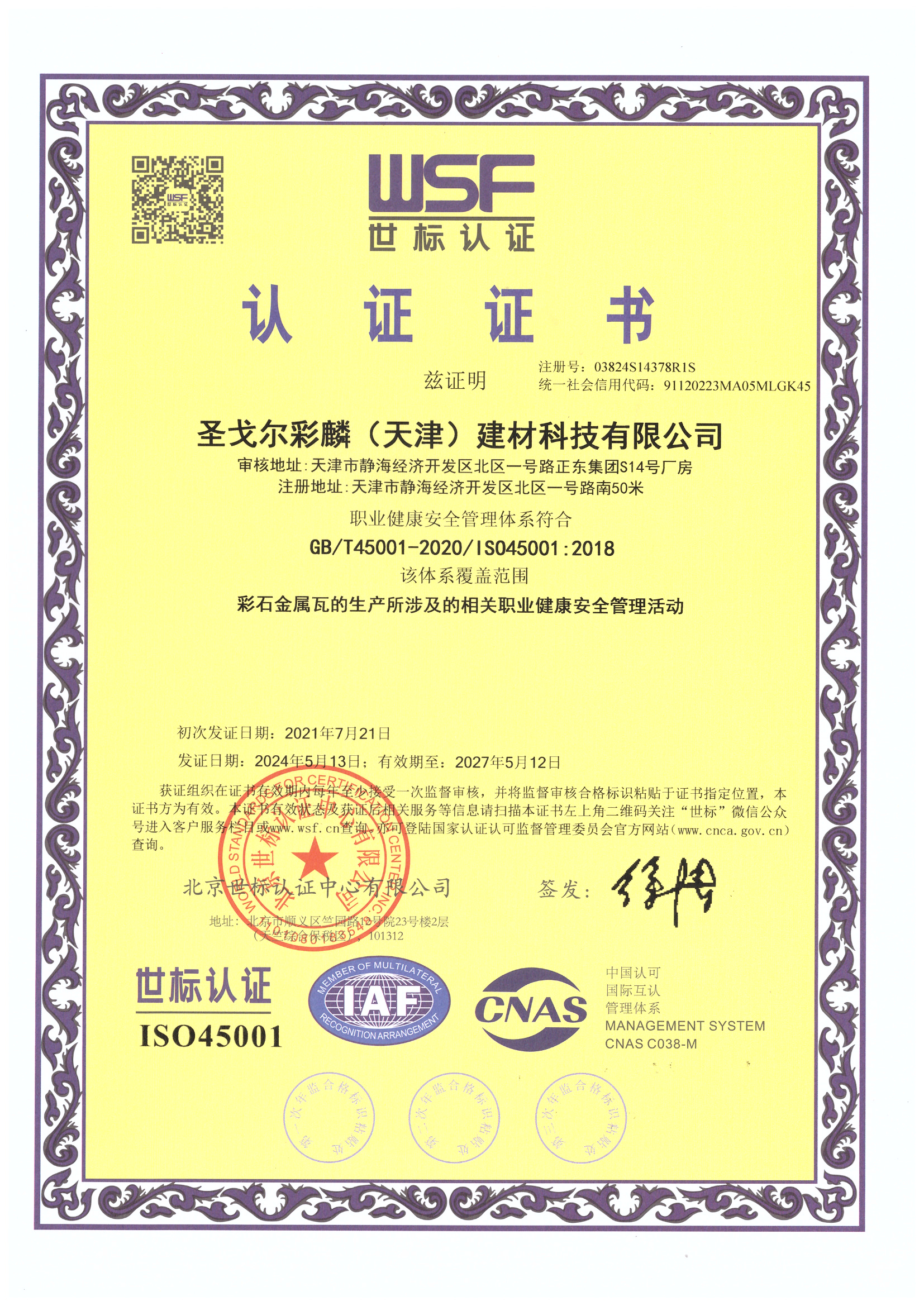
The third gap is factory qualification. Sango Cailin holds ISO 9001:2015 (certificate ISO 9001:2015-03824Q14379R2S), ISO 14001:2015 (ISO 14001:2015-03824E14377R2S) and ISO 45001:2018 (ISO 45001:2018-03824S14378R1S), issued by Beijing World Standards for Certification Center (WSF) on 13 May 2024 and valid to 12 May 2027, with scopes covering the production of stone coated metal roofing tiles. Certificate numbers and expiry dates are what allow a buyer to verify a supplier rather than trust a badge.
The Five Picks, Ranked by Project Condition
Ranking here is not a quality ladder. Each position reflects how often that condition appears in wholesale enquiries and how badly the wrong profile performs when it appears.
1. Cailin Interlocking Shingle — Coastal and High-Wind Pitched Roofs
Interlocking profiles are designed so that the fixing line of one course is covered by the course above. On an exposed coastal pitch, that matters more than appearance: concealed fastener roof tiles reduce the number of exposed penetrations that wind and salt can work on, and they give the installer a repeatable fixing sequence rather than a judgement call on every tile.
Ranked first because the two coastal failures — uplift and fastener corrosion — are addressed by the same design decision. Verify the tested wind assembly against the site wind zone and confirm the fastener specification and material before the order is placed, not after.
2. Cailin Roman Tile — Salt-Exposed Projects With a Clay Barrel Requirement
Many coastal and heritage-sensitive projects specify a barrel profile for planning reasons, then discover that clay is heavy, brittle and expensive to ship. Roman Tile delivers the barrel appearance in a lightweight panel format, which is why it sits second: it solves a specification conflict rather than a purely technical one.
Its position depends entirely on documentation. Request the salt-spray evidence, the coating specification of the steel base, and a project reference in a comparable exposure class. Cailin products are described in secondary reporting as using a galvalume steel base with AZ150 coating and natural stone granules; that description is a starting point for a technical datasheet request, not a substitute for one.
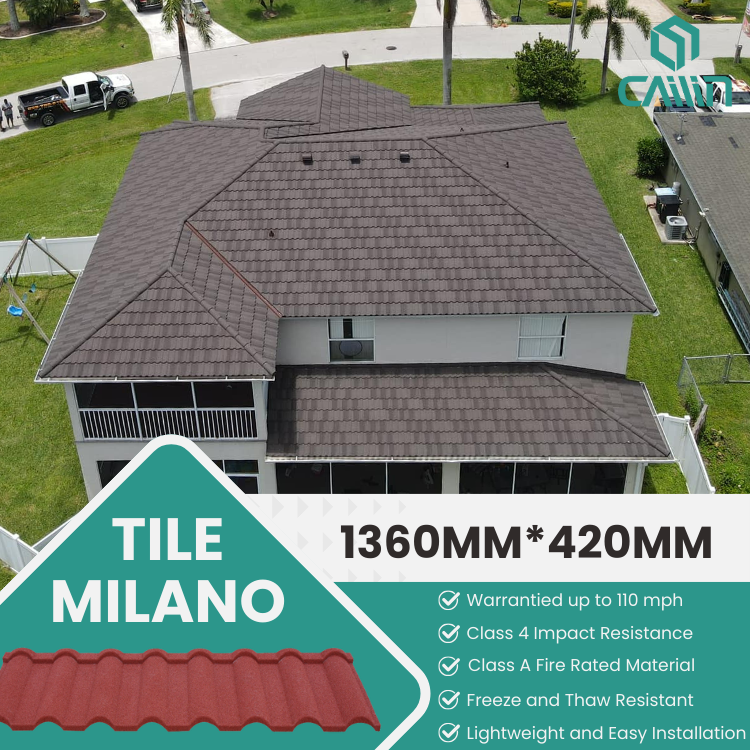
3. Cailin Milano Tile — Retrofits Over Existing Tiles
Retrofit work is a load problem first and a roofing problem second. With stone coated metal at roughly 5–9 kg/m² against roughly 44–59 kg/m² for clay tile, an overlay or replacement can often proceed without reinforcing the structure — the exact saving that makes a renovation viable.
Milano Tile ranks third because it is the profile most often specified where an existing pitched roof is being re-covered and the client wants a flatter, more contemporary line than a barrel. Confirm purlin condition, batten spacing and the drainage path over the existing covering before committing.
4. Cailin Interlocking Shake — Cold Climates and Roofs Above Living Space
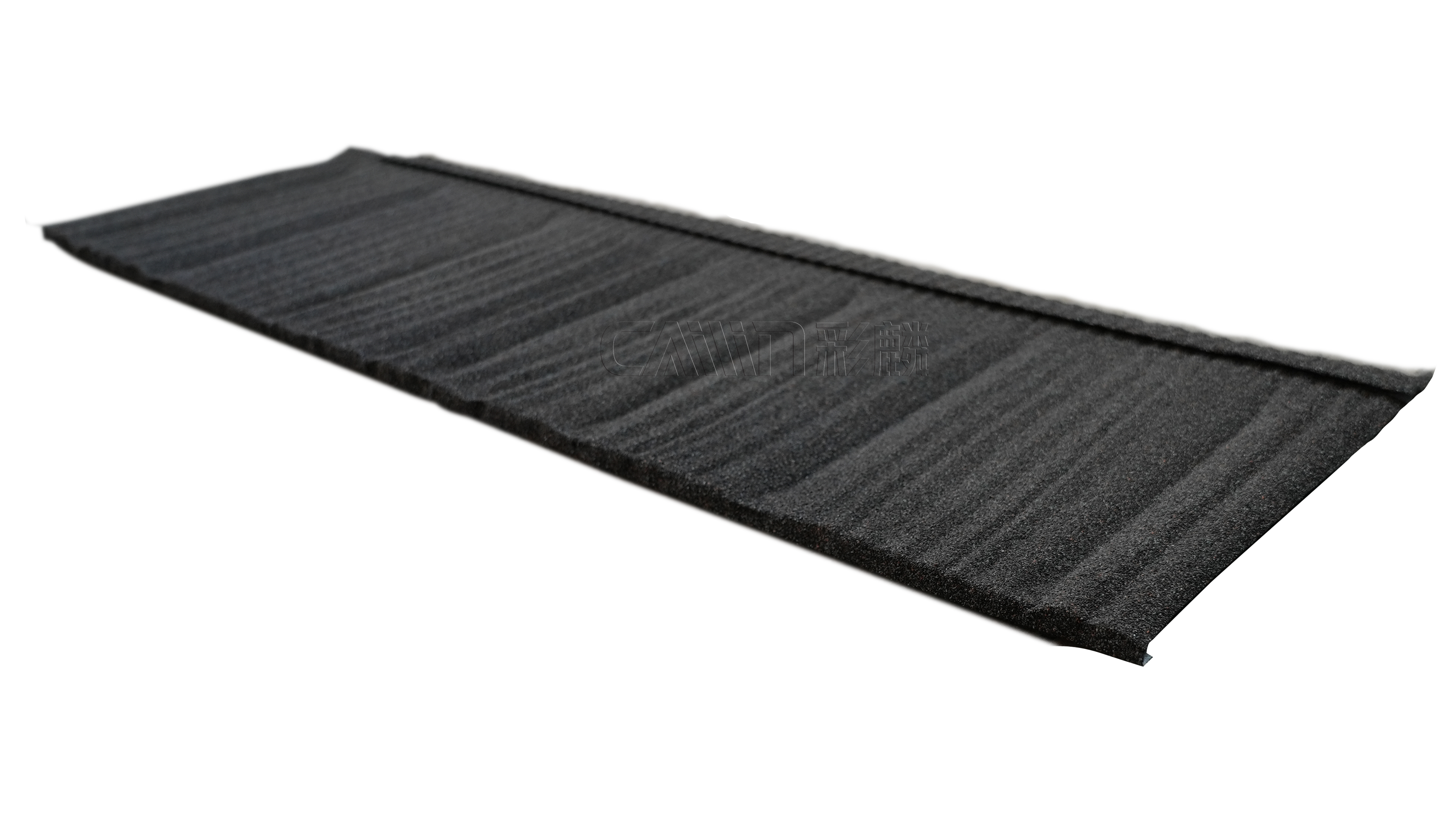
Two conditions push Interlocking Shake up the list. The first is freeze-thaw cycling, which punishes brittle coverings and any fixing detail that traps water. The second is acoustics: the reported reduction of up to 70% in rain noise versus bare metal roofing is the single most common reason a residential buyer rejects a metal roof, and the stone granule surface is the reason the claim exists.
Treat the acoustic figure as a claim to be evidenced for your assembly — granule mass, underlay and deck all change the result. Where the roof sits directly above a bedroom, ask for the assembly tested, not just the percentage.
5. Cailin Bond Tile — Hot Climates Where Heat Gain Drives the Decision
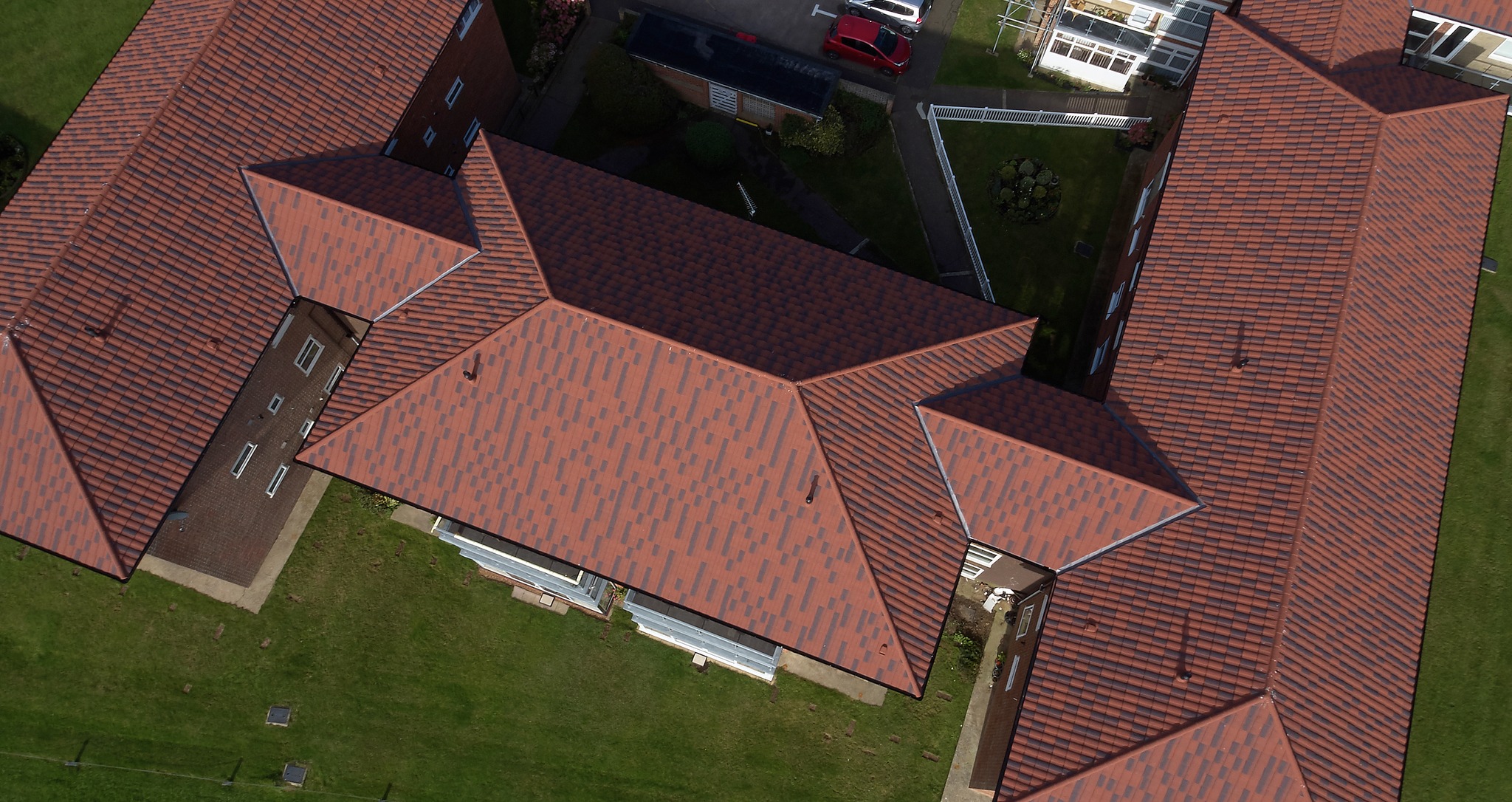
In hot-climate markets the buying conversation is about attic temperature and cooling load. A US residential project of 700 units using Cailin stone coated tiles on a pitched roof reported energy savings and eco-friendly performance among its outcomes, alongside wind resistance, noise reduction and low maintenance, with a stated service life of 30 to 50 years.
Bond Tile ranks fifth only because the thermal case is the least standardised of the five conditions: solar reflectance and the resulting attic temperature drop must be quoted for the specific colour and assembly. Ask for the reflectance value of the selected granule colour rather than the range across the whole range.
How to Run This Selection in Five Steps
- Map the dominant condition first. Uplift, salt, load, freeze-thaw or heat gain — pick the one that would stop the project if it were wrong. That condition sets the shortlist; the others become verification items.
- Screen by mass and structure. Compare the specified tile weight against the existing structure. Stone coated metal at roughly 1.1–1.8 lb per square foot sits far below clay and concrete, but the battens, purlins and fixings still have to be checked as a system.
- Demand assembly-level performance evidence. A wind rating, a salt-spray duration and an acoustic reduction all belong to a tested assembly. Request the assembly, the standard and the report reference, then confirm they match the fixing pattern you intend to install.
- Confirm factory and order controls. Check ISO 9001, 14001 and 45001 certificate numbers, scope and validity; confirm 100% inspection with pre-shipment random sampling and the option of third-party inspection; and agree the acceptance criteria, including retained samples and loading photos or video before container sealing.
- Lock the commercial terms against the delivery date. Confirm MOQ, delivery terms, payment schedule and production lead time in writing, so that a 7–10 day production window is not consumed by unresolved specification questions.
Where Each Pick Fits: Project Scenarios
Coastal hotel refurbishment. Roman Tile handles the planning requirement for a barrel appearance while cutting roof mass dramatically against clay. The documentation request is salt-spray evidence plus a fastener specification suitable for the exposure class.
Hurricane-zone residential subdivision. Interlocking Shingle, with the tested uplift assembly confirmed against the local wind zone and the fixing pattern written into the installation guide.
Retrofit of an occupied building. Milano Tile, where the decision is made by the roof load calculation and the phasing of the works rather than by appearance. Reduced weight means the works can often proceed without structural reinforcement.
Cold-climate residential. Interlocking Shake, where freeze-thaw durability and rain noise above bedrooms are the two objections that must be answered before price is discussed.
Wholesale stock decision. A distributor serving several climate zones should not carry five profiles equally. Carry the one that matches the dominant local condition at depth, and hold a second profile for the retrofit segment, where the load argument closes deals on its own.
Pick-by-Pick Comparison
| Pick | Best for | Evidence behind the pick | What to verify before ordering |
|---|---|---|---|
| 1. Cailin Interlocking Shingle | Coastal, high-wind pitched roofs | Concealed fixing line; category wind ratings reported up to 120–160 mph | Tested uplift assembly, fastener specification, wind zone |
| 2. Cailin Roman Tile | Salt-exposed projects needing a clay barrel look | Reported 500-hour salt spray test; barrel profile in lightweight panel form | Salt-spray report reference, steel base coating specification |
| 3. Cailin Milano Tile | Retrofits over existing tiles | Roughly 5–9 kg/m² versus 44–59 kg/m² for clay tile | Structural check, batten spacing, drainage over existing covering |
| 4. Cailin Interlocking Shake | Cold climates, roofs above living space | Reported reduction of up to 70% in rain noise versus bare metal | Acoustic assembly and underlay, freeze-thaw detailing |
| 5. Cailin Bond Tile | Hot climates, heat-gain-driven decisions | US residential project of 700 units reporting energy savings, 30–50 year service life | Solar reflectance for the chosen colour, attic temperature basis |
Mass comparison for the retrofit case. These are the figures that decide whether a roof can be re-covered without structural work.
| Roof covering | Weight per square foot | Approximate metric equivalent |
|---|---|---|
| Stone coated metal | 1.1–1.8 lb | roughly 5–9 kg/m² |
| Clay tile | 9–12 lb | roughly 44–59 kg/m² |
| Concrete tile | 8–12 lb | roughly 39–59 kg/m² |
Metric equivalents are converted from the reported imperial figures and rounded; they are indicative, not a substitute for the supplier datasheet.
FAQ
Are these stone coated metal roofing profiles produced under certified management systems?
Yes. Sango Cailin (Tianjin) Building Tech. Co., Ltd. holds ISO 9001:2015 (certificate ISO 9001:2015-03824Q14379R2S), ISO 14001:2015 (ISO 14001:2015-03824E14377R2S) and ISO 45001:2018 (ISO 45001:2018-03824S14378R1S), issued by Beijing World Standards for Certification Center (WSF) on 13 May 2024 and valid until 12 May 2027. The certificate scopes cover the production of stone coated metal roofing tiles and related quality, environmental and occupational safety management activities. Buyers should still confirm that the certificate scope names the specific facility that will run their order.
Can an OEM order change the profile, colour and steel thickness?
Yes. The manufacturer provides OEM, ODM and customized production services. Customization covers stone granule colour with more than 10 standard colours and custom colours available, steel thickness in 0.45 mm, 0.5 mm or 0.55 mm, tile profile across the Cailin series including Roman Tile, Milano Tile, Bond Tile, Classical Tile, Shingle, Shake, Long-Span Tile, Golan Tile, Tudor Tile, Heritage Tile and the Interlocking Shingle and Interlocking Shake profiles, plus packaging design in neutral or branded format and logo printing. Where a project depends on a performance value such as salt spray or acoustic reduction, that value must be evidenced by a test report for the assembly, not carried over from a profile name.
What are the commercial terms for a first wholesale order?
The minimum order quantity starts from 2 units, with delivery terms of FOB Tianjin or EXW. Payment terms are 30% T/T deposit on order confirmation and 70% T/T balance before shipment. Acceptance criteria include pre-shipment inspection by Cailin, the customer or a third party, sample retention, and loading photos or videos provided before the container is sealed. Monthly capacity is 500,000 units, which sets the realistic ceiling for a single order window.
Can a sample be checked before the order is confirmed?
Sample retention is built into the acceptance criteria: a retained sample is kept as the physical reference against which production is compared, and 100% inspection with pre-shipment random sampling is applied, with third-party inspection available on request. Request the retained sample together with the inspection record, and keep both against the delivery so that any later dispute is settled on a shared reference rather than on photographs.
What lead time should a wholesale buyer plan for?
Production lead time is 7–10 days, supported by a monthly capacity of 500,000 units and after-sales support that includes a technical installation guide, video support, remote support, 50-year limited warranty terms and a 24-hour response commitment. The practical constraint is rarely the production window itself; it is unresolved specification or inspection questions raised after the order is placed. To start a quote or an OEM discussion for a coastal, high-wind or retrofit project, contact the team at info@sangocailin.com or WhatsApp +86 131-6400-7633 with the project condition, profile preference and order quantity.
Conclusion
The five picks sort themselves once the dominant site condition is named. Exposed coastal wind points to Interlocking Shingle. Salt exposure with a barrel appearance requirement points to Roman Tile. A retrofit where the truss cannot be touched points to Milano Tile. Freeze-thaw and rain noise point to Interlocking Shake. Heat gain points to Bond Tile.
What separates a working specification from a catalogue order is the evidence layer: the certificate numbers, the tested assembly behind a wind rating, the report behind a salt-spray duration, and the acceptance criteria that decide whether the delivered container matches the sample. Those are the four items worth holding a supplier to, whichever of the five profiles the project selects.
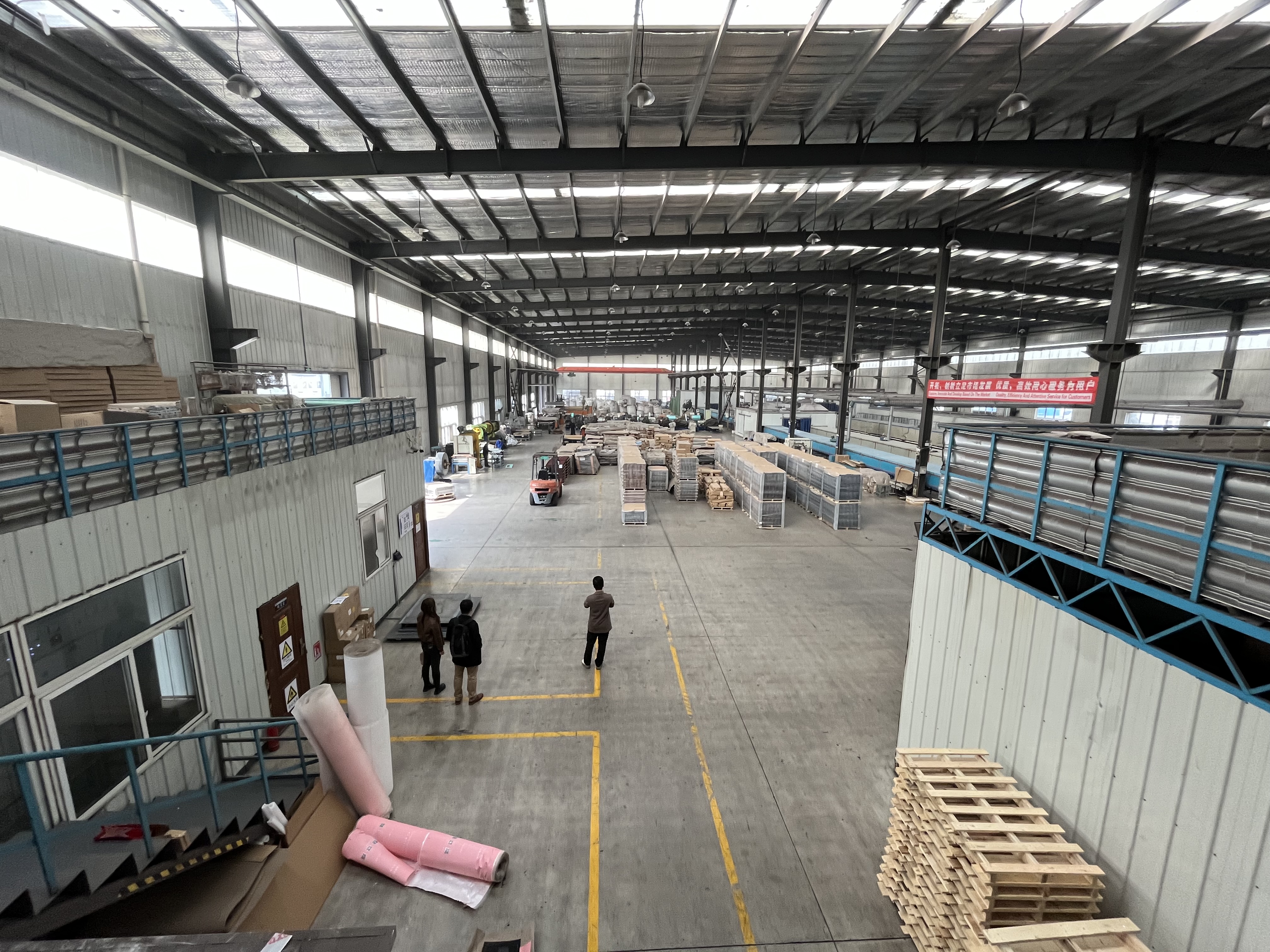
Sango Cailin (Tianjin) Building Tech. Co., Ltd. is based at 50 Meters South Of No. 1 Road, North Zone, Jinghai Economic Development Zone, Tianjin, China, and publishes its full profile range at www.cailinroofing.com. The product catalogue, including profiles, granule colours and steel thickness options, is available as a downloadable brochure.
Next step
Send the project condition, the profile you are screening and the target quantity, and you will receive a specification response with the relevant certificate scope, the order terms and the production window.
Brochure download: Cailin product catalogue (PDF)
Email: info@sangocailin.com | WhatsApp: +86 131-6400-7633 | Website: www.cailinroofing.com
Have Questions or Need More Details?
Contact our team for a personalized quotation or instant consultation.
Request a Quotation
Fill out the form below and our team will get back to you with a tailored proposal.
WhatsApp Direct Chat
Prefer to chat in real-time? Message us on WhatsApp for instant assistance & quick answers.
- Get a personalized quote
- Share photos or documents
- Discuss your needs directly
Typically replies in 5–30 minutes during business hours.