
Stone Coated Metal Roofing Suppliers: Breakage & Delivery Checks
Stone Coated Metal Roofing Suppliers: Breakage & Delivery Checks
Two figures separate a stone coated metal roofing supplier that can execute an order from one that can only describe it: the breakage rate recorded across transport and installation, and the delivery reliability behind the quoted lead time. Stone coated metal roofing stays under 0.5% breakage during transport and installation, compared with 3–8% for clay tiles, and both numbers can be verified — provided the buyer requests the right records before the first container is sealed.
This guide is written for wholesale buyers, importers, distributors and project procurement teams who have already shortlisted suppliers and are close to committing to a first order. It does not rank factories or restate brochure language. It sets out which evidence to request, how to read it without over-claiming, and how to convert it into purchasing terms and acceptance criteria that still protect you in month twelve of the relationship.
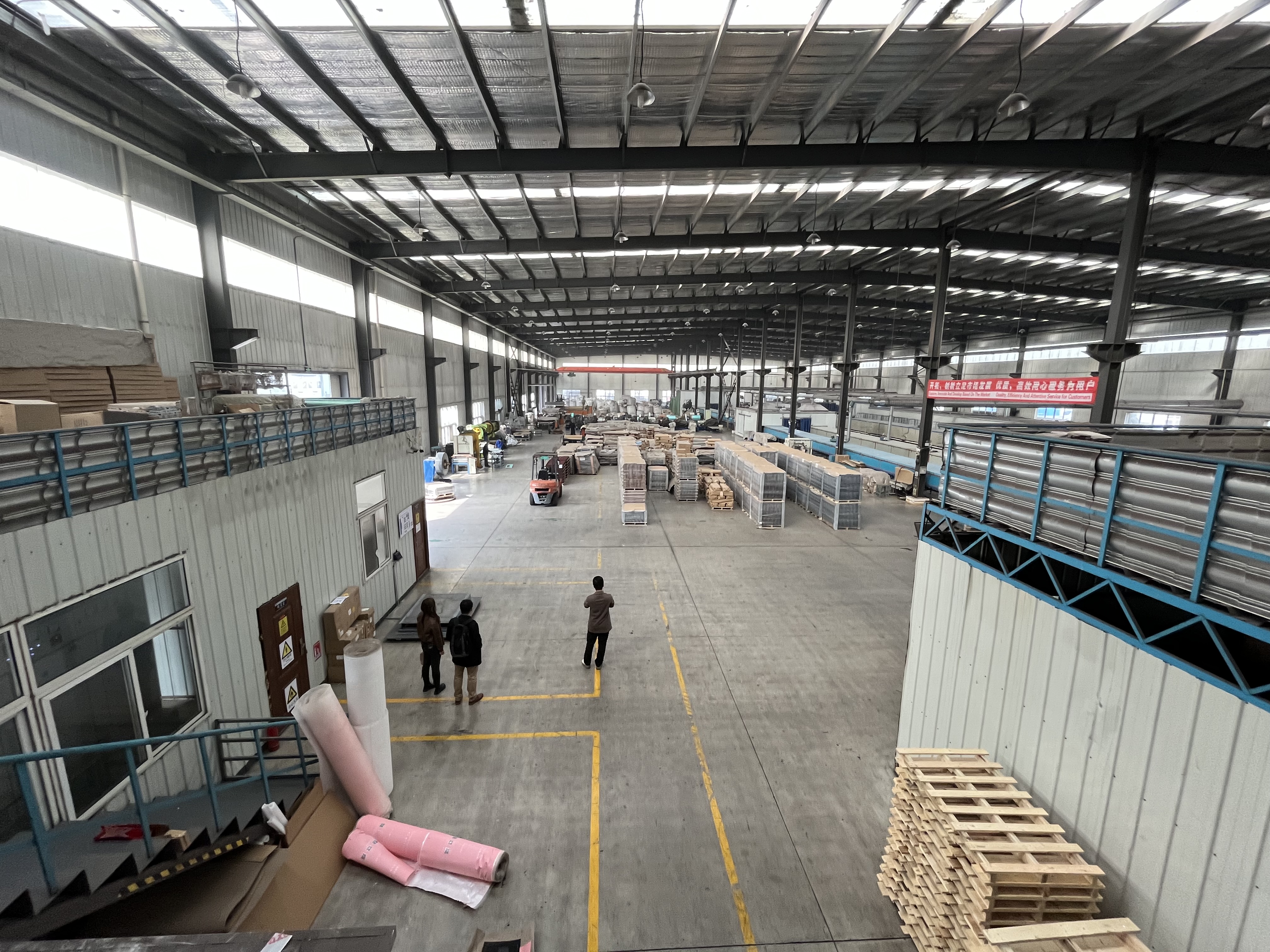
Why breakage and delivery outrank price at the first order
A quotation tells you what the tiles cost. It does not tell you how many will arrive intact, when the container will actually leave, or what happens when a pallet is crushed in transit. Those three questions decide the real cost of a first order, and all three can be answered before a deposit is paid.
Breakage is the more visible of the two. In the product comparison data used for this guide, stone coated metal roofing is specified at under 0.5% breakage during transport and installation, while clay tiles run at 3–8%. On a 1,000 m² order the difference is arithmetic rather than opinion: a 3–8% rate equals 30–80 m² of damaged clay tiles to replace, re-order or absorb, against under 5 m² for a product performing at the 0.5% benchmark. The steel substrate behind that figure is 0.4–0.6 mm thick and weighs around 4.5 kg/m², versus 45–65 kg/m² for clay tiles — a lighter panel generates less impact energy when it falls, and an interlocking profile spreads the load across the panel rather than through a brittle body.
Delivery reliability is quieter but no less expensive. A roof tile order that arrives two weeks late idles a crew, delays a client handover and, in coastal or hurricane-window projects, can push installation into the wrong part of the season. Reliability here means something specific: confirmed capacity, a lead time defined from a stated starting event, a documented inspection step, and evidence that the container was loaded as agreed.
Decision rule: if a supplier cannot produce a breakage figure with a defined base and a delivery record with a defined starting point, treat the quotation as indicative and the supplier as unqualified for a first order.
Check 1: Ask for a breakage rate with a defined base
Breakage data is only useful when you know what it counts. A percentage without a base — damaged units against shipped units, damaged square metres against ordered square metres, or claims filed against containers delivered — cannot be compared between suppliers.
Ask for the following, in writing:
- The definition used. Units, pallets or square metres damaged, against what denominator, and whether installation damage on site is included.
- The observation period. Claims recorded over the last 12 months, with the number of shipments that period covers.
- The packaging specification. Bundle quantities, edge and corner protection, interleaving, pallet type, and how ridge and accessory pieces are packed separately.
- Claim handling. How a damage claim is documented at destination, who inspects it, and how replacements are supplied in the next production run.
Stone coated metal roofing has one structural advantage in this conversation: the product is not brittle. Clay and concrete tiles crack when a pallet is dropped or a worker kneels on a corner, which is why their 3–8% range is a material property as much as a logistics one. A steel panel with a stone granule surface dents rather than shatters. That does not make breakage impossible — crushed bundles, cut straps and rough unloading all leave marks — so the packaging spec and the destination inspection matter as much as the headline percentage.
Two qualifications belong beside any breakage benchmark. First, the rate reflects handling and site storage as well as the product itself, so a supplier quoting under 0.5% should be able to show that the figure was measured under comparable shipping and unloading conditions. Second, breakage is not a warranty term; it is a logistics and packaging performance indicator, and it should be paired with an agreed damage allowance in the purchase contract rather than treated as a guarantee.
Check 2: Verify management-system certificates by number, not by logo
A certificate logo on a catalogue page proves nothing. A certificate number, checked against the issuing body’s own directory and matched to the legal entity that will sign your contract, is verifiable evidence of an audited management system.
For reference, a stone coated metal roofing manufacturer operating under a certified system typically holds three separate standards, each covering a different part of the operation:
| Standard | What it covers | Example certificate number |
|---|---|---|
| ISO 9001:2015 | Quality management system — process control, inspection, corrective action | 03824Q14379R2S |
| ISO 14001:2015 | Environmental management system — waste, emissions, coating and solvent handling | 03824E14377R2S |
| ISO 45001:2018 | Occupational health and safety management — production-line safety and incident control | 03824S14378R1S |
These three numbers are the certificates stated by Sango Cailin (Tianjin) Building Tech. Co., Ltd., a stone coated metal roofing manufacturer based in Tianjin, China, operating a 15,000 m² facility with a stated annual output of 6,000,000 units. They are quoted here as a worked example of what a request should return — not as a substitute for your own verification.
Run four checks on any certificate you receive:
- Number and issuing body. Search the number on the certification body’s public directory. A PDF alone is not verification; the record behind it is.
- Scope. Confirm the certificate covers the actual production site and product family in your order, not a trading office or a sister company.
- Entity match. The certificate holder name must match the counterparty on the sales contract and the beneficiary on the payment instruction.
- Validity. Check the expiry date and whether the certificate is under a surveillance cycle that is still current.
Keep the distinction clear in your evaluation file: ISO 9001:2015 tells you the factory runs a controlled quality process; it does not tell you a specific tile resists a specific wind load. That requires the test evidence in the next two sections.
Check 3: Read a 500-hour salt spray report properly
For coastal projects, corrosion evidence is the difference between a supplier who has data and one who has adjectives. The claim to request is a salt spray test of 500 hours, supported by a report you can read — not a sentence in a brochure.
A usable report shows the test duration in hours, the test method applied, the laboratory that ran it, the sample construction (coated coil, finished panel, or a panel with a cut edge), and the acceptance criteria used to judge pass or fail. Ask specifically how cut edges and fixing points performed, because on a coastal roof those are where corrosion starts, and a report on an uncut flat sample does not answer the question.
Pair the salt spray report with two production-side facts. First, whether salt spray testing is applied to random samples from every batch, which indicates the test is a routine control rather than a one-off promotional exercise; the factory referenced above states batch-level random sampling of this kind. Second, whether accelerated weathering testing — QUV or equivalent — is carried out by a third party, since a 500-hour salt spray result says nothing about how the acrylic top coat and stone granules survive ultraviolet exposure.
What the evidence does and does not establish: a 500-hour salt spray result supports a corrosion-resistance claim for the tested sample under the tested conditions. It is not a service-life prediction for your building, and it does not replace a project-specific specification review against local coastal or hurricane-zone requirements.
Check 4: Make the 160 mph wind uplift claim specific
Stone coated metal roofing is specified at up to 160 mph wind uplift resistance in the comparison data used for this guide, against 90–120 mph for clay tiles. The number is real, but it belongs to an assembly, not to a tile in isolation.
Wind uplift performance depends on the profile, the steel gauge, the batten spacing, the fastener pattern and the substrate the assembly is fixed to. Request the test report for the same configuration you intend to install, and check that it names the profile and gauge — 0.4–0.6 mm steel is the stated range — plus the fixing schedule used during the test. Where the report is silent on batten spacing or screw pattern, ask for the installation manual that defines them, because that document is what your installer will actually follow on site.
Concealed fastener systems deserve a specific question. When fixings are hidden under the overlapping panel, installation error becomes harder to see after the fact, so the supplier’s control over installation quality shifts from the product to the documentation and training. Ask what installation support is provided: technical installation guides, video support, remote assistance and a defined response time are all part of the wind performance chain, not extras.
Check 5: Confirm capacity, lead time and response commitments
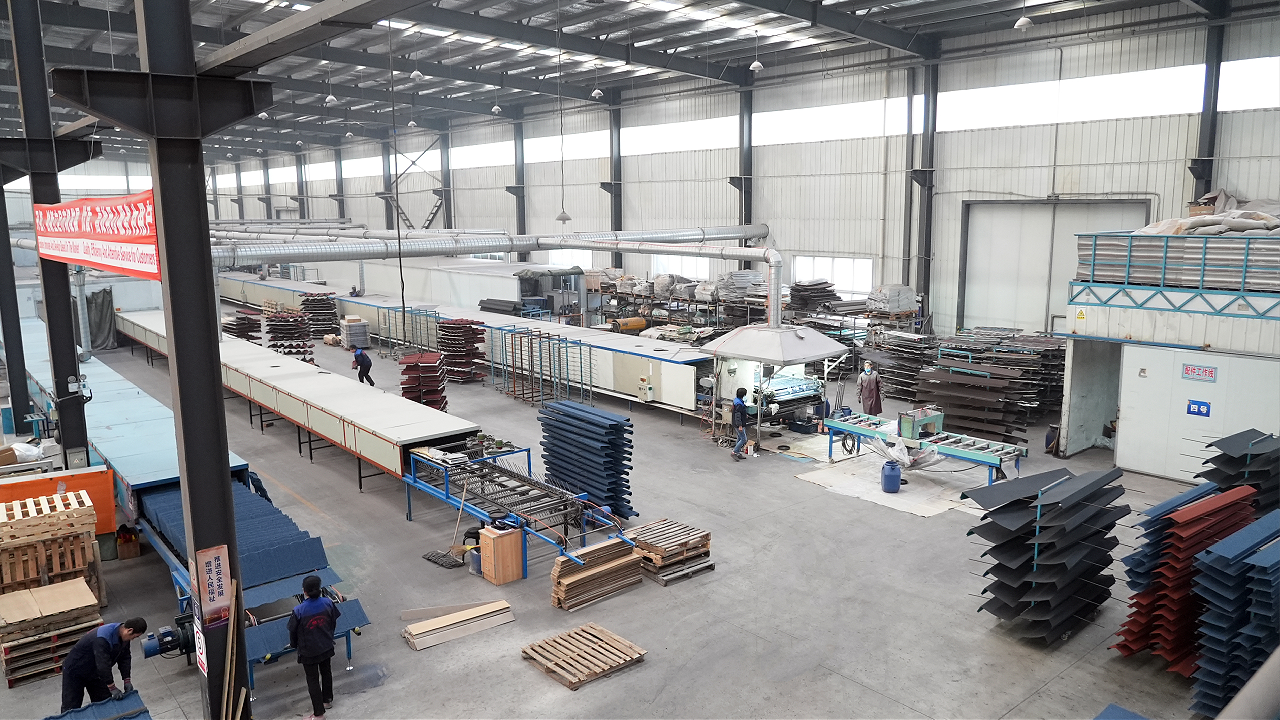
Capacity figures are only meaningful when they are large enough to absorb your order without displacing someone else’s. The reference manufacturer states a monthly production capacity of 500,000 units and a typical production lead time of 7–10 days — figures consistent with its stated annual output of 6,000,000 units. With 25% of output exported, mainly to the USA, Canada and Southeast Asia, export packing and documentation are routine rather than exceptional.
Three questions turn those numbers into a delivery commitment:
- When does the lead time start? From deposit receipt, from colour or profile confirmation, or from artwork approval — each produces a different ship date.
- Is capacity reserved or estimated? A 7–10 day typical lead time is a planning figure. For a dated project, ask for a production slot confirmation against your order number.
- What is the response commitment? A 24-hour response time, remote technical support and an installation guide/video library are the practical after-sales terms that matter when a fixings question arises on site.
Where delivery reliability is a contractual concern, tie the schedule to evidence rather than promises: pre-shipment inspection before container sealing, loading photographs or video with the container number visible, and a named contact who confirms the booking.
Stone coated metal roofing versus clay tiles on the four checks
| Measure | Stone coated metal roofing | Clay roof tiles |
|---|---|---|
| Weight | 4.5 kg/m² | 45–65 kg/m² |
| Breakage during transport and installation | Under 0.5% | 3–8% |
| Wind uplift resistance | 160 mph | 90–120 mph |
| Material thickness | 0.4–0.6 mm steel | 15–20 mm |
Read the table as a screening aid, not a verdict. The comparison holds for the configurations described in the source data; a specific clay tile from a specific manufacturer may perform differently, and a stone coated panel still depends on correct fastening to reach its wind rating. What the table does establish is why breakage and delivery, rather than material aesthetics, belong at the centre of supplier vetting.
Check 6: Align purchasing terms and acceptance criteria before order one
Most first-order disputes are not about product quality; they are about what “accepted” meant. Fix that in writing before the deposit, using the supplier’s stated commercial terms as the starting draft.
| Term | Stated position | What to confirm in writing |
|---|---|---|
| Delivery terms | FOB Tianjin, EXW | Named port, container type, who books freight, and where risk transfers |
| Payment | 30% T/T deposit on order confirmation; 70% T/T before shipment | Whether the balance falls due before or after inspection, and which documents are released against payment |
| Inspection | Pre-shipment inspection by the factory, the customer, or a third party | Sampling plan, acceptance threshold, who attends, and who bears the cost |
| Reference sample | Sample retained from the production batch | Retention period and how future batches are compared against it |
| Loading evidence | Loading photos or video provided before container sealing | Container number, pallet count and timestamp visible in the file |
Two additional clauses are worth negotiating at the same stage, because they translate the breakage discussion into money. A damage allowance defines what percentage of a shipment may be damaged before a claim is raised, and a replacement mechanism defines whether damaged units are credited or supplied in the next production run. Neither clause guarantees performance; both make the remedy predictable, which is the point of acceptance criteria.
A pre-order verification sequence you can run in two weeks
- Define the requirement. Fix profile, gauge, colour and quantity, and note whether the project is coastal, high-wind or a retrofit — the answers determine which evidence is mandatory.
- Request the breakage record. Ask for definition, period, shipment count and packaging specification, then compare responses using the same base.
- Collect certificates. Take certificate numbers for ISO 9001:2015, ISO 14001:2015 and ISO 45001:2018, and verify each against the issuing body’s directory.
- Request the test evidence. Salt spray report with duration, method, laboratory and sample description; wind uplift report for the intended assembly; third-party weathering test if UV exposure is a concern.
- Confirm capacity and dates. Production slot, lead-time starting event, and the response commitment for technical questions.
- Inspect before sealing. Attend pre-shipment inspection or appoint a third party, and keep the retained sample with its batch reference.
- Capture the loading record. Photographs or video, container number, pallet count, seal number.
- Review after delivery. Compare actual breakage and arrival condition against the supplier’s stated figure, and record the variance for the next order.
What changes after the first order
Supplier vetting does not end at delivery; it changes subject. In the first year the questions are about documentation and delivery dates. In the second and third year they are about consistency: whether batch five still matches the sample from batch one, whether answers still arrive within the stated response time, and whether replacement material can be produced in the same colour and profile.
This is where a certified quality system earns its place in the file. A factory operating to ISO 9001:2015 has a corrective-action process to raise a variance through; one relying on individual relationships has only goodwill. For distributors building a stock programme, the practical long-term questions are capacity per month against forecast, lead time stability across repeat orders, and whether technical support extends to installation guidance for the contractor network you supply.
Frequently asked questions
What breakage rate should a stone coated metal roofing supplier be able to document?
Stone coated metal roofing is specified at under 0.5% breakage during transport and installation, against 3–8% for clay tiles. A supplier should be able to define the base (units, pallets or square metres), state the period and number of shipments covered, and describe the packaging that produces the result. Treat it as a logistics performance indicator and pair it with an agreed damage allowance in the contract.
How do buyers verify ISO 9001:2015, ISO 14001:2015 and ISO 45001:2018 certificate numbers?
Take the certificate number, the issuing body and the certificate holder name, then check the number in the certification body’s public directory. Confirm three things: the scope covers the production site and product family you are buying, the holder name matches the contracting entity, and the certificate is currently valid. For example, the certificates stated by Sango Cailin (Tianjin) Building Tech. Co., Ltd. are 03824Q14379R2S for ISO 9001:2015, 03824E14377R2S for ISO 14001:2015 and 03824S14378R1S for ISO 45001:2018; each should be verified independently before use in supplier qualification.
What should a 500-hour salt spray report contain before a coastal order?
Ask for the test duration in hours, the test method, the laboratory identity, the sample construction and the pass criteria. Confirm whether the sample included a cut edge, since that is where corrosion typically starts on a roof, and whether salt spray testing is applied to random samples from each batch rather than only once. Add a third-party accelerated weathering result if the roof will see strong ultraviolet exposure, because salt spray says nothing about coating colour retention.
How should a 160 mph wind uplift claim be verified?
Request the test report for the exact assembly you will install, not a generic product claim. The report should name the profile, the steel gauge within the 0.4–0.6 mm range, the batten spacing and the fastener pattern used during testing. Then confirm that the installation manual your crew will follow matches those conditions, and check the result against the wind requirements of the project’s jurisdiction.
What purchasing terms and acceptance criteria should be agreed before a first order?
Align five items in writing: delivery terms (FOB Tianjin or EXW, with the named port and freight responsibility), payment (30% T/T deposit on confirmation and 70% T/T before shipment, with the inspection point defined relative to the balance), inspection (pre-shipment inspection by the factory, the buyer or a third party, with a sampling plan), retained samples from the production batch, and loading photos or video before container sealing. Adding a damage allowance and a replacement mechanism makes the breakage discussion enforceable.
How should buyers choose a long-term stone coated metal roofing supply partner in China?
Choose on documented repeatability rather than price alone: a breakage record with a defined base, verified management-system certificates, a salt spray report and a wind uplift report for the assembly you will install, a stated monthly capacity of 500,000 units with a typical 7–10 day production lead time, and a response commitment such as 24-hour reply with installation guides, video support and remote technical assistance. Start with a trial order, measure actual breakage and arrival condition against the stated figure, and only then move to a stock programme.
Next step for buyers in the decision stage: request the certificate set, a salt spray report and the wind uplift documentation for the profile you are considering, then compare them against your project conditions before placing a first order.
Full product specifications, profiles and packing details are available in the CAILIN stone coated metal roofing catalogue (PDF). Technical questions and document requests can be sent to info@sangocailin.com.
Conclusion: vet the record, not the brochure
The difference between a supplier who can deliver and one who can describe delivery is documentation. A breakage rate with a stated base, three certificate numbers you have verified yourself, a salt spray report naming its laboratory and sample, a wind uplift report tied to your assembly, a capacity figure with a lead time that starts on a defined date, and acceptance criteria signed before the deposit — that is the full checklist, and every item on it can be requested in a single email.
Run the same sequence on two or three shortlisted suppliers and the comparison becomes factual rather than persuasive. The supplier who returns complete, internally consistent records in the first response is also the one most likely to answer a fixings question in year three.
Have Questions or Need More Details?
Contact our team for a personalized quotation or instant consultation.
Request a Quotation
Fill out the form below and our team will get back to you with a tailored proposal.
WhatsApp Direct Chat
Prefer to chat in real-time? Message us on WhatsApp for instant assistance & quick answers.
- Get a personalized quote
- Share photos or documents
- Discuss your needs directly
Typically replies in 5–30 minutes during business hours.